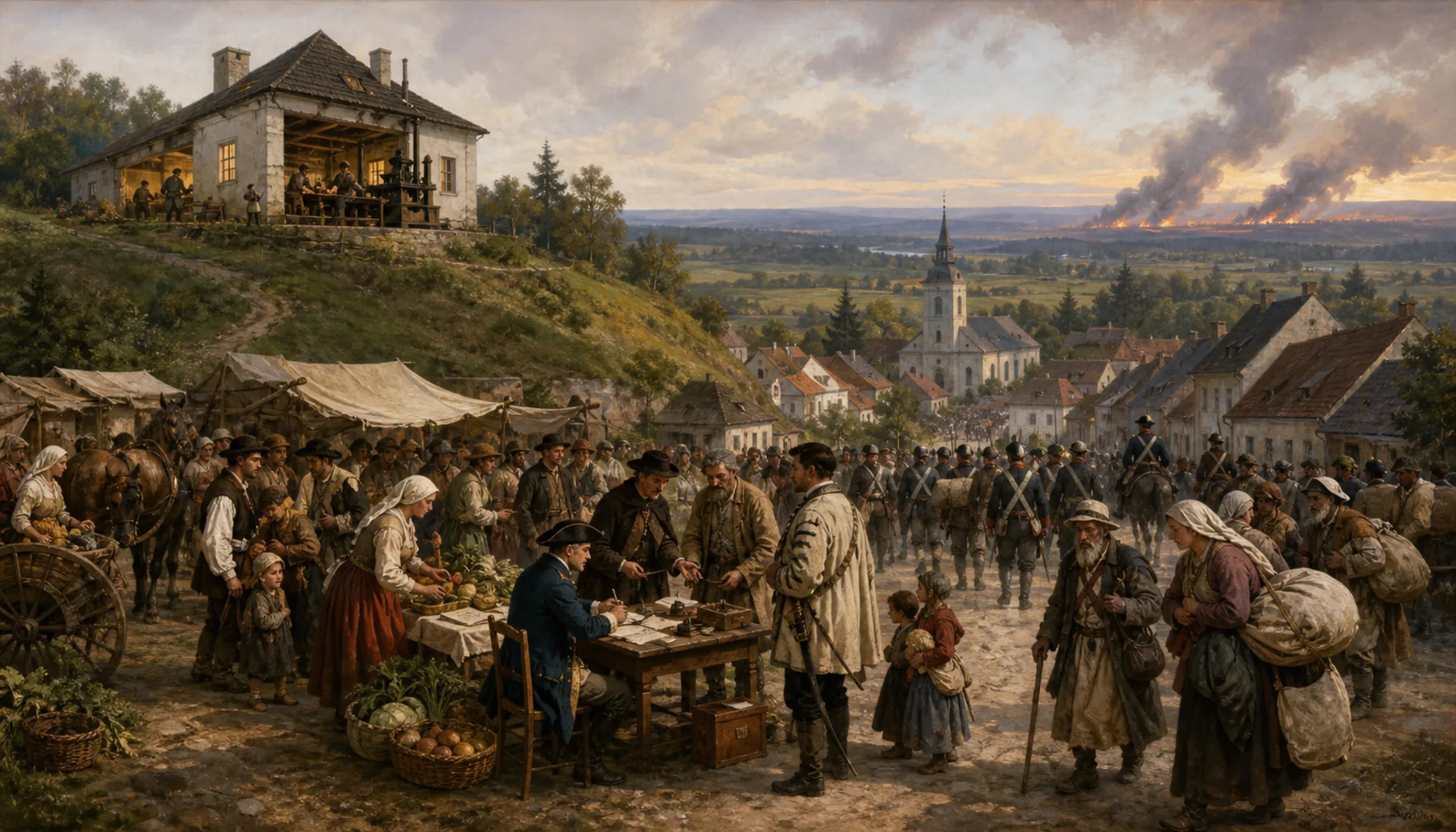
While the Ottoman front burned two hundred kilometres to the south-east, Záhorie was the rear: no sieges here, but taxes, soldiers passing through and refugees arriving. The estate changed hands — the Fugger banking family of Augsburg held it from 1553 to 1575, then the Balašas — and in 1566 the emperor Maximilian II granted Malacky the privileges of a market town, the right to hold weekly markets and annual fairs. That is the moment a village starts turning into a town, because a market pulls in roads, craftsmen and money. Between 1579 and 1584 one of the earliest printing presses in Slovakia worked up at the castle under Štefan Balaša, producing calendars, hymn books and the writings of the Protestant author Peter Bornemisza.Kým dvesto kilometrov na juhovýchod horel osmanský front, Záhorie bolo zázemím: bez obliehaní, zato s daňami, prechádzajúcimi vojskami a prichádzajúcimi utečencami. Panstvo menilo majiteľov — v rokoch 1553 – 1575 ho držali augsburskí bankári Fuggerovci, potom Balašovci — a v roku 1566 udelil cisár Maximilián II. Malackám výsady mestečka, teda právo týždenných trhov a výročných jarmokov. Vtedy sa z dediny začína stávať mesto: trh k sebe pritiahne cesty, remeselníkov aj peniaze. V rokoch 1579 – 1584 pracovala na hrade u Štefana Balašu jedna z najstarších tlačiarní na Slovensku — tlačila kalendáre, spevníky a spisy protestantského autora Petra Bornemisu.