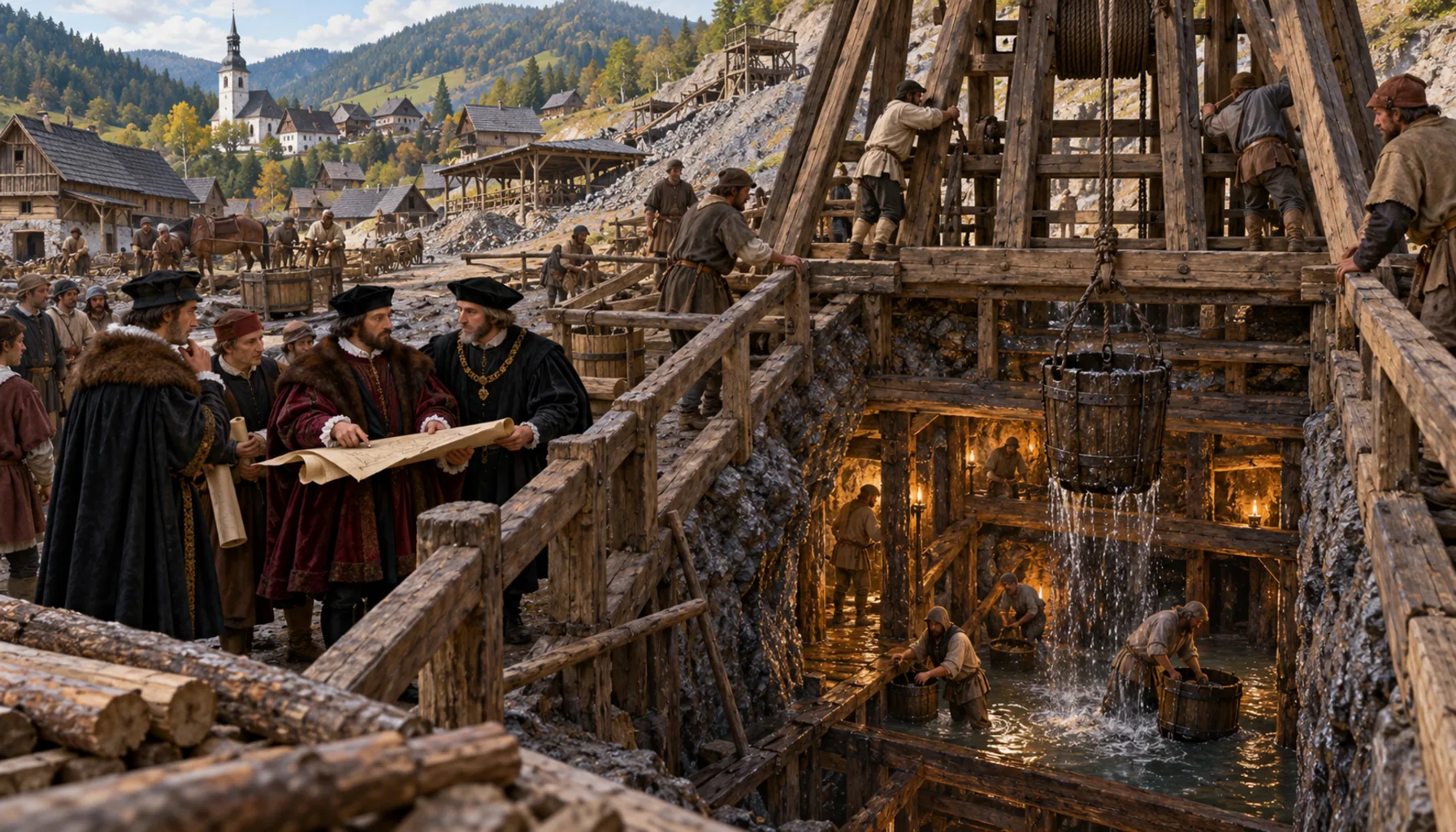
By the late 1400s the easy ore near the surface was gone and the deep workings were filling with water. Ján Thurzo, who had learned water-lifting engineering abroad, joined forces with the Augsburg banking family of the Fuggers and formed a company run from Banská Bystrica. In 1494 he began sinking a shaft here of a new type — the main shaft, later called the Ferdinand shaft, which eventually reached 250 metres. Money and machinery from Germany, ore from this valley: historians call it one of the first multinational companies, and it made the copper of Špania Dolina a name in Kraków, Antwerp and Venice.Koncom 15. storočia bola ľahká ruda pri povrchu preč a hlboké diela zalievala voda. Ján Turzo, ktorý sa v cudzine vyučil čerpaniu banských vôd, sa spojil s augsburskou bankárskou rodinou Fuggerovcov a založil spoločnosť riadenú z Banskej Bystrice. Roku 1494 tu začal hĺbiť šachtu nového typu — takzvanú hlavnú, neskôr nazývanú Ferdinandova, ktorá napokon dosiahla 250 metrov. Peniaze a stroje z Nemecka, ruda z tejto doliny: historici to označujú za jeden z prvých nadnárodných podnikov vôbec a špaňodolinská meď sa vďaka nemu stala pojmom v Krakove, Antverpách i Benátkach.