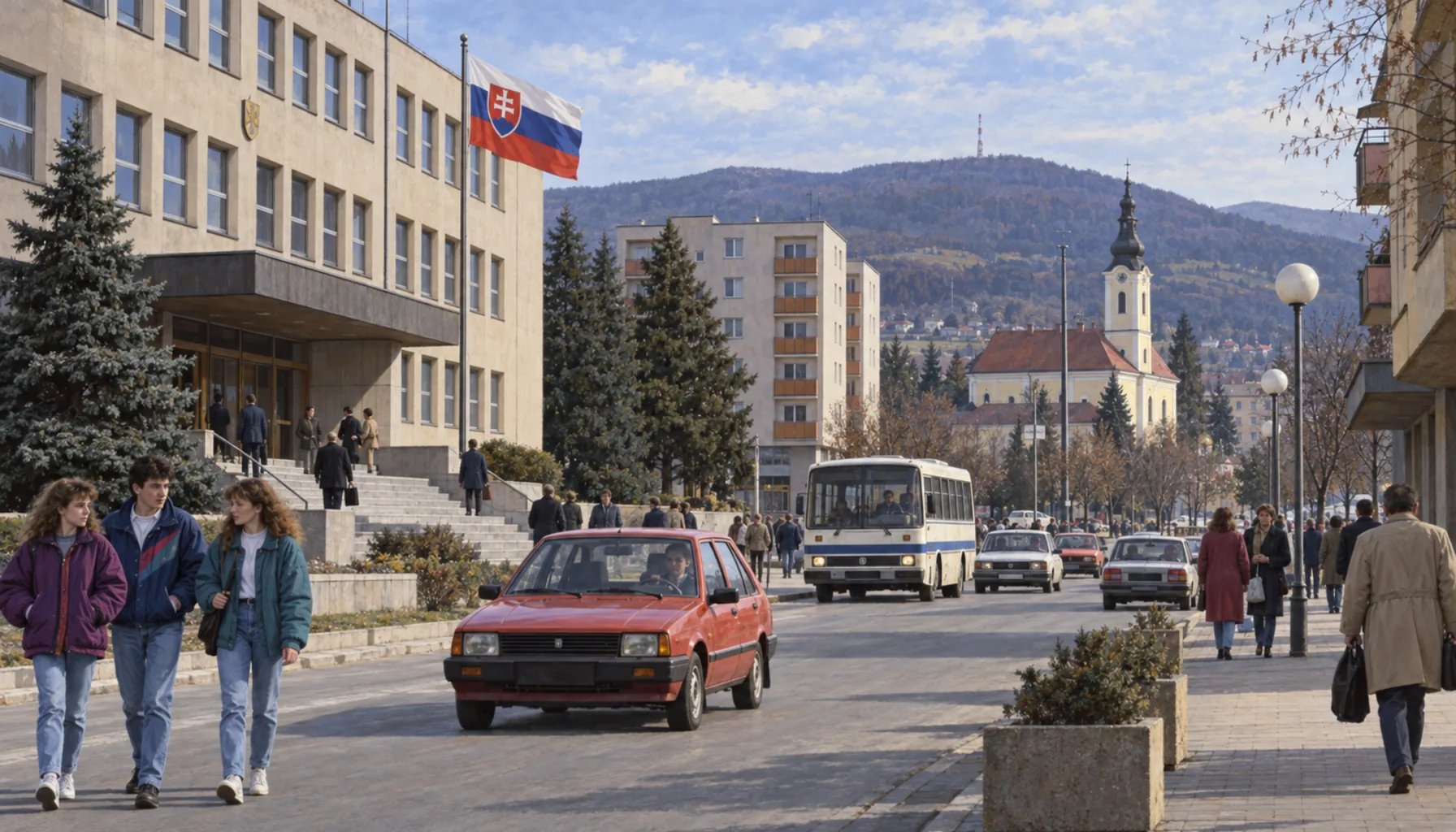
Czechoslovakia split on 1 January 1993 and Humenné became a district town of the independent Slovak Republic. Slovakia joined the European Union on 1 May 2004 and the passport-free Schengen area on 21 December 2007, which turned the Ukrainian border an hour east of here into the outer edge of both — the same corridor as ever, now with a different meaning. In the chateau the Vihorlat Museum shows the region's history and natural history, and in the park behind it stands the open-air museum, where the wooden church of 1745 from Nová Sedlica was re-erected after being taken apart in the easternmost village in the country. A town that rarely controlled its own story has ended up as the place where the region's story is kept.Československo sa 1. januára 1993 rozdelilo a Humenné sa stalo okresným mestom samostatnej Slovenskej republiky. Slovensko vstúpilo 1. mája 2004 do Európskej únie a 21. decembra 2007 do schengenského priestoru bez pasových kontrol, čím sa z ukrajinskej hranice hodinu jazdy odtiaľto stal vonkajší okraj oboch — ten istý koridor ako vždy, len s iným významom. V kaštieli sídli Vihorlatské múzeum s dejinami a prírodou kraja a v parku za ním stojí skanzen, kde znovu postavili drevený chrám z roku 1745 z Novej Sedlice, rozobratý v najvýchodnejšej obci krajiny. Mesto, ktoré o sebe málokedy rozhodovalo samo, sa napokon stalo miestom, kde sa uchovávajú dejiny celého kraja.