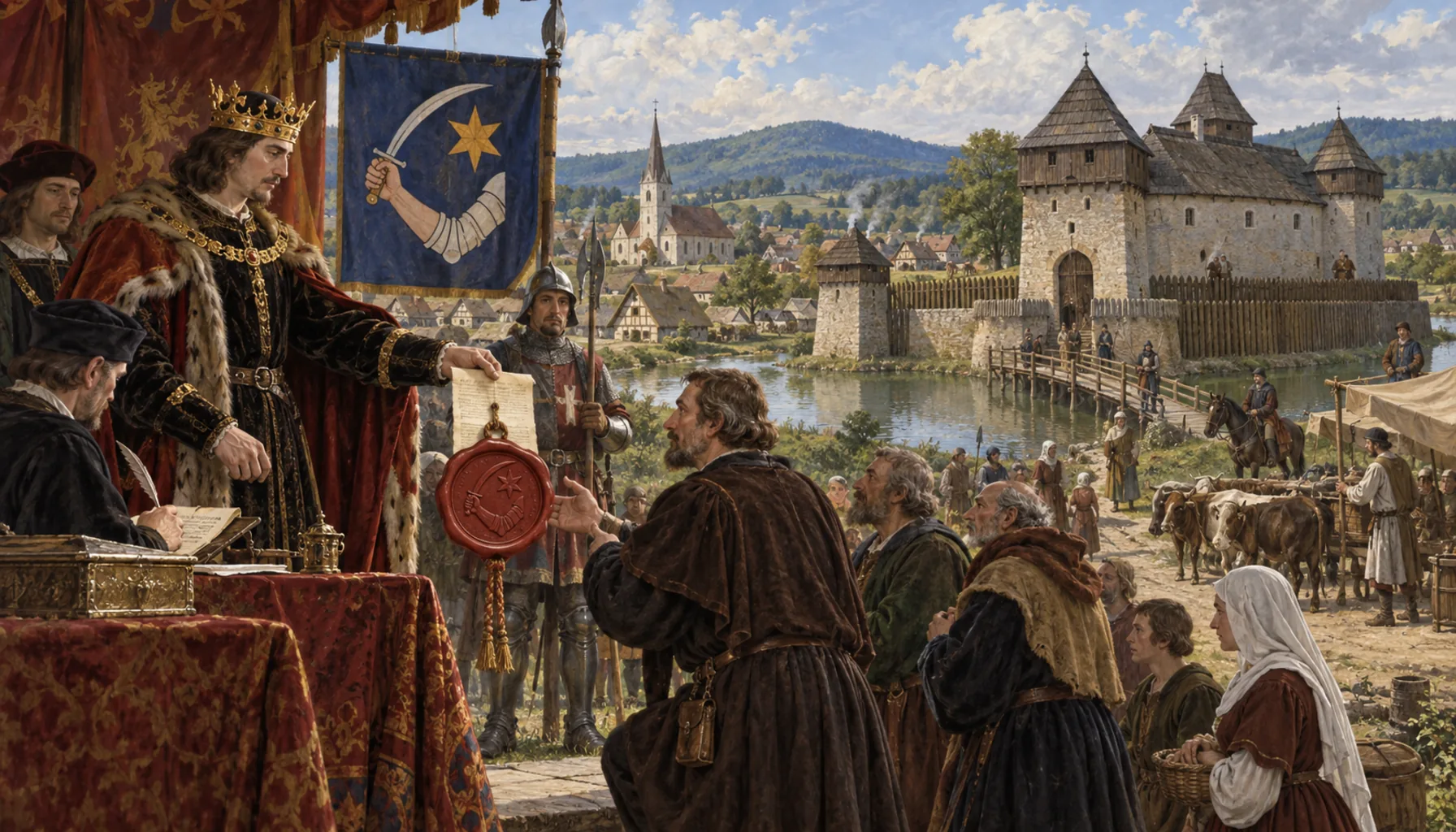
During the fifteenth century King Matthias Corvinus granted Humenné town privileges — its own seal and its own coat of arms. Privileges were not decoration: they meant the right to hold markets, to judge small cases and to deal with the king rather than only with a landlord, and they are the difference between a village and a town. A water castle — a fortified house defended by a ditch and water rather than by a cliff — is first mentioned here in 1449. The place was still small: about seven hundred people lived in Humenné in the sixteenth century.V pätnástom storočí udelil kráľ Matej Korvín Humennému mestské výsady — vlastnú pečať a vlastný erb. Výsady neboli ozdoba: znamenali právo držať trhy, súdiť menšie spory a rokovať priamo s kráľom, nielen so zemepánom, a práve v tom je rozdiel medzi dedinou a mestom. Roku 1449 sa tu prvý raz spomína vodný hrad — opevnené sídlo, ktoré nechráni skalné bralo, ale priekopa a voda. Mesto bolo ešte maličké: v šestnástom storočí malo Humenné okolo sedemsto obyvateľov.