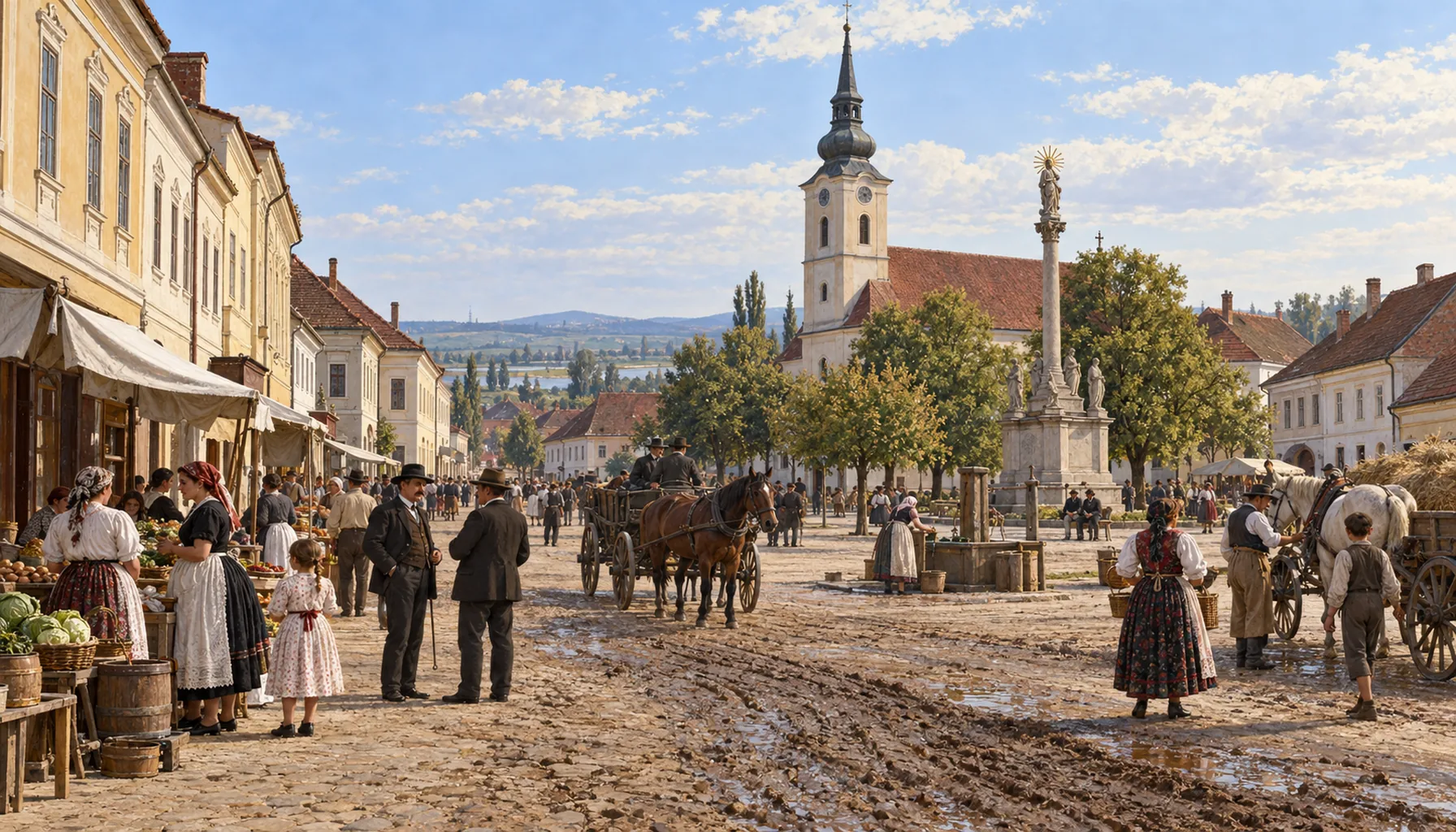
The census of 1910 found 2,725 people in the town, of whom 99.8 per cent gave Hungarian as their mother tongue. That figure needs handling with care: Hungarian censuses of the period asked about language, not identity, and the state was actively pushing Magyarisation — schooling, offices and advancement all ran in Hungarian. But there is no serious doubt that the Bodrogköz was and is genuinely Hungarian-speaking, and it still is by a large majority today. Learning to read a census critically without throwing it away is one of the more useful things history teaches.Sčítanie v roku 1910 napočítalo v meste 2 725 ľudí, z ktorých 99,8 percenta uviedlo ako materinský jazyk maďarčinu. S tým číslom treba narábať opatrne: vtedajšie uhorské sčítania sa pýtali na jazyk, nie na identitu, a štát presadzoval maďarizáciu — škola, úrad aj kariéra fungovali po maďarsky. Nikto však vážne nepochybuje, že Medzibodrožie bolo a je naozaj maďarsky hovoriace, a je ním veľkou väčšinou dodnes. Naučiť sa čítať sčítanie kriticky, a pritom ho nezahodiť, patrí k užitočnejším veciam, ktoré dejepis učí.