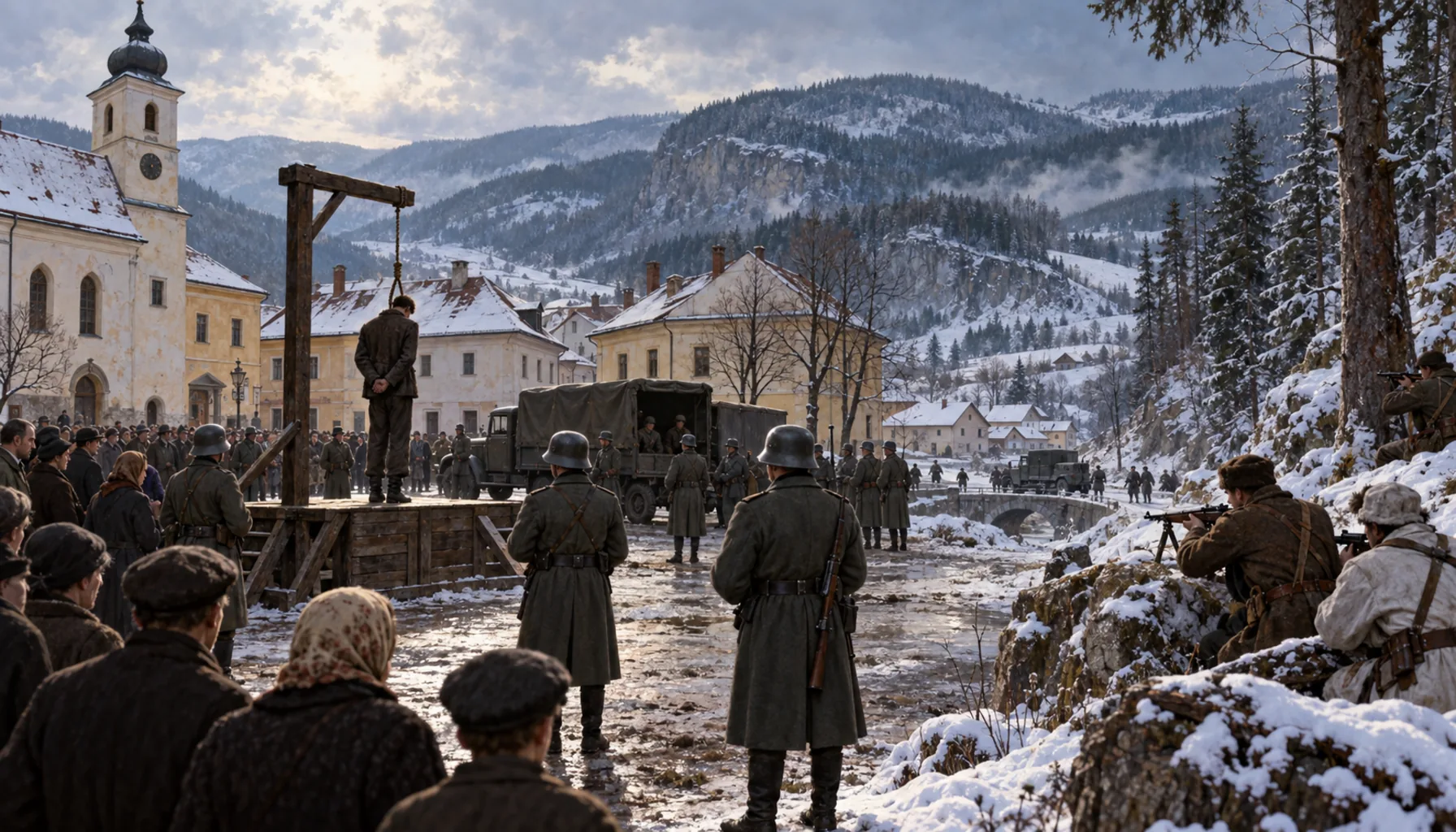
The Slovak National Uprising began in August 1944 and Germany occupied the country to crush it; partisans kept fighting through the winter in the forests of the Ore Mountains around Dobšiná. On 20 December 1944 Karol Adler, commander of the joint partisan group Petöfi Sándor, was executed on the town square — a public killing, in the middle of the town, meant to be seen. Five weeks later, on 27 January 1945, Dobšiná was taken by troops of the Fourth Romanian Army under general Dăscălescu, fighting alongside the Soviets. Romania had been on the other side until August 1944; that is why Romanian soldiers are on the memorials of eastern Slovakia.Slovenské národné povstanie sa začalo v auguste 1944 a Nemecko obsadilo krajinu, aby ho potlačilo; partizáni bojovali celú zimu v lesoch Rudohoria okolo Dobšinej. 20. decembra 1944 popravili na námestí Karola Adlera, veliteľa spojenej partizánskej skupiny Petöfi Sándor — verejné zabitie uprostred mesta, ktoré malo byť videné. O päť týždňov, 27. januára 1945, oslobodili Dobšinú vojská 4. rumunskej armády zborového generála Dăscăleska, bojujúce po boku Sovietov. Rumunsko stálo do augusta 1944 na druhej strane; práve preto sú na pamätníkoch východného Slovenska rumunskí vojaci.