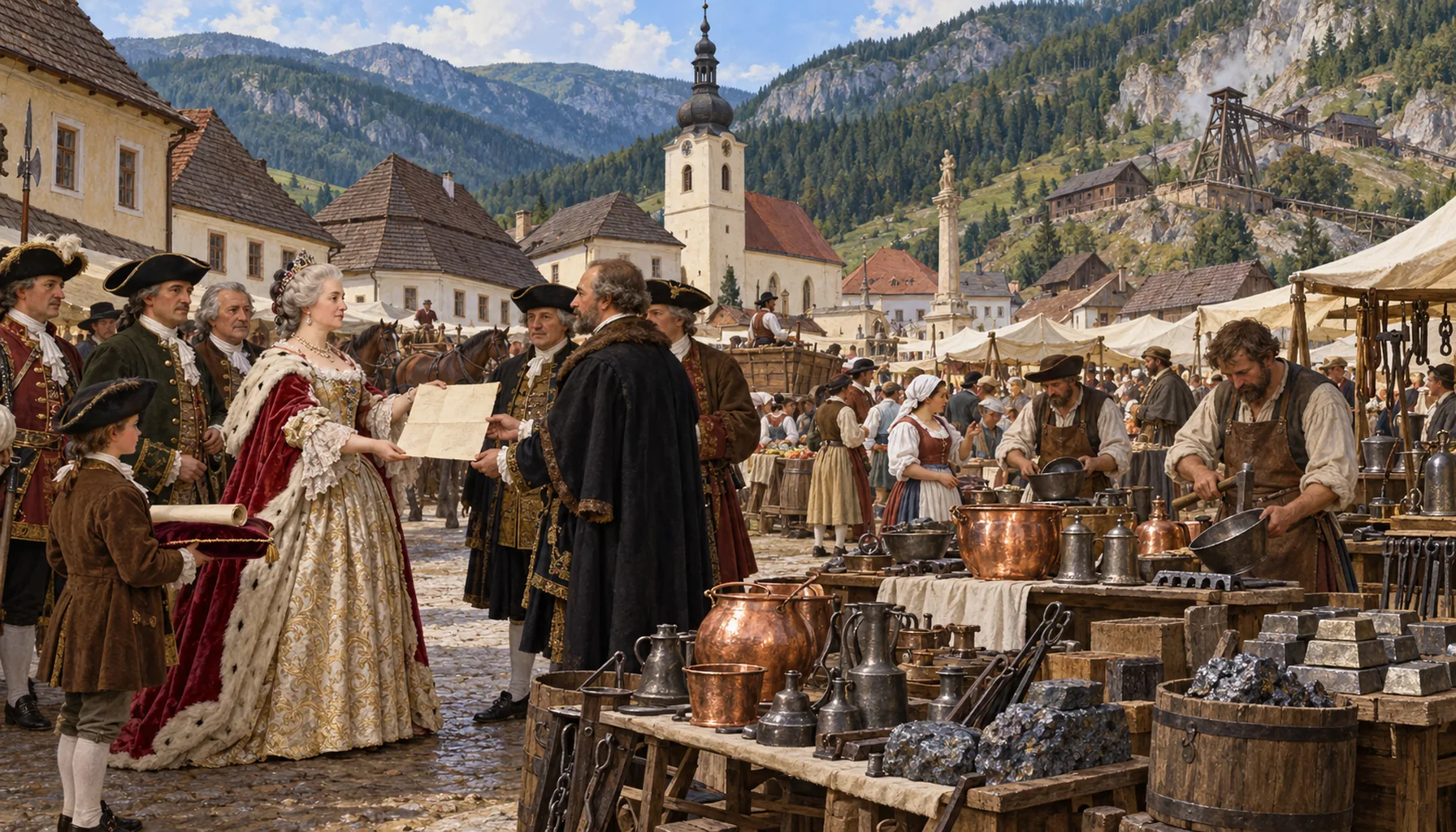
In 1756 Empress Maria Theresa confirmed Dobšiná's right to four annual fairs — a small piece of paper that meant four fixed dates a year when money came into the valley. The same century made the town's name in a different way. Alongside the old iron and copper, miners here began working cobalt and nickel ores, which were rare in the Kingdom of Hungary, and Dobšiná became a place that metallurgists elsewhere in Europe had heard of. Cobalt gave the deep blue used in glass and porcelain; nickel later became an industrial metal in its own right. A town's fortune can turn on which elements happen to be in its rock.Roku 1756 potvrdila cisárovná Mária Terézia Dobšinej právo na štyri výročné trhy — kúsok papiera, ktorý znamenal štyri pevné termíny do roka, keď do doliny prichádzali peniaze. To isté storočie preslávilo mesto aj inak. Popri starom železe a medi tu baníci začali dobývať kobaltové a niklové rudy, v Uhorskom kráľovstve vzácne, a Dobšiná sa stala menom, ktoré poznali hutníci aj inde v Európe. Kobalt dával sýtu modrú do skla a porcelánu, nikel sa neskôr stal priemyselným kovom sám osebe. Osud mesta môže závisieť od toho, ktoré prvky sa náhodou nachádzajú v jeho hornine.