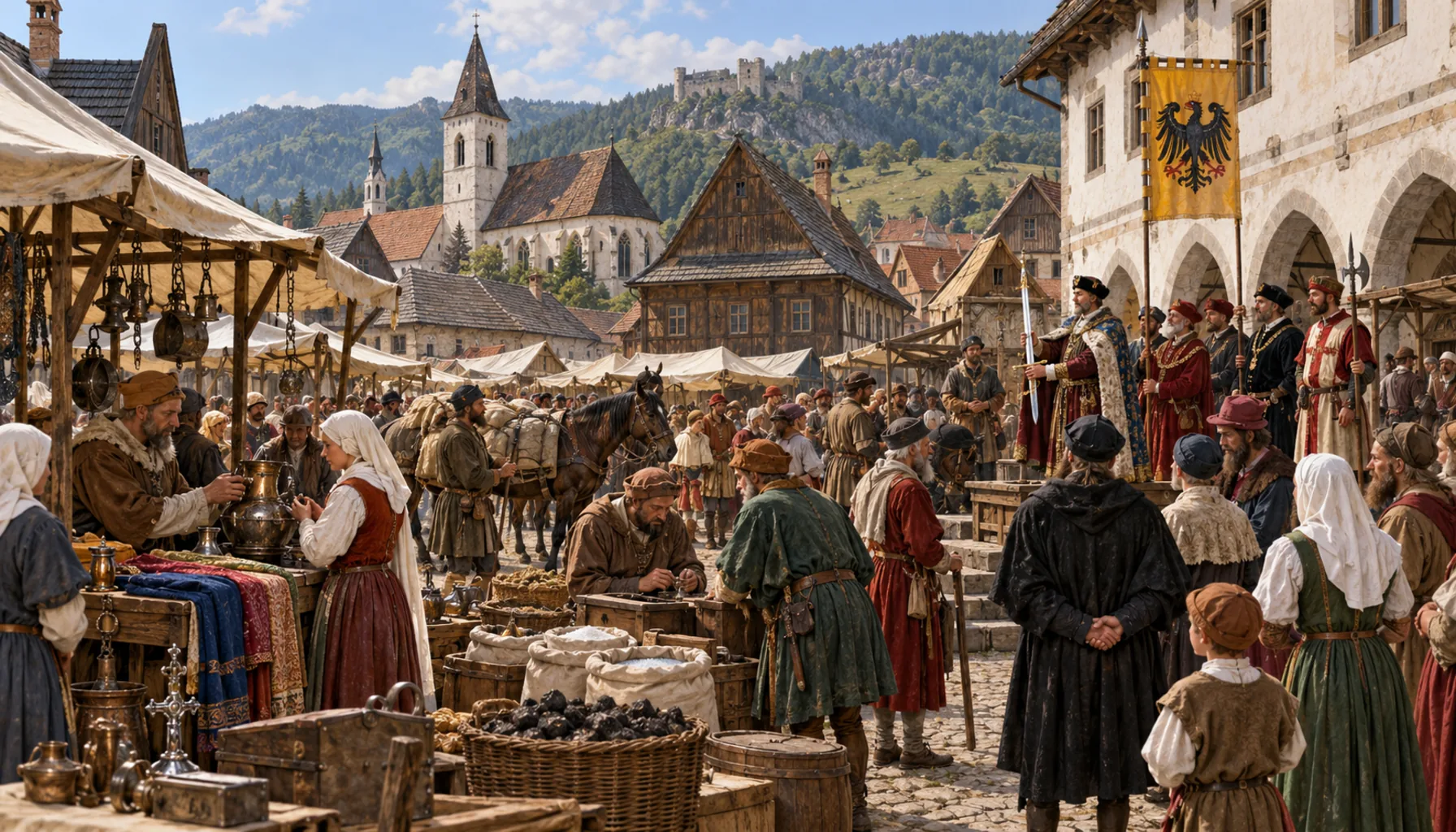
In 1417 King Sigismund of Luxembourg granted Dobšiná the right to hold fairs, and the town also held the right of the sword — the authority to try and to execute capital cases inside its own boundaries. Those two rights are worth putting side by side, because together they are what made a medieval town a town: it could organise trade, and it could enforce order without asking a lord's permission. A fair was not a village market. It was a fixed date when merchants came from far off, prices were set, and a mining settlement could sell metal and buy the grain it could not grow. For a place this high in the mountains, the fair was the food supply.Roku 1417 udelil kráľ Žigmund Luxemburský Dobšinej jarmočné právo a mesto malo aj právo meča — právomoc súdiť a popraviť hrdelné zločiny vo vlastnom chotári. Tieto dve práva sa oplatí položiť vedľa seba, lebo spolu robili zo stredovekého mesta mesto: mohlo organizovať obchod a mohlo udržiavať poriadok bez toho, aby sa pýtalo zemepána. Jarmok nebol dedinský trh. Bol to pevný termín, keď prišli kupci zďaleka, ustálili sa ceny a banská osada mohla predať kov a kúpiť obilie, ktoré si sama nedopestovala. Pre takto vysoko položené miesto bol jarmok zásobovaním potravinami.