Only what belongs to Bratislava — each on its own page.Len to, čo patrí k mestu Bratislava — každé s vlastnou stránkou.
Pick a year to see what was happening here then.Vyberte rok a uvidíte, čo sa tu vtedy dialo.
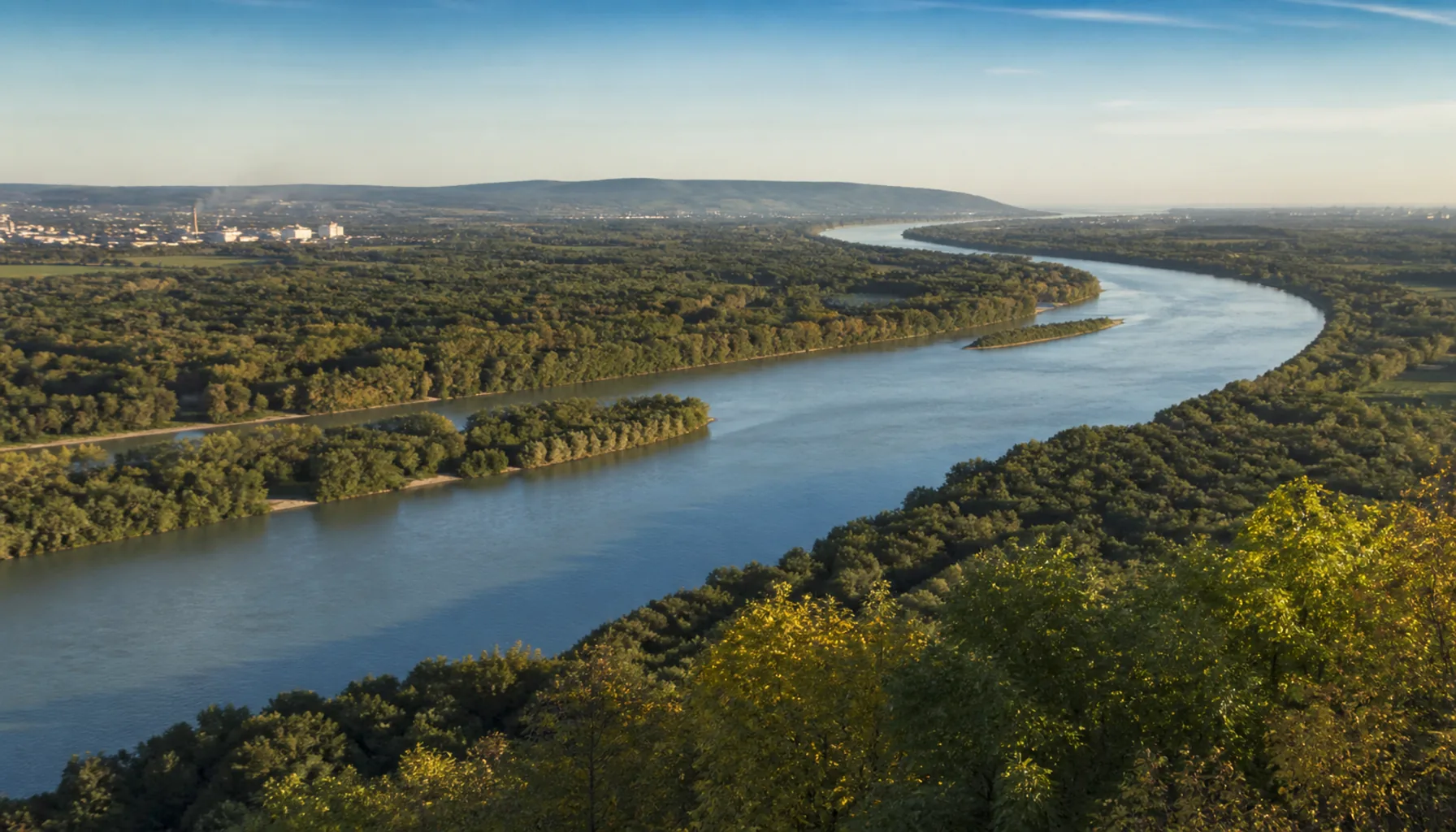
Long before anyone wrote this place down, the hill above the ford was a Celtic town. In the last centuries BC the Boii built an oppidum — a fortified hill town — on the castle rock and struck their own silver coins there; the coins are called biatec after the word stamped on them, and their design was borrowed for Slovakia's own coins after 1993. When Rome pushed its frontier up to the Danube, the river below the rock became part of the limes, the guarded edge of the empire, and an auxiliary fort called Gerulata was built on the Roman bank at what is now the Bratislava borough of Rusovce; Roman troops also held posts on the far side, including the crag at Devín. What is left of Gerulata was added to the UNESCO World Heritage list in 2021 as part of the Roman Danube frontier. Rome held the right bank, the tribes it never conquered held the left — and a border running down the middle of the water has been an ordinary fact of life here ever since.Dávno predtým, než niekto toto miesto zapísal, stálo na kopci nad brodom keltské mesto. Bójovia tu v posledných storočiach pred naším letopočtom vybudovali oppidum — opevnené výšinné sídlisko — a razili vlastné strieborné mince; volajú sa biatec podľa nápisu na nich a ich kresba sa po roku 1993 dostala na slovenské koruny. Keď Rimania posunuli hranicu k Dunaju, rieka pod skalou sa stala súčasťou limesu, stráženého okraja ríše, a na rímskom brehu, v dnešnej mestskej časti Rusovce, vyrástol pomocný tábor Gerulata; rímske posádky držali aj body na druhej strane, napríklad devínsku skalu. Zvyšky Gerulaty zapísali roku 2021 do zoznamu svetového dedičstva UNESCO ako súčasť rímskej dunajskej hranice. Rím držal pravý breh, nepodmanené kmene ľavý — a hranica vedená stredom vody je tu odvtedy úplne bežnou vecou.
Slavs settled the castle rock and made it one of the strongholds of Great Moravia, the first state to rule most of what is now Slovakia. Archaeologists digging on the summit found the foundations of a stone church of that period, and part of the excavation is shown in an underground exhibition beneath the castle courtyard. A Frankish annal written for the year 864 names a fortress called Dowina, traditionally taken to be Devín where the Morava runs into the Danube — traditionally, because the identification has never actually been proved. The name of the place on the castle hill appears for the first time in a chronicle entry for the year 907, written as Brezalauspurc, in connection with a battle fought nearby in which a Bavarian army was destroyed. Great Moravia is not heard of after that, and the Magyars, who had won, stayed.Slovania sa usadili na hradnom brale a urobili z neho jedno z centier Veľkej Moravy — prvého štátu, ktorý ovládal väčšinu dnešného Slovenska. Archeológovia na vrchole odkryli základy kamenného kostola z tohto obdobia a časť výskumu je sprístupnená v podzemnej expozícii pod hradným nádvorím. Franský letopis k roku 864 spomína hradisko Dowina, ktoré sa tradične stotožňuje s Devínom pri ústí Moravy do Dunaja — tradične preto, lebo dokázané to nikdy nebolo. Meno miesta na hradnom kopci sa prvý raz objavuje v kronikárskom zázname k roku 907 v podobe Brezalauspurc, a to v súvislosti s bitkou nablízku, v ktorej bolo bavorské vojsko zničené. O Veľkej Morave sa potom už nepíše a Maďari, ktorí zvíťazili, tu zostali.
When the Kingdom of Hungary took shape around the year 1000, this rock became one of its border strongholds and the seat of a county — a župa, the unit of local government run from a royal castle by an official appointed by the king. A stone castle stood here from the eleventh century, watching the frontier with the German empire, and German rulers came to besiege it more than once. Under its walls a market settlement grew at the ford, living off the crossing, the tolls taken from river traffic and the vineyards on the slopes behind. It was not yet a great town. It was a garrison, a customs post and a wine village standing in the corner of a kingdom.Keď sa okolo roku 1000 sformovalo Uhorské kráľovstvo, toto bralo sa stalo jednou z jeho pohraničných pevností a sídlom župy — správnej jednotky, ktorú z kráľovského hradu spravoval panovníkom menovaný župan. Kamenný hrad tu stál od 11. storočia a strážil hranicu s nemeckou ríšou; nemeckí panovníci ho neraz obliehali. Pod hradbami vyrástla pri brode trhová osada, ktorá žila z prievozu, z mýta vyberaného od lodí a z viníc na svahoch za chrbtom. Veľké mesto to ešte nebolo. Bola to posádka, colnica a vinohradnícka dedina na okraji kráľovstva.
In the spring of 1241 the Mongol army destroyed the Hungarian royal army at Muhi and rode across the kingdom; a year later it turned back east and left. Around here what burned was what had no wall: the open villages and the settlement below the castle. The stone fortress on the rock is counted among the places that held. But the important part of 1241 is not the damage — it is the lesson King Béla IV drew from it. He ordered stone castles built all over the kingdom and gave towns the right to wall themselves, inviting settlers, many of them German-speaking, to fill them. Nearly every stone castle in Slovakia dates from the decades after the Mongols, not before them.Na jar 1241 mongolské vojsko rozdrvilo pri Muhi uhorskú kráľovskú armádu a prehnalo sa krajinou; o rok neskôr sa obrátilo na východ a odtiahlo. Tu zhorelo to, čo nemalo hradby: otvorené dediny a osada pod hradom. Kamenná pevnosť na brale sa ráta medzi tie, ktoré odolali. Podstatná na roku 1241 však nie je spúšť, ale ponaučenie, ktoré si z nej vzal kráľ Belo IV. Nariadil stavať kamenné hrady po celej krajine a mestám dal právo opevniť sa; pozýval doň osadníkov, mnohých z nemeckého jazykového prostredia. Takmer každý kamenný hrad na Slovensku pochádza z desaťročí po Mongoloch, nie spred nich.
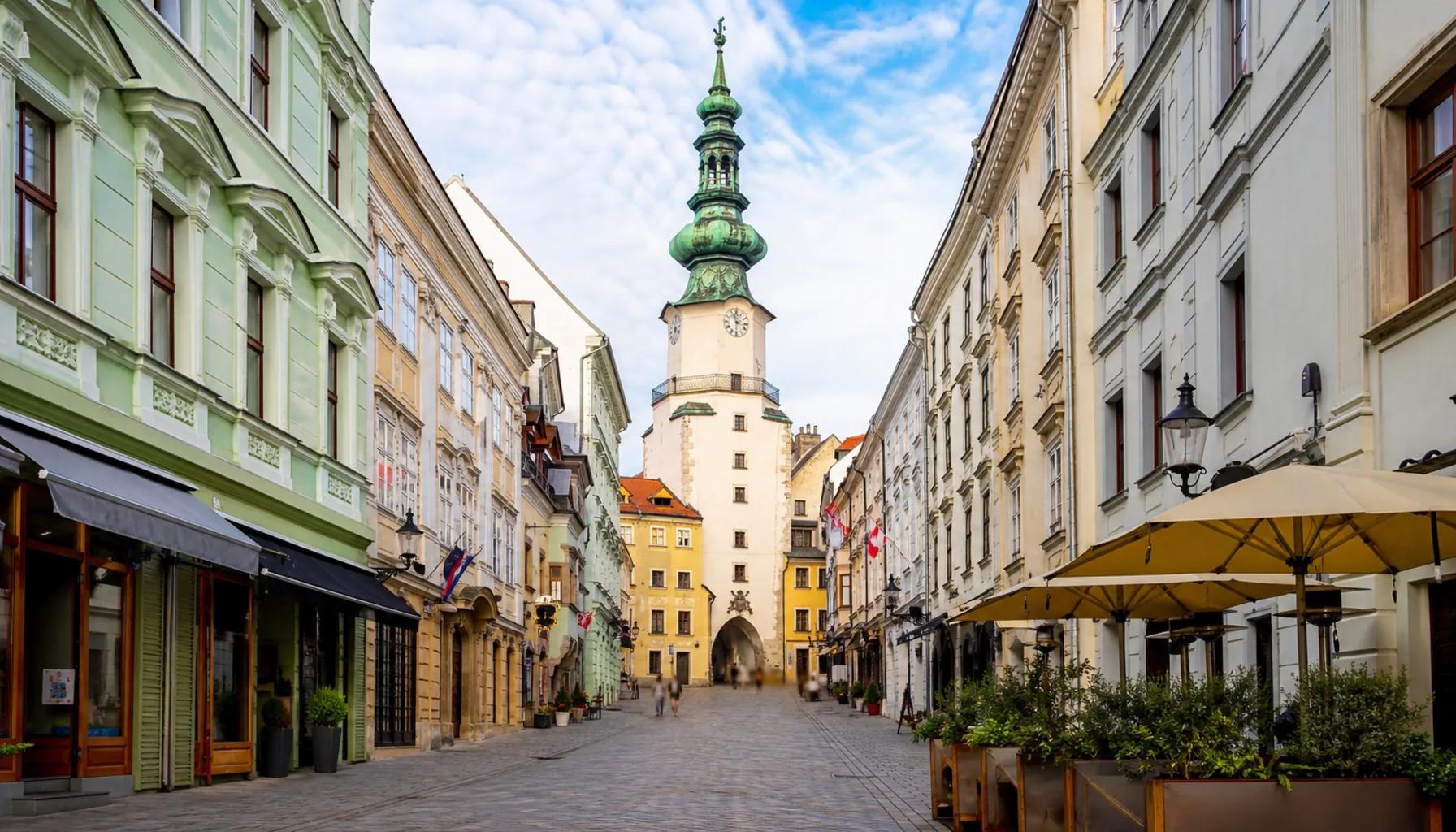
In 1291 King Andrew III granted the settlement under the castle a charter of privileges, and that is the moment it became a town in law rather than just a place where people lived. The burghers could elect their own judge and council, hold markets, and keep their rights over the vineyards; in exchange they owed the king money and soldiers, not labour. Walls, towers and four gates went up around the streets, and one of those gates — Michael's Gate — is still standing; the tower goes back to about 1300, and the copper onion dome and the figure of St Michael on top are Baroque additions of the eighteenth century. The town spoke mostly German, wrote in Latin, and made its money from wine, which went down the Danube by boat. Everything a visitor now walks through in the Old Town is laid out on the street plan drawn in these years.Roku 1291 udelil kráľ Ondrej III. osade pod hradom výsadnú listinu — a to je chvíľa, keď sa z nej právne stalo mesto, nielen miesto, kde ľudia bývali. Mešťania si mohli voliť vlastného richtára a radu, konať trhy a podržať si práva na vinice; kráľovi za to dlhovali peniaze a vojakov, nie robotu. Okolo ulíc vyrástli hradby, veže a štyri brány a jedna z nich — Michalská brána — stojí dodnes; veža pochádza približne z roku 1300, medená cibuľová strecha a socha svätého Michala na nej sú barokovým prídavkom z 18. storočia. Mesto hovorilo prevažne po nemecky, písalo po latinsky a zarábalo na víne, ktoré sa vozilo loďami po Dunaji. Všetko, čím dnes návštevník v Starom Meste prechádza, leží na uliciach vymeraných v týchto rokoch.
In 1405 Sigismund of Luxembourg declared Pressburg a free royal town — meaning it answered to the king alone and to no local lord, the best legal position a town could have. Sigismund was also fighting the Hussite wars across the border in Bohemia and Moravia, and he rebuilt the castle above the town as a huge Gothic fortress; its south-western Crown Tower still stands from that work, and Hussite raiding columns reached this corner of the kingdom repeatedly in the 1430s. Then in 1465 King Matthias Corvinus obtained the pope's permission and founded the Academia Istropolitana here — the first university on the territory of today's Slovakia. It taught law, medicine and the arts to students from several countries, and it did not survive its founder: after Matthias died in 1490 the money stopped and the university closed.Roku 1405 vyhlásil Žigmund Luxemburský Prešporok za slobodné kráľovské mesto — teda za mesto, ktoré sa zodpovedá iba kráľovi a nijakému zemepánovi, čo bolo právne to najlepšie postavenie, aké mesto mohlo mať. Žigmund zároveň viedol husitské vojny za hranicou v Čechách a na Morave a hrad nad mestom prestaval na mohutnú gotickú pevnosť; z tejto stavby dodnes stojí juhozápadná Korunná veža a husitské spanilé jazdy sa v 30. rokoch 15. storočia opakovane dostali až do tohto kúta krajiny. Roku 1465 potom kráľ Matej Korvín získal pápežovo povolenie a založil tu Academiu Istropolitanu — prvú univerzitu na území dnešného Slovenska. Učilo sa na nej právo, medicína a slobodné umenia a chodili sem študenti z viacerých krajín; svojho zakladateľa však neprežila: po Matejovej smrti roku 1490 prestali chodiť peniaze a univerzita zanikla.
On 29 August 1526 the Ottoman army destroyed the Hungarian army at Mohács and the young king Louis II drowned as he fled. Within fifteen years Buda had fallen too and the kingdom broke into three pieces: Ottoman Hungary in the middle, Transylvania in the east, and in the north and west the strip left to the Habsburgs, called Royal Hungary. A kingdom needs a capital that is not in the front line, and in 1536 the diet — the assembly of nobles — chose Pressburg. Overnight a wine town on the edge of things became the seat of the diet, the royal offices and the crown of Hungary; the archbishop of Esztergom, driven out of his own city, moved to Trnava nearby. The Ottomans never took Pressburg: the frontier settled about a hundred kilometres to the east, and this town spent the next century and a half being the safe place behind it.29. augusta 1526 zničilo osmanské vojsko pri Moháči uhorskú armádu a mladý kráľ Ľudovít II. sa na úteku utopil. O pätnásť rokov padla aj Budín a kráľovstvo sa rozpadlo na tri časti: osmanské Uhorsko v strede, Sedmohradsko na východe a na severe a západe pás, ktorý zostal Habsburgovcom — takzvané kráľovské Uhorsko. Kráľovstvo potrebuje hlavné mesto, ktoré nie je v prvej línii, a tak si snem — zhromaždenie šľachty — vybral roku 1536 Prešporok. Z vinohradníckeho mesta na okraji diania sa zo dňa na deň stalo sídlo snemu, krajinských úradov a uhorskej koruny; ostrihomský arcibiskup, vyhnaný z vlastného mesta, sa presťahoval do neďalekej Trnavy. Osmani Prešporok nikdy nedobyli: hranica sa ustálila asi sto kilometrov na východ a mesto bolo nasledujúce poldruha storočia bezpečným zázemím za ňou.
From 1563 the rulers of Hungary were crowned in St Martin's Cathedral, down in the town below the castle; the first was Maximilian, the last was a queen consort crowned in 1830. Eleven rulers and eight royal consorts were crowned here — nineteen people in all, over two hundred and sixty-seven years. The crown jewels were kept up in the castle's Crown Tower, and the coronation itself was a day-long procession through the streets: the new king rode out to a mound built of earth brought from every county of the kingdom and cut the air with a sword towards each of the four points of the compass, swearing to defend the country from every direction. A gilded copy of the crown still sits on top of the cathedral spire. That is why this ordinary-looking Gothic church matters so much: for nearly three centuries, whoever ruled Hungary began by kneeling in it.Od roku 1563 sa uhorskí panovníci korunovali v Dóme svätého Martina, dole v meste pod hradom; prvým bol Maximilián, poslednou kráľovná manželka korunovaná roku 1830. Korunováciu tu absolvovalo jedenásť panovníkov a osem kráľovských manželiek — spolu devätnásť ľudí počas dvestošesťdesiatich siedmich rokov. Korunovačné klenoty sa uchovávali hore na hrade v Korunnej veži a samotná korunovácia bola celodenným sprievodom po meste: nový kráľ vyšiel na vŕšok navŕšený z hliny privezenej zo všetkých stolíc kráľovstva a máchol mečom na štyri svetové strany na znak toho, že bude krajinu brániť zo všetkých smerov. Pozlátená kópia koruny je na veži dómu dodnes. Práve preto je tento na pohľad obyčajný gotický kostol taký dôležitý: kto vládol Uhorsku, začínal takmer tri storočia tým, že si v ňom kľakol.
Because Royal Hungary was governed from Pressburg, it was also punished from Pressburg. In 1673 and 1674 an extraordinary court sitting in this town summoned hundreds of Protestant pastors and teachers and put them on trial; those who would neither convert nor go into exile were condemned, and a group of them was marched across Europe and sold as galley slaves at Naples. It is one of the harshest episodes of the Counter-Reformation in this country and it happened here, in a courtroom, not on a battlefield. Then in July 1683, as the Ottoman army marched on Vienna, the town capitulated to the kuruc rebels of Imre Thököly, and only came back into Habsburg hands after the Turks were beaten outside Vienna that September. The Rákóczi uprising swept the country again between 1703 and 1711, and each of these years taught the same lesson: a city with the kingdom's parliament in it is never a bystander.Keďže sa kráľovské Uhorsko z Prešporka spravovalo, z Prešporka sa aj trestalo. V rokoch 1673 a 1674 predvolal mimoriadny súd zasadajúci v tomto meste stovky evanjelických farárov a učiteľov a súdil ich; tých, ktorí neprestúpili na katolícku vieru ani neodišli do vyhnanstva, odsúdil, a časť z nich hnali cez Európu a predali ako galejníkov do Neapola. Je to jedna z najtvrdších epizód protireformácie u nás a odohrala sa tu, v súdnej sieni, nie na bojisku. V júli 1683, keď osmanské vojsko tiahlo na Viedeň, sa mesto vzdalo kurucom Imricha Tököliho a do habsburských rúk sa vrátilo až po tureckej porážke pod Viedňou v septembri toho roku. V rokoch 1703 – 1711 sa krajinou prehnalo Rákócziho povstanie a každý z týchto rokov učil to isté: mesto, v ktorom sedí krajinský snem, nikdy nie je iba divákom.
Maria Theresa was crowned in St Martin's on 25 June 1741, and a few months later, with her lands invaded from three sides, she stood before the diet in Pressburg and asked the Hungarian nobles for an army; they voted her one, in a scene remembered by the Latin words for 'our life and our blood'. Her reign was this city's golden age. The castle was rebuilt as a proper court residence with terraced gardens, palaces and townhouses went up in the streets below, and her son-in-law Albert of Saxe-Teschen governed from the hill and assembled the collection of prints and drawings that became the Albertina in Vienna. By about 1780 roughly 33,000 people lived here — more than in any other town in the Kingdom of Hungary. Almost everything an outsider now admires in the Old Town was built, rebuilt or refaced in these forty years.Máriu Teréziu korunovali v Dóme svätého Martina 25. júna 1741 a o pár mesiacov neskôr, keď na jej krajiny útočili z troch strán, predstúpila pred snem v Prešporku a požiadala uhorskú šľachtu o vojsko; odhlasovala jej ho a výjav sa zapamätal latinskými slovami o „živote a krvi“. Jej panovanie bolo zlatým vekom mesta. Hrad prestavali na skutočné panovnícke sídlo s terasovitými záhradami, v uliciach pod ním vyrástli paláce a meštianske domy a jej zať Albert Sasko-Tešínsky, ktorý odtiaľto spravoval krajinu, zhromaždil zbierku grafiky a kresieb, z ktorej vznikla viedenská Albertina. Okolo roku 1780 tu žilo približne 33 000 ľudí — viac než v ktoromkoľvek inom meste Uhorského kráľovstva. Takmer všetko, čo dnes cudzinec v Starom Meste obdivuje, v týchto štyridsiatich rokoch postavili, prestavali alebo dostalo novú fasádu.
In 1783 Joseph II moved the central offices of the kingdom from Pressburg to Buda, and the crown jewels left the castle the following year. The city went on holding coronations, but it had stopped being where anything was decided. On 26 December 1805, days after the battle of Austerlitz, Austria signed peace with Napoleon in the Hall of Mirrors of the Primate's Palace here, which is why the treaty is called the Peace of Pressburg. Four years later the French were back in earnest: they shelled the city in 1809 and blew up Devín Castle as they withdrew, which is why Devín is a ruin whose walls end in mid-air. Then in 1811 the castle above the town caught fire and burned out completely, and for well over a century the emblem of the city was a roofless shell.Roku 1783 presunul Jozef II. ústredné krajinské úrady z Prešporka do Budína a o rok neskôr odviezli z hradu aj korunovačné klenoty. Mesto síce korunovalo ďalej, ale prestalo byť miestom, kde sa o čomkoľvek rozhoduje. 26. decembra 1805, pár dní po bitke pri Slavkove, podpísalo Rakúsko mier s Napoleonom v Zrkadlovej sieni tunajšieho Primaciálneho paláca — preto sa mu hovorí Prešporský mier. O štyri roky prišli Francúzi znova a naostro: roku 1809 mesto ostreľovali a pri ústupe vyhodili do vzduchu Devín, a práve preto je z Devína zrúcanina, ktorej múry sa končia vo vzduchu. Roku 1811 potom vyhorel aj hrad nad mestom a znakom Prešporka bola na viac než storočie strecha, ktorá tam nebola.
The Evangelical lyceum in Pressburg — a secondary school with a theological department — had a chair of Czech-Slovak language and literature, and out of it came the generation that invented modern Slovak nationhood. In 1836 Ľudovít Štúr and a group of his students walked out to the ruin of Devín and swore an oath there to serve their nation, each of them adding a Slavic second name. In 1843 Štúr, Jozef Miloslav Hurban and Michal Miloslav Hodža agreed on a written Slovak based on the central Slovak dialects — the language a Slovak schoolchild writes in today. When the authorities pushed Štúr out of his teaching post, his students left the city in protest in 1844 and walked to Levoča; the words of what is now the Slovak national anthem were written by Janko Matúška in connection with that departure. A national language was decided in a school building in this town, by people in their twenties.Evanjelické lýceum v Prešporku — stredná škola s teologickým oddelením — malo katedru reči a literatúry československej a vyšla z nej generácia, ktorá vymyslela moderný slovenský národ. Roku 1836 vyšiel Ľudovít Štúr so skupinou svojich študentov k devínskej zrúcanine a zložili tam sľub, že budú slúžiť národu; každý si pritom pridal slovanské druhé meno. Roku 1843 sa Štúr, Jozef Miloslav Hurban a Michal Miloslav Hodža dohodli na spisovnej slovenčine založenej na stredoslovenských nárečiach — na jazyku, v ktorom dnes píše každý slovenský školák. Keď Štúra vrchnosť pripravila o miesto na lýceu, jeho študenti roku 1844 na protest odišli z mesta pešo do Levoče a v súvislosti s týmto odchodom napísal Janko Matúška slová dnešnej slovenskej hymny. O národnom jazyku sa rozhodlo v budove jednej prešporskej školy a rozhodli o ňom dvadsiatnici.
The diet that met in Pressburg in 1847 turned out to be the last one ever held here. On 11 April 1848, in the Primate's Palace, King Ferdinand V signed the laws it had passed: serfdom was abolished, the labour and dues that peasants owed their landlords were ended, and Hungary was given its own responsible government. For most people living in this country, that April is the single most important date of the nineteenth century — it is when their great-great-grandparents stopped working somebody else's fields for nothing. The revolution and the war that followed were fought out elsewhere, and when it was over the Hungarian parliament moved to Pest and never came back. Pressburg had been the political capital for three hundred and twelve years; from 1848 it was a provincial city with unusually good architecture.Snem, ktorý sa zišiel v Prešporku roku 1847, sa ukázal ako posledný, aký sa tu kedy konal. 11. apríla 1848 podpísal kráľ Ferdinand V. v Primaciálnom paláci zákony, ktoré snem prijal: zrušilo sa poddanstvo, skončili sa roboty a dávky, ktoré sedliaci odvádzali zemepánom, a Uhorsko dostalo vlastnú zodpovednú vládu. Pre väčšinu ľudí v tejto krajine je ten apríl najdôležitejším dátumom celého 19. storočia — vtedy prestali ich prapradedovia zadarmo obrábať cudzie polia. Revolúcia a vojna, ktoré nasledovali, sa odohrali inde, a keď sa skončili, uhorský snem sa presťahoval do Pešti a už sa nevrátil. Prešporok bol politickým hlavným mestom tristodvanásť rokov; od roku 1848 bol provinčným mestom s neobyčajne dobrou architektúrou.
After the compromise of 1867 the city — officially Pozsony — lay in the Hungarian half of Austria-Hungary, and the state pushed the Hungarian language hard in schools and offices. It stayed all the same a place where people changed language in the middle of a street: in the census of 1910 roughly two inhabitants in five gave German, another two in five Hungarian and about one in seven Slovak. Industry arrived quickly — a dynamite factory founded in 1873 by Alfred Nobel's company, a chocolate works, a cable works, and the Apollo oil refinery on the riverbank. The first permanent bridge across the Danube here opened in 1891 and electric trams began running in 1895; the horse-drawn railway out to Svätý Jur, built in 1840, had already been the first railway line anywhere in the Kingdom of Hungary. A quiet coronation town had turned into a working industrial city in about forty years.Po rakúsko-uhorskom vyrovnaní roku 1867 ležalo mesto — úradne Pozsony — v uhorskej polovici monarchie a štát v školách a na úradoch tvrdo presadzoval maďarčinu. Napriek tomu zostalo mestom, kde ľudia menili jazyk uprostred ulice: pri sčítaní roku 1910 uviedli približne dvaja z piatich obyvateľov nemčinu, ďalší dvaja z piatich maďarčinu a asi jeden zo siedmich slovenčinu. Priemysel prišiel rýchlo — dynamitka založená roku 1873 firmou Alfreda Nobela, čokoládovňa, káblovka a na brehu rieky rafinéria Apollo. Prvý stály most cez Dunaj tu otvorili roku 1891 a električky sa rozbehli roku 1895; konská železnica do Svätého Jura, postavená roku 1840, bola vôbec prvou železnicou v celom Uhorskom kráľovstve. Z pokojného korunovačného mesta sa asi za štyridsať rokov stalo robotné priemyselné mesto.
The city sent its men to the fronts of a war fought for a monarchy that did not survive it. The factories turned to war production, food was rationed and grew short, and the wounded filled improvised hospitals. When Austria-Hungary collapsed in the autumn of 1918, nobody here knew which state the city would end up in: the Slovak National Council declared for a common state with the Czechs at Turčiansky Svätý Martin on 30 October 1918, but this was a German- and Hungarian-speaking city that had not asked to join it. For a few weeks there was even a serious proposal to make it a neutral free city named after the American president — Wilson City. Nothing came of it, and the decision was made by soldiers instead.Mesto poslalo svojich mužov na fronty vojny, ktorú viedla monarchia, čo ju neprežila. Továrne prešli na vojnovú výrobu, potraviny sa prideľovali na lístky a ubúdalo ich, provizórne nemocnice sa plnili ranenými. Keď sa na jeseň 1918 Rakúsko-Uhorsko rozpadlo, nikto tu nevedel, v ktorom štáte mesto skončí: Slovenská národná rada sa 30. októbra 1918 v Turčianskom Svätom Martine prihlásila k spoločnému štátu s Čechmi, lenže Prešporok bol nemecky a maďarsky hovoriace mesto, ktoré o to nežiadalo. Pár týždňov sa dokonca vážne uvažovalo o tom, že by z neho bolo neutrálne slobodné mesto pomenované po americkom prezidentovi — Wilsonovo mesto. Nebolo z toho nič a rozhodli namiesto toho vojaci.
Czechoslovak legionaries took control of the city on 1 January 1919. Six weeks later, on 12 February, German- and Hungarian-speaking inhabitants demonstrated against the new order and the legionaries opened fire on the unarmed crowd; people were killed. On 27 March 1919 the city was officially renamed Bratislava. The name was a nineteenth-century scholarly coinage, worked back out of the old chronicle form Brezalauspurc, rather than a word the city's own inhabitants had been using: Pressburg, Pozsony and Prešporok all disappeared into one new name at a stroke. Nothing on the map of this country shows more clearly how completely the year 1918 changed it.Československí legionári prevzali mesto 1. januára 1919. O šesť týždňov, 12. februára, demonštrovali nemecky a maďarsky hovoriaci obyvatelia proti novým pomerom a legionári do neozbrojeného davu vystrelili; boli mŕtvi. 27. marca 1919 mesto úradne premenovali na Bratislavu. To meno bolo vedeckým výmyslom 19. storočia, odvodeným spätne zo starej kronikárskej podoby Brezalauspurc, a nie slovom, ktoré by obyvatelia mesta bežne používali: Pressburg, Pozsony aj Prešporok naraz zmizli v jednom novom názve. Nič na mape tejto krajiny neukazuje tak jasne, ako dôkladne ju rok 1918 zmenil.
Bratislava became the seat of Slovakia's administration, and for the first time in history Slovakia was governed from a Slovak city. Comenius University was founded in 1919 — the first Slovak university since the Academia Istropolitana closed in 1490 — and the Slovak National Theatre began performing in Slovak; ministries, banks, a radio station and publishers followed, and Slovaks and Czechs moved in in large numbers to staff them. Functionalist buildings in concrete and glass went up along the new streets, and by 1930 the city had grown to about 124,000 people. It was still a city of three languages and several religions, argumentative and not always comfortable. But for the first time the language of the offices in it was Slovak.Bratislava sa stala sídlom slovenskej správy a Slovensko sa po prvý raz v dejinách riadilo zo slovenského mesta. Roku 1919 vznikla Univerzita Komenského — prvá slovenská univerzita od zániku Academie Istropolitany roku 1490 — a Slovenské národné divadlo začalo hrať po slovensky; pribudli úrady, banky, rozhlas a vydavateľstvá a prisťahovali sa Slováci a Česi, ktorí ich obsadili. Na nových uliciach vyrástli funkcionalistické stavby z betónu a skla a do roku 1930 mesto narástlo približne na 124 000 obyvateľov. Stále to bolo mesto troch jazykov a viacerých vyznaní, hašterivé a nie vždy pohodlné. Po prvý raz však bola jazykom jeho úradov slovenčina.
The Munich Agreement of September 1938 did not only take the Czech borderlands. On 10 October 1938 Nazi Germany annexed Petržalka and Devín — two parts of Bratislava itself — and renamed Petržalka Engerau. The border of the German Reich now ran down the Danube through the middle of the city, and the bridge ended at a German checkpoint. On 14 March 1939, under direct pressure from Hitler, the Slovak assembly meeting in Bratislava declared an independent Slovak State, and the city became a capital for the second time in its history. That state was a client of Nazi Germany, led by a Catholic priest, Jozef Tiso, with one legal party, the uniformed Hlinka Guard on the streets and German advisers inside its ministries. It is not a period this country remembers with pride, and it should not be told as though it were.Mníchovská dohoda zo septembra 1938 nezobrala len české pohraničie. 10. októbra 1938 nacistické Nemecko zabralo Petržalku a Devín — dve časti samotnej Bratislavy — a Petržalku premenovalo na Engerau. Hranica Nemeckej ríše viedla odvtedy Dunajom stredom mesta a most sa končil nemeckou závorou. 14. marca 1939 vyhlásil slovenský snem zasadajúci v Bratislave pod priamym Hitlerovým nátlakom samostatný Slovenský štát a mesto sa po druhý raz v dejinách stalo hlavným. Tento štát bol klientom nacistického Nemecka, na čele s katolíckym kňazom Jozefom Tisom, s jedinou povolenou stranou, uniformovanou Hlinkovou gardou na uliciach a nemeckými poradcami vo vnútri ministerstiev. Nie je to obdobie, na ktoré je táto krajina hrdá, a netreba ho tak ani rozprávať.
The Slovak National Uprising broke out on 29 August 1944 with its centre at Banská Bystrica, and for two months a large part of central Slovakia was in insurgent hands. Bratislava was not part of it: this was the seat of the government that had called the German army into the country to crush the rising, and the Gestapo worked here until the last weeks of the war. On 16 June 1944 American bombers attacked the Apollo refinery on the riverbank; the raid killed civilians in the streets around it and wrecked part of the Danube bridge. The Red Army entered the city on 4 April 1945 after fighting on its eastern approaches, and the war here was over. On the hill above the centre the Slavín memorial and military cemetery holds the graves of the Soviet soldiers who died in the fighting for Bratislava and the region around it.Slovenské národné povstanie vypuklo 29. augusta 1944 s centrom v Banskej Bystrici a veľká časť stredného Slovenska bola dva mesiace v rukách povstalcov. Bratislava jeho súčasťou nebola: sídlila tu vláda, ktorá do krajiny pozvala nemecké vojsko, aby povstanie potlačilo, a gestapo tu pôsobilo až do posledných týždňov vojny. 16. júna 1944 zaútočili americké bombardéry na rafinériu Apollo na brehu Dunaja; nálet zabil civilistov v okolitých uliciach a poškodil aj časť dunajského mosta. Červená armáda vstúpila do mesta 4. apríla 1945 po bojoch na jeho východných prístupoch a vojna sa tu skončila. Na kopci nad centrom stojí pamätník a vojenský cintorín Slavín s hrobmi sovietskych vojakov, ktorí padli v bojoch o Bratislavu a jej okolie.
The war ended and the three-language city ended with it. The German inhabitants — the Carpathian Germans, who had been the largest single group here within living memory — fled or were expelled between 1945 and 1947 under the post-war decrees. Slovaks from the surrounding countryside came in to take their houses and their jobs. In February 1948 the Communist Party took power across Czechoslovakia: shops, workshops and factories were nationalised, private trade ended, and in April 1950 the monasteries of the whole country were emptied in a single night. Within five years Bratislava had a new population, a new economy and a new politics — a break as sharp as any in its history.Vojna sa skončila a s ňou sa skončilo aj trojjazyčné mesto. Nemeckí obyvatelia — karpatskí Nemci, ktorí tu ešte za pamäti vtedy žijúcich ľudí tvorili najväčšiu skupinu — v rokoch 1945 – 1947 ušli alebo ich na základe povojnových dekrétov vysťahovali. Do ich domov a na ich miesta prišli Slováci z okolitého vidieka. Vo februári 1948 prevzala v Československu moc komunistická strana: obchody, dielne a továrne znárodnili, súkromné podnikanie sa skončilo a v apríli 1950 vyprázdnili počas jedinej noci kláštory v celej krajine. Bratislava mala za päť rokov nové obyvateľstvo, nové hospodárstvo aj novú politiku — taký ostrý zlom, aký v jej dejinách nemá obdobu.
The new bridge over the Danube — Most SNP, opened in 1972, with the round restaurant on its pylon that everyone calls the UFO — needed a motorway ramp driven straight through the old town under the castle. On the far bank the village of Petržalka disappeared under one of the largest housing estates in Central Europe: prefabricated panelák blocks built from 1977 onwards, where over 100,000 people live today. In the same decades the burnt castle was finally rebuilt, work beginning in the 1950s and the restored building reopening in the 1960s. Communist Bratislava built more than any century before it — and demolished more as well.Nový most cez Dunaj — Most SNP, otvorený roku 1972, s okrúhlou reštauráciou na pylóne, ktorej všetci hovoria UFO — potreboval nájazd vedený rovno cez staré mesto pod hradom. Na druhom brehu zmizla dedina Petržalka pod jedným z najväčších sídlisk v strednej Európe: paneláky tam stavali od roku 1977 a dnes v nich žije vyše 100 000 ľudí. V tých istých desaťročiach napokon obnovili aj vyhorený hrad — práce sa začali v 50. rokoch a obnovená stavba sa otvorila v 60. rokoch. Komunistická Bratislava postavila viac než ktorékoľvek storočie pred ňou — a viac aj zbúrala.
The reforms of the Prague Spring loosened censorship and raised hopes all over the country. On 3 August 1968 the leaders of the Warsaw Pact parties met in Bratislava and signed a declaration that was meant to settle the quarrel between them. Eighteen days later, on 21 August, their armies invaded Czechoslovakia. In Bratislava soldiers fired on crowds at Šafárikovo námestie and three people were fatally wounded — Danka Košanová, Stanislav Sivák and Ján Holík; twenty-nine people were killed in Slovakia in all. One reform did survive the invasion: on 30 October 1968 the law turning Czechoslovakia into a federation was signed at Bratislava Castle, and from 1 January 1969 the city was the capital of the Slovak Socialist Republic — a capital again, inside a country that had just been occupied.Reformy Pražskej jari uvoľnili cenzúru a vzbudili nádeje v celej krajine. 3. augusta 1968 sa v Bratislave stretli vedúci predstavitelia strán Varšavskej zmluvy a podpísali vyhlásenie, ktoré malo spor medzi nimi urovnať. O osemnásť dní neskôr, 21. augusta, ich armády vpadli do Československa. V Bratislave vojaci strieľali do davu na Šafárikovom námestí a smrteľne zranili troch ľudí — Danku Košanovú, Stanislava Siváka a Jána Holíka; na Slovensku zahynulo spolu dvadsaťdeväť ľudí. Jedna reforma inváziu predsa len prežila: 30. októbra 1968 podpísali na Bratislavskom hrade zákon o federácii a od 1. januára 1969 bolo mesto hlavným mestom Slovenskej socialistickej republiky — opäť hlavným mestom, len v krajine, ktorú práve obsadili.
On the evening of 25 March 1988 several thousand people gathered on Hviezdoslavovo námestie holding lit candles. They were asking for bishops to be appointed to the empty Slovak dioceses, for religious freedom and for civil rights, and they stood in silence. The police broke the gathering up with water cannon, dogs and batons, drove cars into the crowd and arrested people in the surrounding streets. The candle demonstration was the largest public protest against the regime in Czechoslovakia since the end of the 1960s, and its importance is exactly where it happened: in Bratislava, eighteen months before Prague, by people who had decided that standing still in the dark holding a candle was worth being beaten for.Večer 25. marca 1988 sa na Hviezdoslavovom námestí zišlo niekoľko tisíc ľudí so zapálenými sviečkami. Žiadali, aby boli obsadené prázdne slovenské biskupstvá, žiadali náboženskú slobodu a občianske práva — a stáli mlčky. Polícia zhromaždenie rozohnala vodnými delami, psami a obuškami, vnikla do davu autami a v okolitých uliciach zatýkala. Sviečková manifestácia bola najväčším verejným protestom proti režimu v Československu od konca 60. rokov a jej význam je práve v tom, kde sa odohrala: v Bratislave, rok a pol pred Prahou, a urobili ju ľudia, ktorí sa rozhodli, že stáť potme so sviečkou v ruke stojí za to, aj keď za to dostanú obuškom.
On Thursday 16 November 1989 a few hundred Bratislava students marched through the city — a day before the Prague march that is usually said to have started everything — and stopped at Šafárikovo námestie to lay flowers where Danka Košanová had been shot in 1968. On 19 November, in the Umelecká beseda building, Slovak dissidents, actors and scientists founded Verejnosť proti násiliu, Public Against Violence, the movement that led the revolution in Slovakia. From 22 November demonstrations filled Námestie SNP every single evening; on 24 November about 100,000 people stood in it. The two-hour general strike on 27 November settled the argument, and the Communist Party gave up its monopoly on power without a shot being fired — which is why it is called the Velvet Revolution.Vo štvrtok 16. novembra 1989 prešlo mestom niekoľko sto bratislavských študentov — deň pred pražským pochodom, o ktorom sa zvyčajne hovorí, že všetko odštartoval — a zastavili sa na Šafárikovom námestí, aby položili kvety tam, kde roku 1968 zastrelili Danku Košanovú. 19. novembra založili v priestoroch Umeleckej besedy slovenskí disidenti, herci a vedci hnutie Verejnosť proti násiliu, ktoré viedlo revolúciu na Slovensku. Od 22. novembra sa Námestie SNP zapĺňalo demonštráciami každý večer; 24. novembra na ňom stálo približne 100 000 ľudí. Dvojhodinový generálny štrajk 27. novembra spor rozhodol a komunistická strana sa vzdala monopolu na moc bez jediného výstrelu — preto sa tomu hovorí Nežná revolúcia.
On 1 January 1993 Czechoslovakia split in two and Bratislava became the capital of an independent Slovak Republic. The city had been a capital before — of Royal Hungary from 1536, of the wartime Slovak State, of the Slovak Socialist Republic inside the federation — but never before of a sovereign and democratic Slovakia. The country joined NATO and the European Union in 2004, entered the Schengen area in December 2007, which is why the border below Devín, where people were once shot trying to cross the Morava, is now an open cycle path, and adopted the euro in 2009. The riverbank that once held the Apollo refinery and a derelict port is now Eurovea, glass offices and a promenade, and the tallest buildings in Slovakia stand within sight of a fifteenth-century tower. Stand on the castle terrace and count: from here you can see Austria and Hungary, which is a view no other capital city in the world can offer.1. januára 1993 sa Československo rozdelilo na dva štáty a Bratislava sa stala hlavným mestom samostatnej Slovenskej republiky. Hlavným mestom už predtým bola — kráľovského Uhorska od roku 1536, vojnového Slovenského štátu aj Slovenskej socialistickej republiky vo federácii — nikdy však hlavným mestom zvrchovaného a demokratického Slovenska. Krajina vstúpila roku 2004 do NATO a Európskej únie, v decembri 2007 do schengenského priestoru — a práve preto je hranica pod Devínom, kde kedysi strieľali do ľudí pokúšajúcich sa preplávať Moravu, dnes otvorenou cyklotrasou — a roku 2009 prijala euro. Na brehu, kde stála rafinéria Apollo a chátral prístav, je dnes Eurovea, sklené kancelárie a promenáda a najvyššie budovy Slovenska stoja na dohľad od veže z 15. storočia. Postavte sa na hradnú terasu a rátajte: vidíte odtiaľto Rakúsko aj Maďarsko, a taký výhľad neponúka žiadne iné hlavné mesto na svete.
Sources consulted while researching this page. Follow them to read further — and to check us.Zdroje, z ktorých sme pri príprave tejto stránky vychádzali. Kliknite a čítajte ďalej — aj si nás overte.
Sixteen videos — history, Bratislava.Šestnásť videí — dejiny, Bratislava.