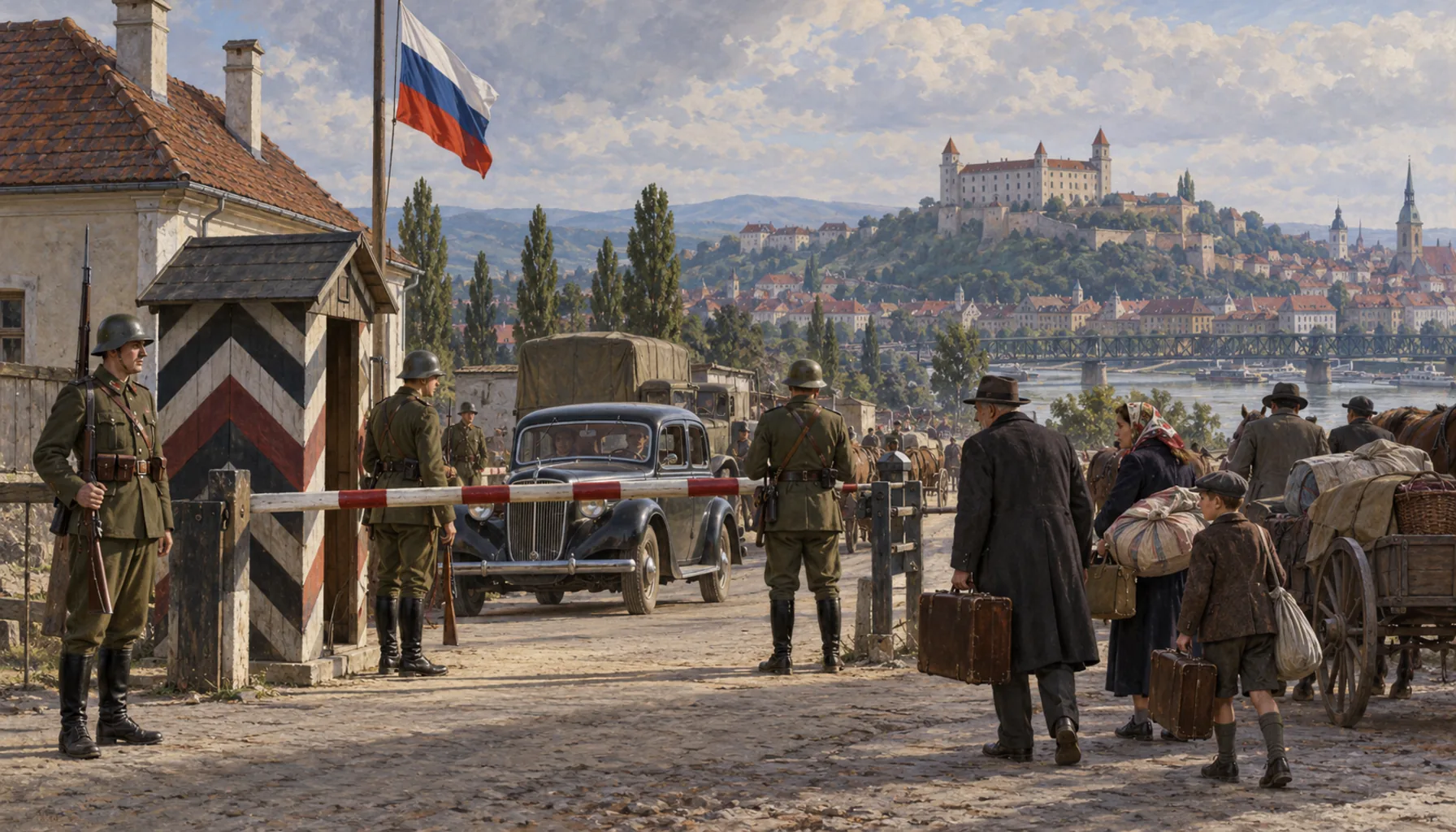
The Munich Agreement of September 1938 did not only take the Czech borderlands. On 10 October 1938 Nazi Germany annexed Petržalka and Devín — two parts of Bratislava itself — and renamed Petržalka Engerau. The border of the German Reich now ran down the Danube through the middle of the city, and the bridge ended at a German checkpoint. On 14 March 1939, under direct pressure from Hitler, the Slovak assembly meeting in Bratislava declared an independent Slovak State, and the city became a capital for the second time in its history. That state was a client of Nazi Germany, led by a Catholic priest, Jozef Tiso, with one legal party, the uniformed Hlinka Guard on the streets and German advisers inside its ministries. It is not a period this country remembers with pride, and it should not be told as though it were.Mníchovská dohoda zo septembra 1938 nezobrala len české pohraničie. 10. októbra 1938 nacistické Nemecko zabralo Petržalku a Devín — dve časti samotnej Bratislavy — a Petržalku premenovalo na Engerau. Hranica Nemeckej ríše viedla odvtedy Dunajom stredom mesta a most sa končil nemeckou závorou. 14. marca 1939 vyhlásil slovenský snem zasadajúci v Bratislave pod priamym Hitlerovým nátlakom samostatný Slovenský štát a mesto sa po druhý raz v dejinách stalo hlavným. Tento štát bol klientom nacistického Nemecka, na čele s katolíckym kňazom Jozefom Tisom, s jedinou povolenou stranou, uniformovanou Hlinkovou gardou na uliciach a nemeckými poradcami vo vnútri ministerstiev. Nie je to obdobie, na ktoré je táto krajina hrdá, a netreba ho tak ani rozprávať.