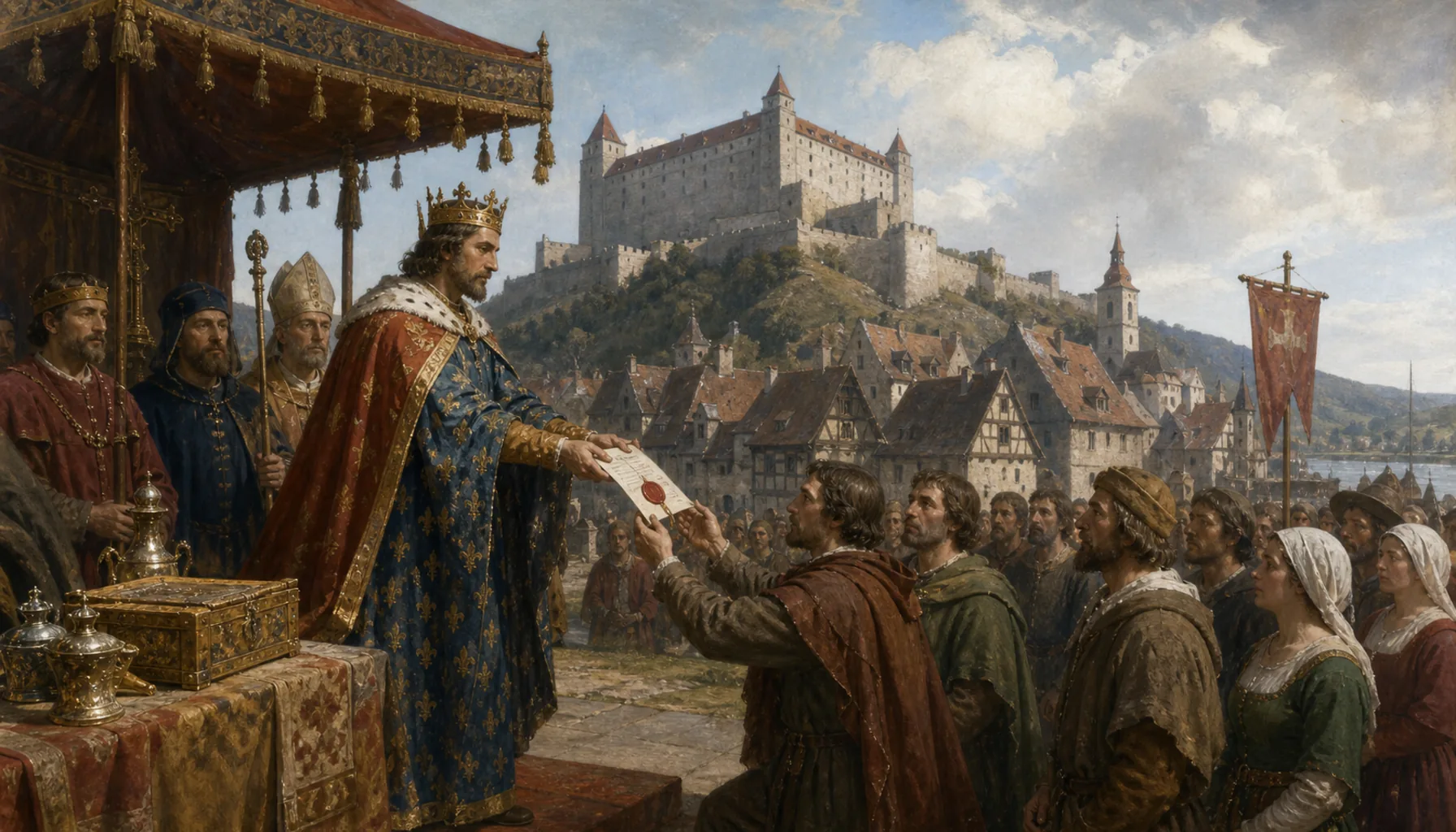
In 1291 King Andrew III granted the settlement under the castle a charter of privileges, and that is the moment it became a town in law rather than just a place where people lived. The burghers could elect their own judge and council, hold markets, and keep their rights over the vineyards; in exchange they owed the king money and soldiers, not labour. Walls, towers and four gates went up around the streets, and one of those gates — Michael's Gate — is still standing; the tower goes back to about 1300, and the copper onion dome and the figure of St Michael on top are Baroque additions of the eighteenth century. The town spoke mostly German, wrote in Latin, and made its money from wine, which went down the Danube by boat. Everything a visitor now walks through in the Old Town is laid out on the street plan drawn in these years.Roku 1291 udelil kráľ Ondrej III. osade pod hradom výsadnú listinu — a to je chvíľa, keď sa z nej právne stalo mesto, nielen miesto, kde ľudia bývali. Mešťania si mohli voliť vlastného richtára a radu, konať trhy a podržať si práva na vinice; kráľovi za to dlhovali peniaze a vojakov, nie robotu. Okolo ulíc vyrástli hradby, veže a štyri brány a jedna z nich — Michalská brána — stojí dodnes; veža pochádza približne z roku 1300, medená cibuľová strecha a socha svätého Michala na nej sú barokovým prídavkom z 18. storočia. Mesto hovorilo prevažne po nemecky, písalo po latinsky a zarábalo na víne, ktoré sa vozilo loďami po Dunaji. Všetko, čím dnes návštevník v Starom Meste prechádza, leží na uliciach vymeraných v týchto rokoch.