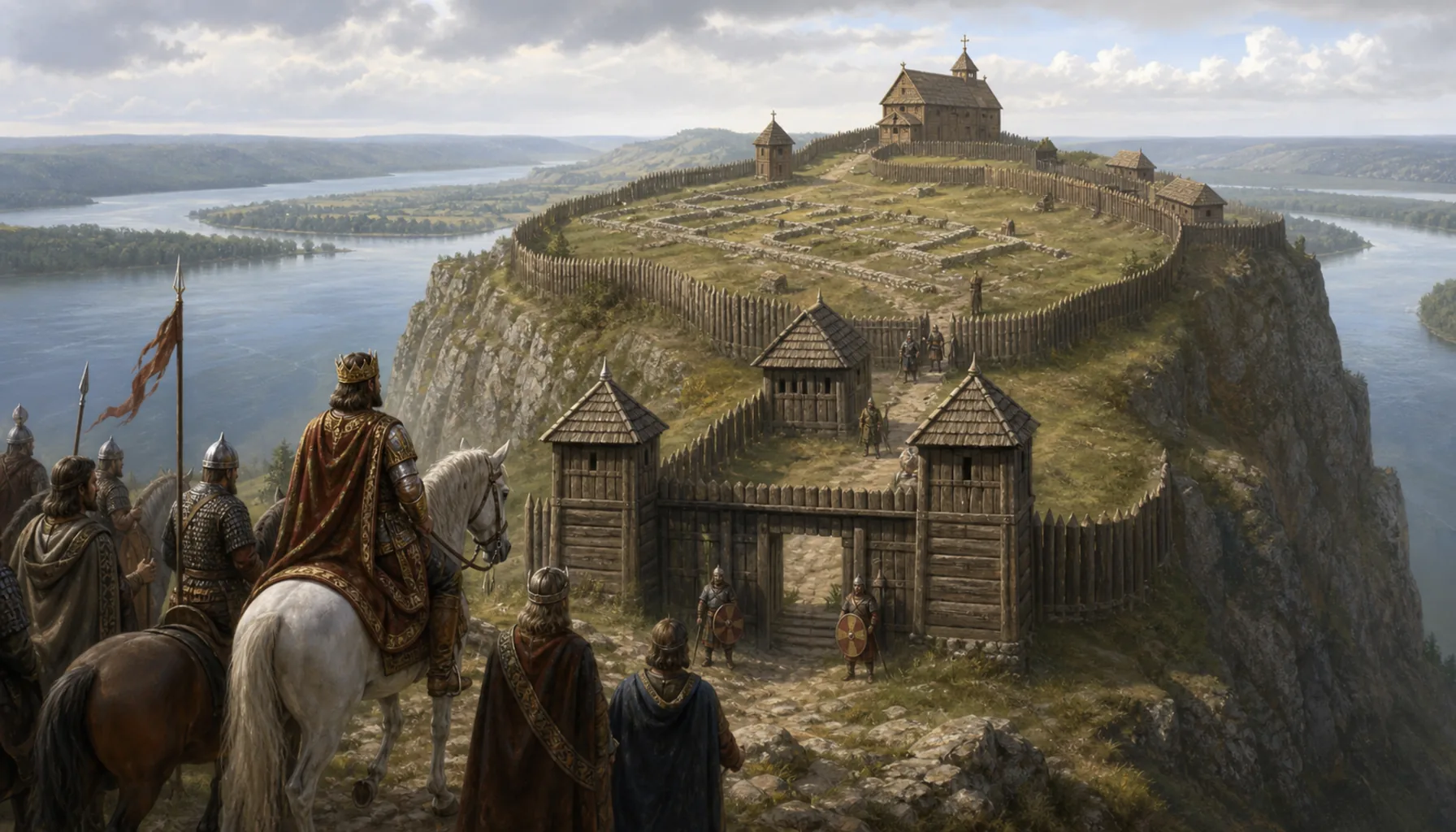
In the ninth century a fortified centre of Great Moravia stood on this rock — ramparts of earth and timber, a lord's residence, and a church whose stone foundations archaeologists uncovered in the upper castle and left lying visible in the grass. In August 864 the East Frankish king Louis the German crossed the Danube with a large army and besieged Prince Rastislav in a stronghold the annals call Dowina, explaining the name as meaning “maiden”; Rastislav had to submit and hand over hostages. Most Slovak historians identify Dowina with this crag, but that identification is a tradition rather than a proven fact, and specialists still argue about it. The church foundations are certain either way, and they are among the oldest Christian building found anywhere in Slovakia.V 9. storočí stálo na tejto skale opevnené centrum Veľkej Moravy — valy z dreva a hliny, sídlo veľmoža a kostol, ktorého kamenné základy archeológovia odkryli v hornom hrade a nechali ich viditeľné v tráve. V auguste 864 prekročil východofranský kráľ Ľudovít Nemec s veľkým vojskom Dunaj a obliehal knieža Rastislava v hradisku, ktoré letopisy nazývajú Dowina a meno vysvetľujú ako „dievčina“; Rastislav sa musel podvoliť a vydať rukojemníkov. Väčšina slovenských historikov stotožňuje Dowinu práve s týmto bralom, no ide skôr o tradíciu než o dokázanú vec a odborníci sa o tom sporia dodnes. Základy kostola sú však isté a patria k najstarším kresťanským stavbám, aké sa na Slovensku našli.