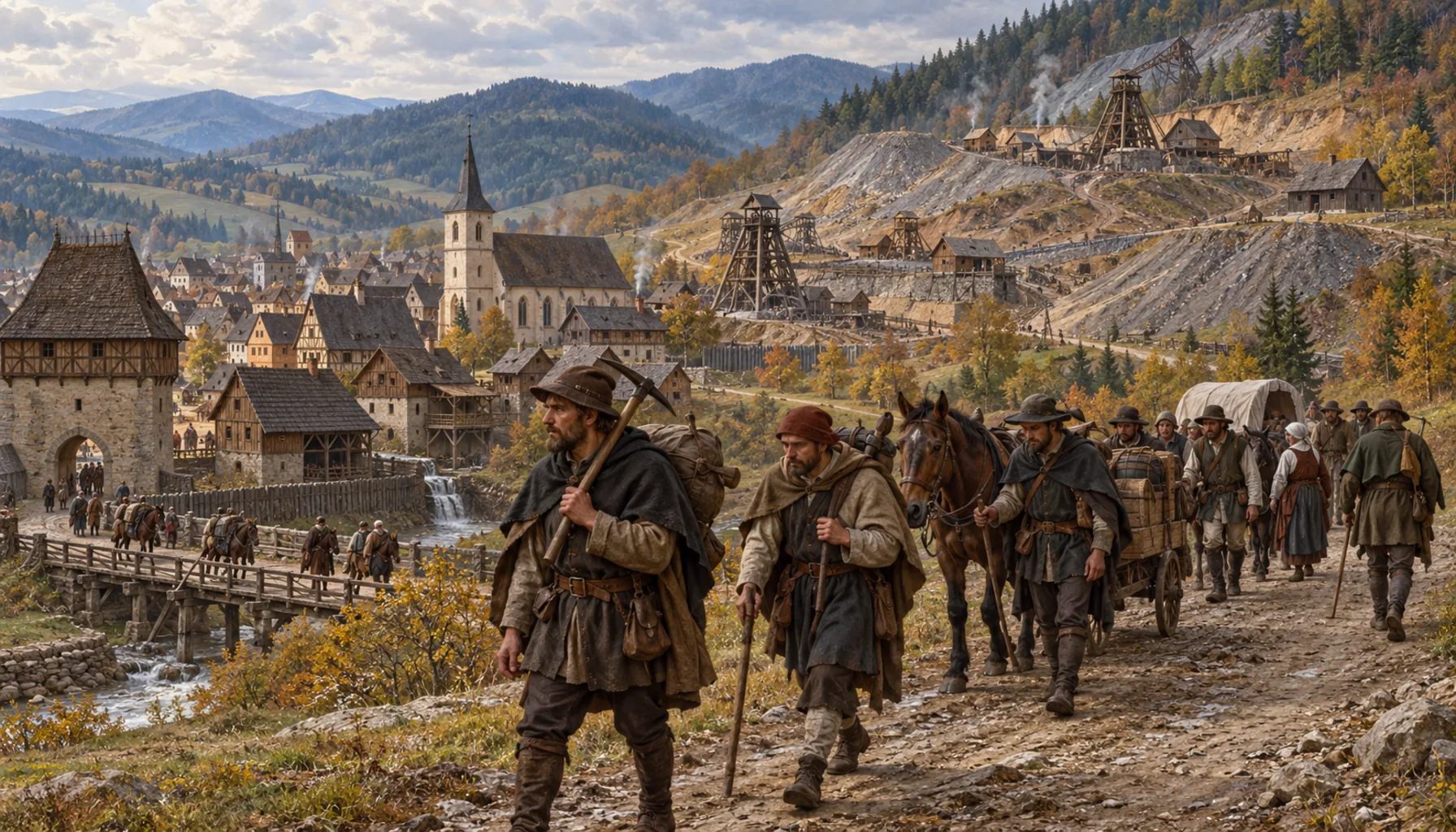
By the fifteenth century the easy ore had been worked out and Nová Baňa was becoming a less attractive place for German miners, who left for better ground elsewhere. This is the pattern of every mining town: the boom lasts two or three generations, and then the shafts must go deeper for less metal. A town founded by specialists filled up instead with people who farmed the warm slopes and cut the woods as well as mining. It never regained the position it had held in the 1300s.V pätnástom storočí bola ľahká ruda vyčerpaná a Nová Baňa prestávala byť pre nemeckých baníkov zaujímavá; odchádzali za lepšou inam. Je to osud každého banského mesta: rozmach vydrží dve-tri generácie a potom treba ísť hlbšie za menším výnosom. Mesto, ktoré založili odborníci, sa napĺňalo ľuďmi, čo popri baniach obrábali teplé svahy a rúbali les. Postavenie zo štrnásteho storočia už nikdy nezískalo späť.