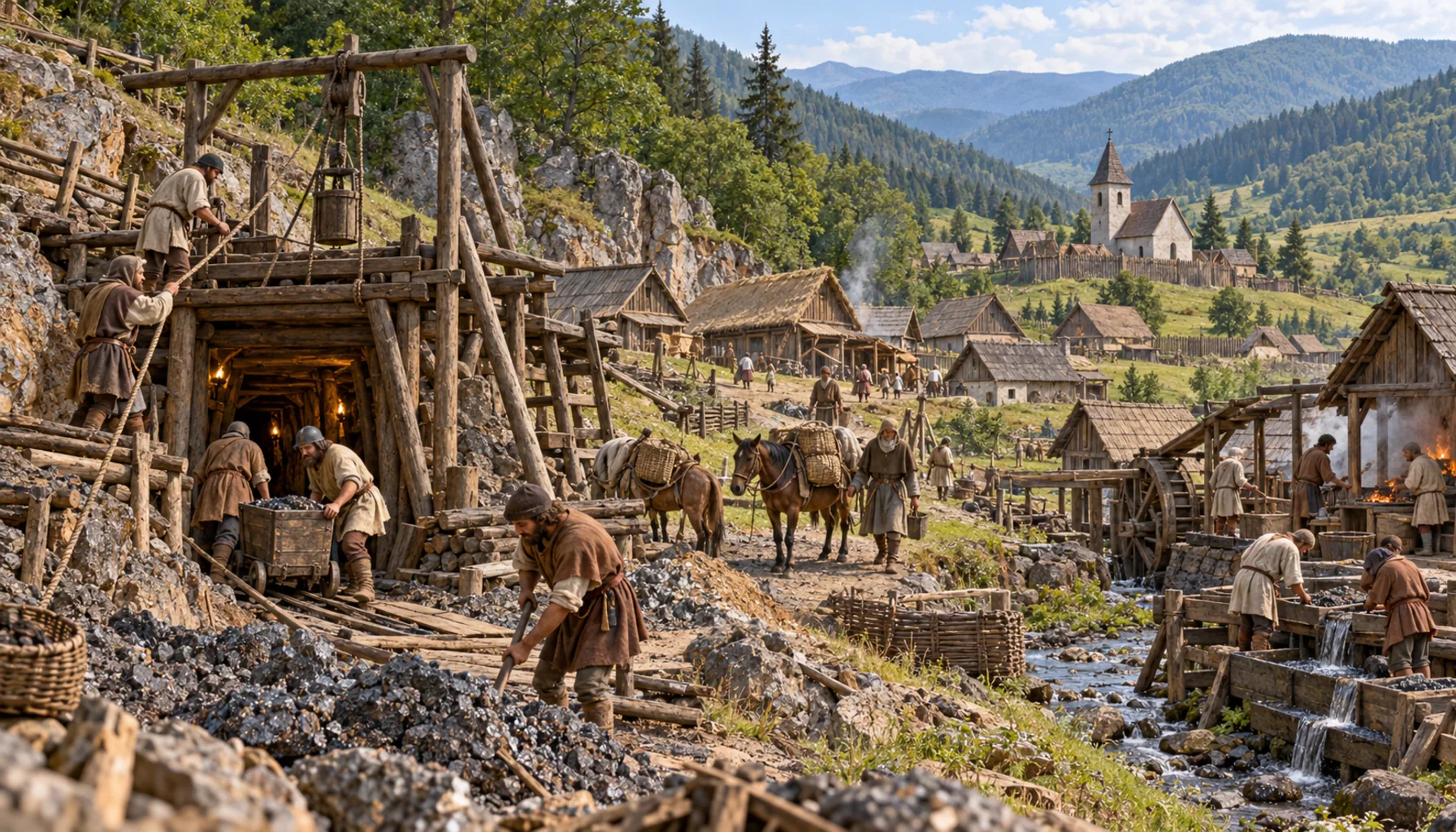
The place first appears in writing in 1337, under the clumsy Latin name 'nova montanya Schewnyche' — the new mine at Schewnyche. Every later name says the same thing: Nová Baňa in Slovak and Újbánya in Hungarian both mean 'new mine', while the German Königsberg, king's hill, says who owned it. Remember that a first mention is a fact about a document, not about when people arrived — the diggings were older than the parchment. Gold had been found, and miners were already moving in to work it.V písomnostiach sa toto miesto objavuje prvý raz v roku 1337 pod kostrbatým latinským menom „nova montanya Schewnyche“ — nová baňa pri Schewnyche. Všetky neskoršie mená hovoria to isté: slovenská Nová Baňa aj maďarská Újbánya znamenajú novú baňu, kým nemecký Königsberg, kráľova hora, hovorí, komu patrila. Prvá zmienka je pritom údaj o listine, nie o tom, kedy sem prišli ľudia — kutiská boli staršie ako pergamen. Zlato sa našlo a baníci sa sem už sťahovali, aby ho ťažili.