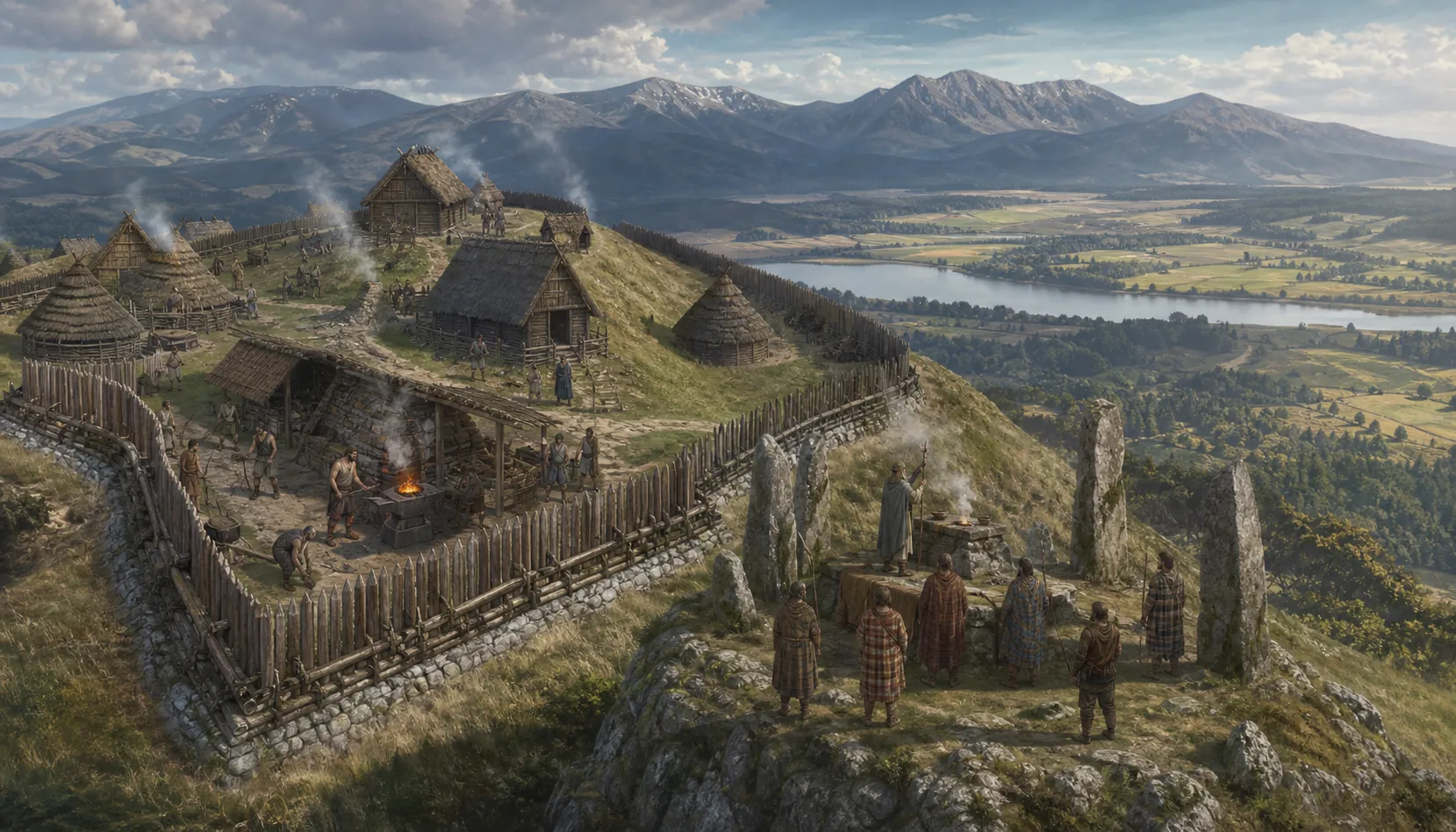
About ten kilometres west of the town, on the hill of Havránok, stood a fortified settlement of the Cotini — a Celtic people who worked iron in these mountains — with a sanctuary of the 1st century BC. Archaeologists uncovered a sacrificial shaft with an altar and the offerings dropped into it, stone paths with a colonnade, and Celtic copies of Greek and Roman coins. Before the Celts the same ground had been settled by people of the Púchov culture, and long after them, between the 12th and the 15th century, a Slavic village stood here with a small wooden manorial fort behind a palisade and a ditch. So the Liptov basin was busy for two thousand years before the first document mentions any town in it. The site has been a national cultural monument since 1967 and is now an open-air museum looking down on the Liptovská Mara reservoir.Asi desať kilometrov západne od mesta, na vrchu Havránok, stálo opevnené sídlisko Kotínov — keltského kmeňa, ktorý v týchto horách spracúval železo — so svätyňou z 1. storočia pred Kr. Archeológovia tu odkryli obetnú šachtu s oltárom a milodarmi, kamenné cesty so stĺporadím aj keltské napodobeniny antických mincí. Pred Keltmi sa na tom istom mieste usadili ľudia púchovskej kultúry a dávno po nich, medzi 12. a 15. storočím, tu stála slovanská osada s malým dreveným zemepanským hrádkom za palisádou a priekopou. Liptovská kotlina teda žila dve tisícročia predtým, než sa v nej prvá listina zmienila o akomkoľvek meste. Lokalita je od roku 1967 národnou kultúrnou pamiatkou a dnes je z nej múzeum v prírode s výhľadom na Liptovskú Maru.