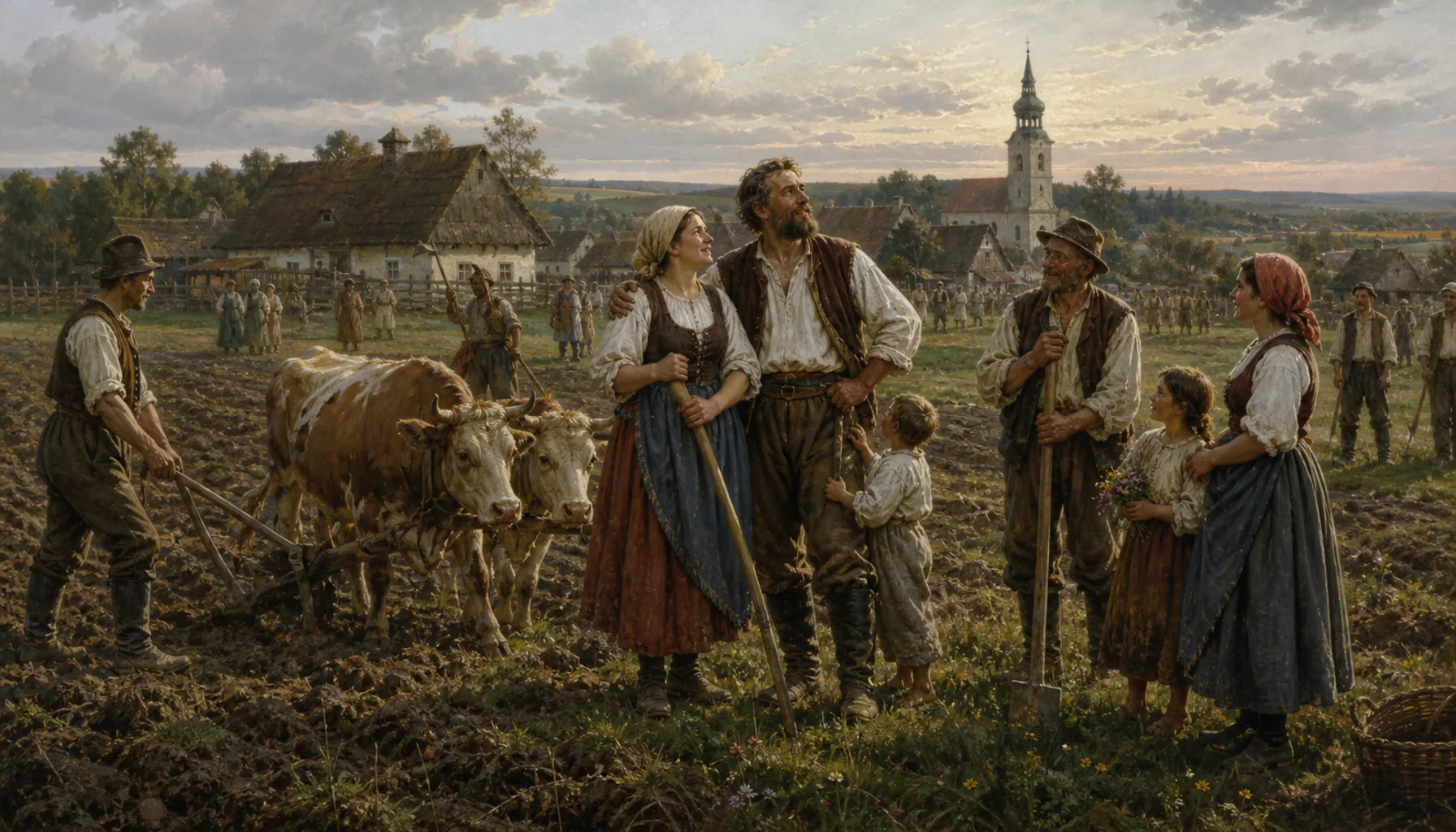
The revolution of 1848 abolished serfdom across the Kingdom of Hungary: the peasants of the surrounding villages stopped owing labour days to a lord and became owners of the land they worked. For a free royal town the same decades cut the other way. The privileges Skalica had held since 1372 — its own court, its own council, its direct line to the king — were steadily replaced by a uniform state administration, and by the 1870s being a free royal town meant little more than a line in the town's history. What replaced the old identity was a national one, and on this border, where Slovak, Czech, German and the Hungarian of officialdom were all heard in one market, the question of which language a school or a newspaper used became the argument of the next seventy years.Revolúcia roku 1848 zrušila v Uhorsku poddanstvo: sedliaci z okolitých dedín prestali byť povinní robotou zemepánovi a stali sa vlastníkmi pôdy, ktorú obrábali. Slobodnému kráľovskému mestu tie isté desaťročia ubrali. Výsady, ktoré Skalica držala od roku 1372 — vlastný súd, vlastná rada, priame spojenie s kráľom — postupne nahradila jednotná štátna správa a v sedemdesiatych rokoch 19. storočia už „slobodné kráľovské mesto“ znamenalo sotva viac než riadok v dejinách mesta. Starú identitu vystriedala národná, a na tejto hranici, kde na jednom trhu znela slovenčina, čeština, nemčina aj úradná maďarčina, sa otázka, akou rečou hovorí škola a noviny, stala sporom nasledujúcich sedemdesiatich rokov.