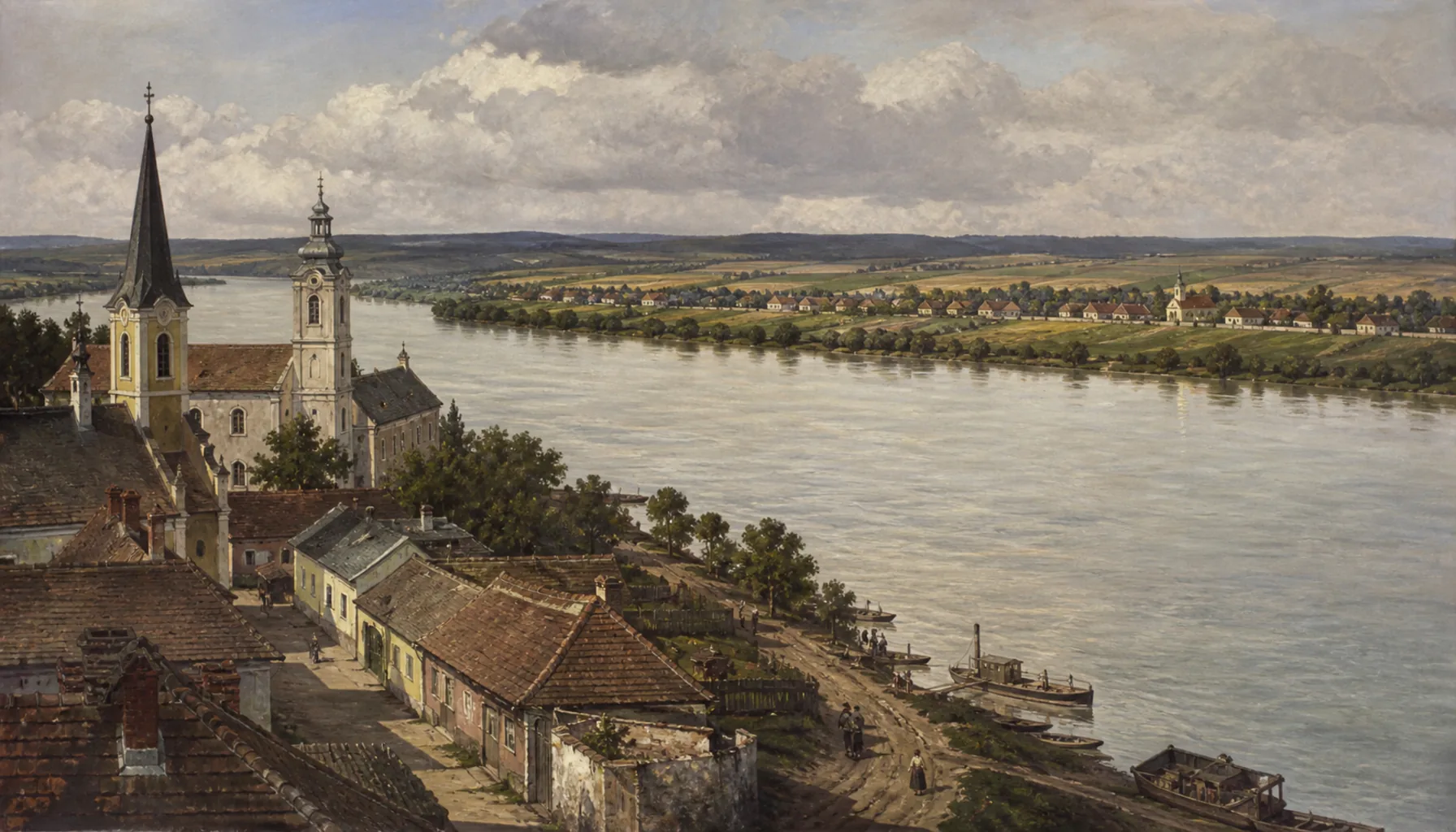
The Treaty of Trianon of 4 June 1920 drew the new border down the Danube, so Šamorín stayed with Czechoslovakia while the villages visible across the water belonged to Hungary. The town was suddenly a frontier town in a state whose official language it did not speak, twenty kilometres from a capital — Bratislava — that was itself being rapidly turned from a German- and Hungarian-speaking city into a Slovak one. Czechoslovak land reform broke up the big estates and brought Slovak and Czech colonists onto the island; Hungarian-language schools carried on, but the political temperature never dropped. The republic built and modernised more here in twenty years than the monarchy had in fifty, and it still failed to convince most people in this town that it was their state.Trianonská zmluva zo 4. júna 1920 viedla novú hranicu stredom Dunaja, takže Šamorín zostal Československu, kým dediny viditeľné cez vodu pripadli Maďarsku. Z mesta sa zrazu stalo pohraničné mesto v štáte, ktorého úradným jazykom nehovorilo, dvadsať kilometrov od hlavného mesta — Bratislavy —, ktoré sa samo rýchlo menilo z nemecko-maďarského mesta na slovenské. Pozemková reforma rozbila veľké panstvá a priviedla na ostrov slovenských a českých kolonistov; maďarské školy fungovali ďalej, no politické napätie neklesalo. Republika tu za dvadsať rokov postavila a zmodernizovala viac než monarchia za päťdesiat — a väčšinu ľudí v tomto meste aj tak nepresvedčila, že je to ich štát.