The Žitný ostrov town nearest Bratislava: a medieval church with fourteenth-century wall paintings, and one of Europe's larger sports campuses built on the fields at its edge.Mesto Žitného ostrova najbližšie k Bratislave: stredoveký kostol s nástennými maľbami zo 14. storočia a jeden z väčších európskych športových areálov postavený na poliach za mestom.
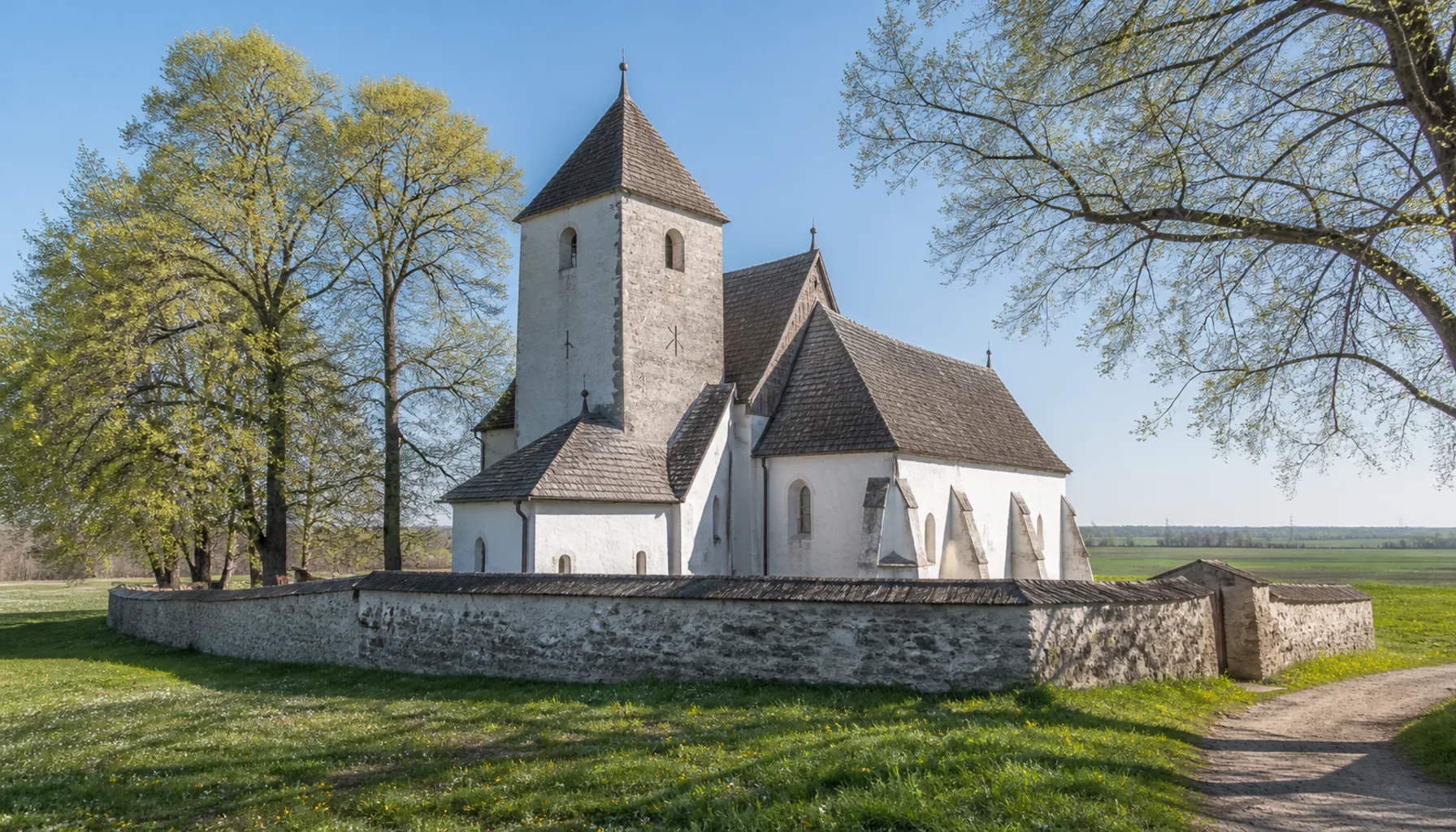
The medieval Reformed church at Šamorín in its walled churchyardStredoveký reformovaný kostol v Šamoríne v ohradenom areáli
Where it standsKde leží
Šamorín stands at the upper end of the Žitný ostrov, roughly twenty kilometres south-east of Bratislava and close to the Danube, where the river has been dammed into the Hrušov reservoir of the Gabčíkovo waterworks. Behind the dyke the land is flat farmland and gravel; in front of it there is a great deal of water.Šamorín leží na hornom konci Žitného ostrova, zhruba dvadsať kilometrov juhovýchodne od Bratislavy a blízko Dunaja, ktorý je tu vzdutý do zdrže Hrušov vodného diela Gabčíkovo. Za hrádzou je rovina polí a štrku, pred ňou veľa vody.
Like the rest of the island the town is bilingual, with a large Hungarian-speaking population; its Hungarian name is Somorja. Its closeness to Bratislava has changed it faster than any other town on the island.Ako celý ostrov je aj mesto dvojjazyčné, s početným maďarsky hovoriacim obyvateľstvom; maďarsky sa volá Somorja. Blízkosť Bratislavy ho zmenila rýchlejšie než ktorékoľvek iné mesto na ostrove.
The storyHistória
Šamorín was a privileged market town in the Middle Ages, prosperous enough on the Danube trade to build in stone early, and its street plan still shows the long market space at its centre.V stredoveku bol Šamorín výsadným trhovým mestom, dosť zámožným z dunajského obchodu na to, aby staval z kameňa skoro, a jeho pôdorys dodnes ukazuje pretiahnuté trhovisko v strede.
The former parish church, Romanesque in origin and Gothic in most of what a visitor sees, passed to the Reformed congregation at the Reformation and has been theirs since. Its medieval wall paintings, uncovered and conserved in the twentieth century, are among the more important cycles of their kind in Slovakia.Bývalý farský kostol, románsky pôvodom a gotický vo väčšine toho, čo návštevník uvidí, prešiel počas reformácie k reformovanej cirkvi a patrí jej dodnes. Jeho stredoveké nástenné maľby, odkryté a zakonzervované v 20. storočí, patria k významnejším cyklom svojho druhu na Slovensku.
What to seeČo vidieť
The Reformed church and its frescoes are the reason to stop. The interior is plain in the Reformed manner, which makes the medieval painting on the walls all the more startling when you come in from the light.Reformovaný kostol a jeho fresky sú dôvodom, prečo tu zastaviť. Interiér je podľa reformovaného zvyku strohý, o to prekvapivejšie preto pôsobia stredoveké maľby na stenách, keď človek vojde zo svetla dnu.
The long market street with its low burgher houses fills the rest of a morning; from the Danube dyke on the edge of town there are views over the reservoir and back towards the Little Carpathians.Dlhá trhová ulica s nízkymi meštianskymi domami zaplní zvyšok dopoludnia; z dunajskej hrádze na okraji mesta je výhľad na zdrž a späť k Malým Karpatom.
The x-bionic sphere on the edge of town is a different order of thing: a large privately built sports campus with an Olympic-size pool, athletics and tennis facilities, football pitches, an equestrian centre and hotels, used for training camps by clubs and national teams from across Europe. It is not a monument, but it is the main reason people who are not from the island come to Šamorín.Areál x-bionic sphere na okraji mesta je celkom iná kategória: veľký súkromne postavený športový kampus s bazénom olympijských rozmerov, atletickými a tenisovými zariadeniami, futbalovými ihriskami, jazdeckým centrom a hotelmi, kam chodia na sústredenia kluby a reprezentácie z celej Európy. Pamiatka to nie je, ale je to hlavný dôvod, prečo do Šamorína prichádzajú ľudia, ktorí nie sú z ostrova.
Work and industryPráca a priemysel
Šamorín is inside Bratislava's commuter belt and a large share of its working population travels to the capital. That has brought new housing to the edges of the town and put steady pressure on its old centre.Šamorín patrí do bratislavského dochádzkového pásma a veľká časť jeho pracujúcich cestuje do hlavného mesta. Prinieslo to novú výstavbu na okraje mesta a trvalý tlak na jeho staré jadro.
Locally there is farming on the island's soil, light industry and logistics along the Bratislava road, and the sports complex itself, which employs a substantial number of people in accommodation, catering and grounds work.Miestne hospodárstvo stojí na poľnohospodárstve na ostrovnej pôde, ľahkej výrobe a logistike pri ceste na Bratislavu a na samotnom športovom areáli, ktorý zamestnáva nemálo ľudí v ubytovaní, gastronómii a údržbe.
Getting thereAko sa tam dostať
Trains on the Bratislava–Dunajská Streda–Komárno line stop at Šamorín and buses from Bratislava are frequent; the expressway running south-east from the capital passes close by. From the Danube dyke a cycle route leads both back towards Bratislava and on down the island.V Šamoríne zastavujú vlaky na trati Bratislava – Dunajská Streda – Komárno a autobusy z Bratislavy premávajú často; neďaleko prechádza rýchlostná cesta smerujúca z hlavného mesta na juhovýchod. Z dunajskej hrádze vedie cyklotrasa späť k Bratislave aj ďalej po ostrove.
Explore ŠamorínObjavujte Šamorín
Every part of this place with a page of its own.Každá časť tohto miesta, ktorá má vlastnú stránku.