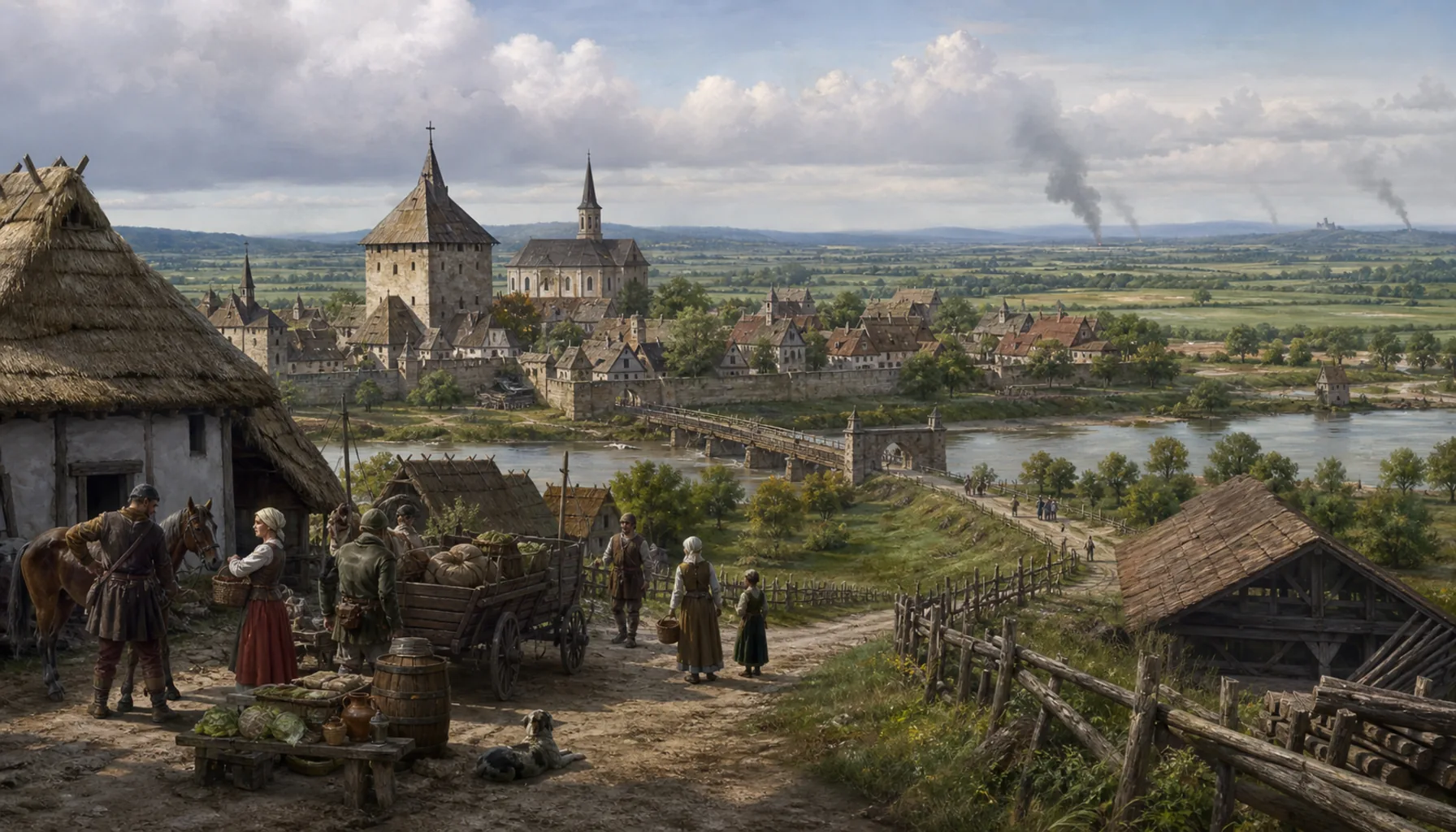
The middle of the fifteenth century was violent in Slovakia: Ján Jiskra's Bohemian mercenaries held the mining towns and much of the north and east for years, and King Matthias Corvinus spent a decade prising them out. None of it reached the Žitný ostrov, which lay in the far south-west, in the shadow of Bratislava and firmly in royal hands. Šamorín's fifteenth century was therefore a matter of parchment rather than of war: in 1465 Matthias confirmed the privileges Sigismund had granted, and the town went on trading. It is worth noticing how much of Slovak history is decided by geography — the same flat, watery ground that gave nobody a place to build a castle also kept the armies away.Polovica 15. storočia bola na Slovensku násilná: českí žoldnieri Jána Jiskru z Brandýsa roky držali banské mestá a veľkú časť severu a východu a kráľ Matej Korvín ich odtiaľ vytláčal celé desaťročie. Na Žitný ostrov, ležiaci na krajnom juhozápade, v tieni Bratislavy a pevne v kráľovských rukách, z toho nedoľahlo nič. Šamorínske 15. storočie bolo preto vecou pergamenu, nie vojny: roku 1465 potvrdil Matej výsady, ktoré mestu dal Žigmund, a mesto obchodovalo ďalej. Stojí za povšimnutie, koľko zo slovenských dejín rozhoduje zemepis — tá istá rovná, vodnatá pôda, na ktorej sa nedal postaviť hrad, sem nepustila ani vojská.