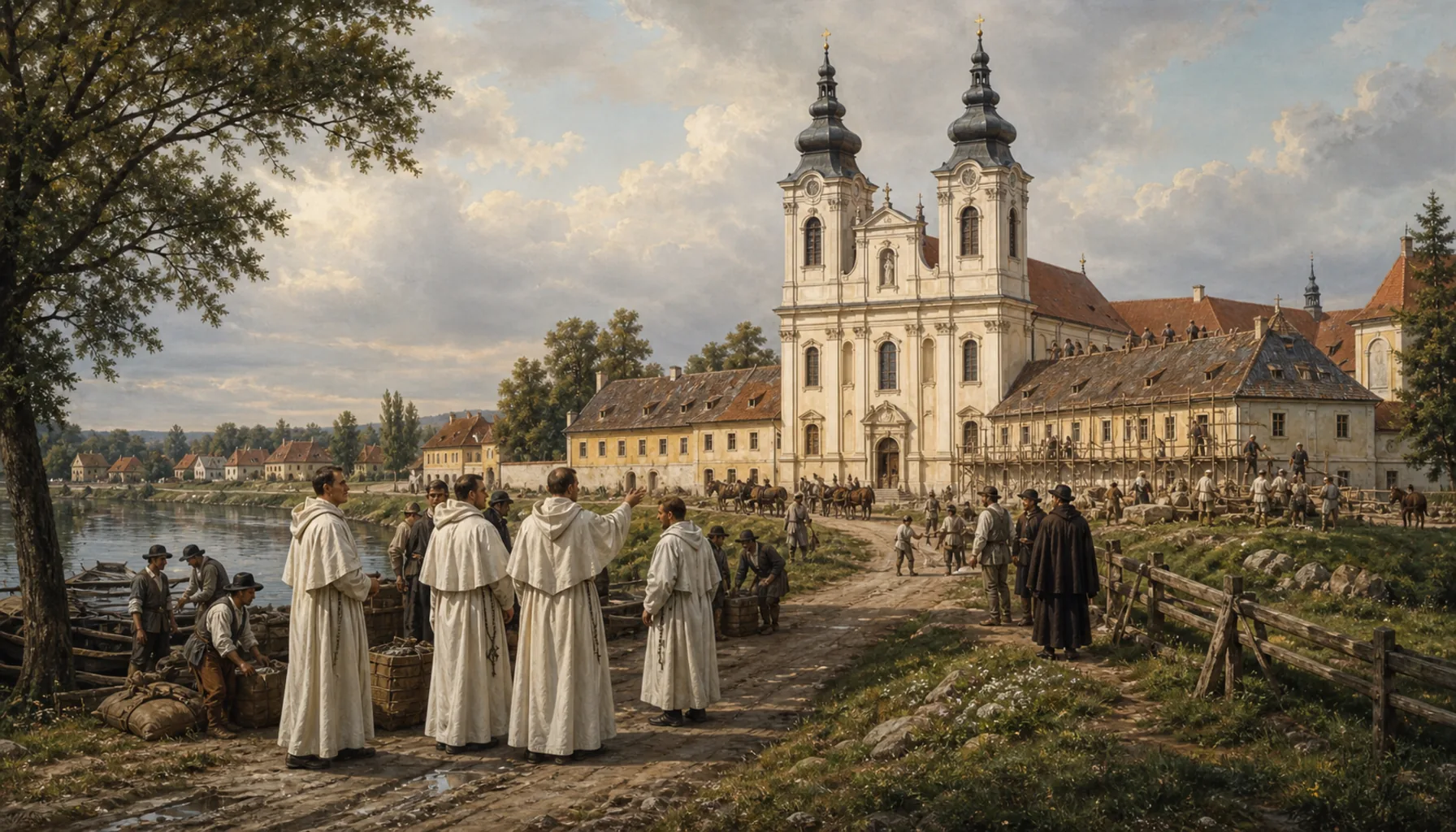
In 1690, with the Ottoman wars finally turning, the Pauline friars founded a monastery in Šamorín, and in 1778 they finished a baroque church beside it. They had barely settled in. In the 1780s Emperor Joseph II dissolved most contemplative orders across his lands, the Paulines among them, on the reasoning that a monastery which neither taught nor nursed the sick was of no use to the state; the buildings stayed, the community did not. By then Šamorín was one of the administrative centres of the Bratislava estate — a quiet farming and market town of exactly the sort the Habsburg reformers were busy counting, surveying and taxing.Roku 1690, keď sa osmanské vojny konečne obracali, založili v Šamoríne kláštor pavlíni a roku 1778 dokončili vedľa neho barokový kostol. Dlho si ho neužili. V osemdesiatych rokoch 18. storočia zrušil cisár Jozef II. vo svojich krajinách väčšinu rozjímavých reholí vrátane pavlínov s odôvodnením, že kláštor, ktorý ani neučí, ani neopatruje chorých, je štátu na nič; budovy zostali, rehoľná komunita nie. Šamorín bol vtedy už jedným zo správnych stredísk bratislavského panstva — tichým roľníckym a trhovým mestečkom presne toho druhu, aké habsburskí reformátori práve horlivo sčítavali, merali a zdaňovali.