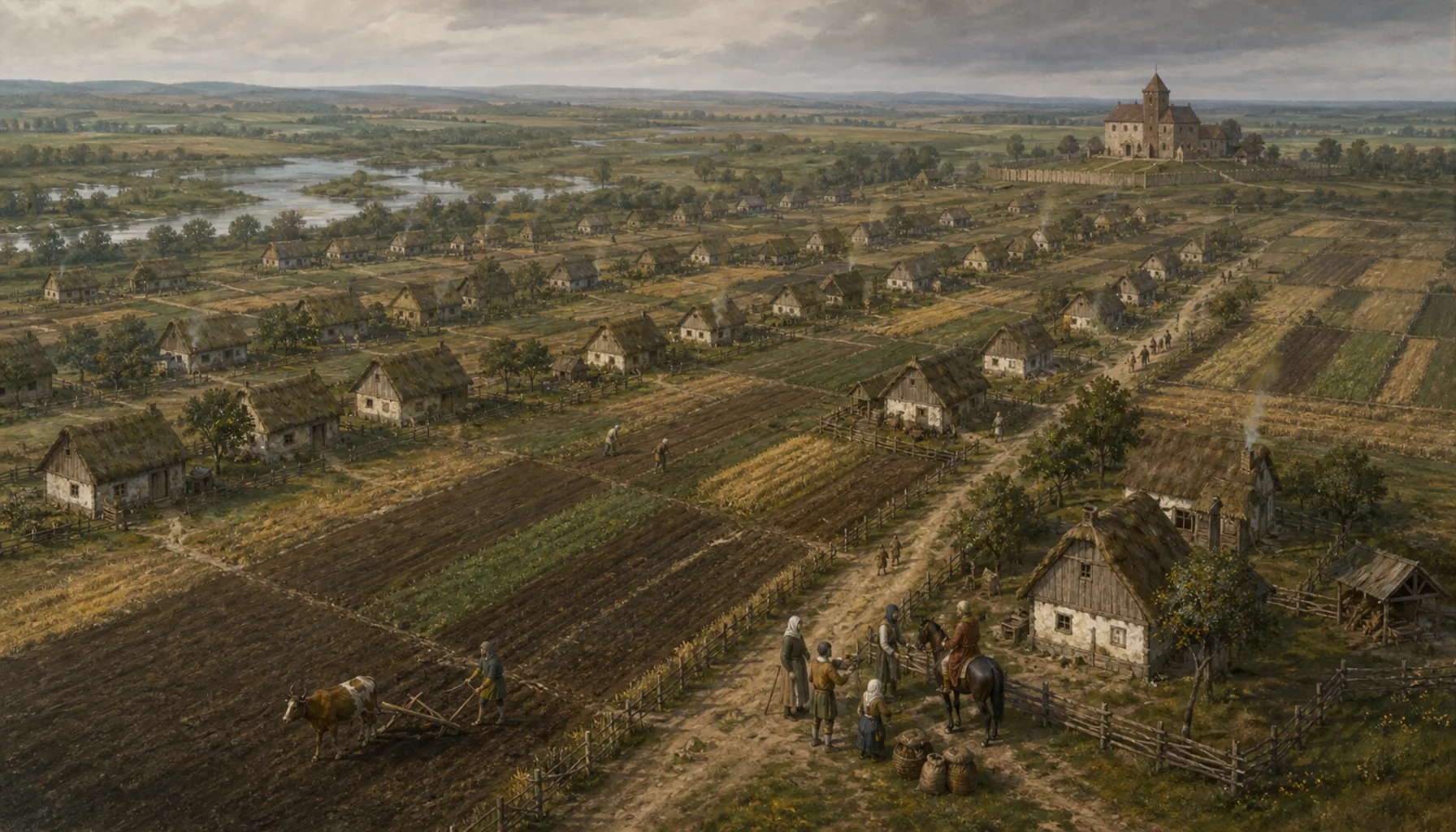
A survey of the Holíč estate in 1452 counted forty holdings at Gbely — a holding being one peasant farm with its house, its strips in the fields and its dues to the lord — which made it the third-largest settlement on the whole estate. That is a useful number, because it shows how thinly Záhorie was populated even where it was doing well. The soil here is sand: rye, potatoes, hemp and pine, not the wheat that grows on the far side of the Little Carpathians. A village of forty holdings on sand had no particular reason to expect a future.Súpis holíčskeho panstva z roku 1452 napočítal v Gbeloch štyridsať usadlostí — usadlosť bolo jedno sedliacke hospodárstvo s domom, s dielmi na poliach a s dávkami zemepánovi — čím boli treťou najväčšou obcou celého panstva. Je to užitočné číslo, lebo ukazuje, aké riedko bolo Záhorie osídlené aj tam, kde sa mu darilo. Pôda je tu piesočnatá: raž, zemiaky, konope a borovica, nie pšenica, aká rastie na druhej strane Malých Karpát. Dedina so štyridsiatimi usadlosťami na piesku nemala zvláštny dôvod čakať nejakú budúcnosť.