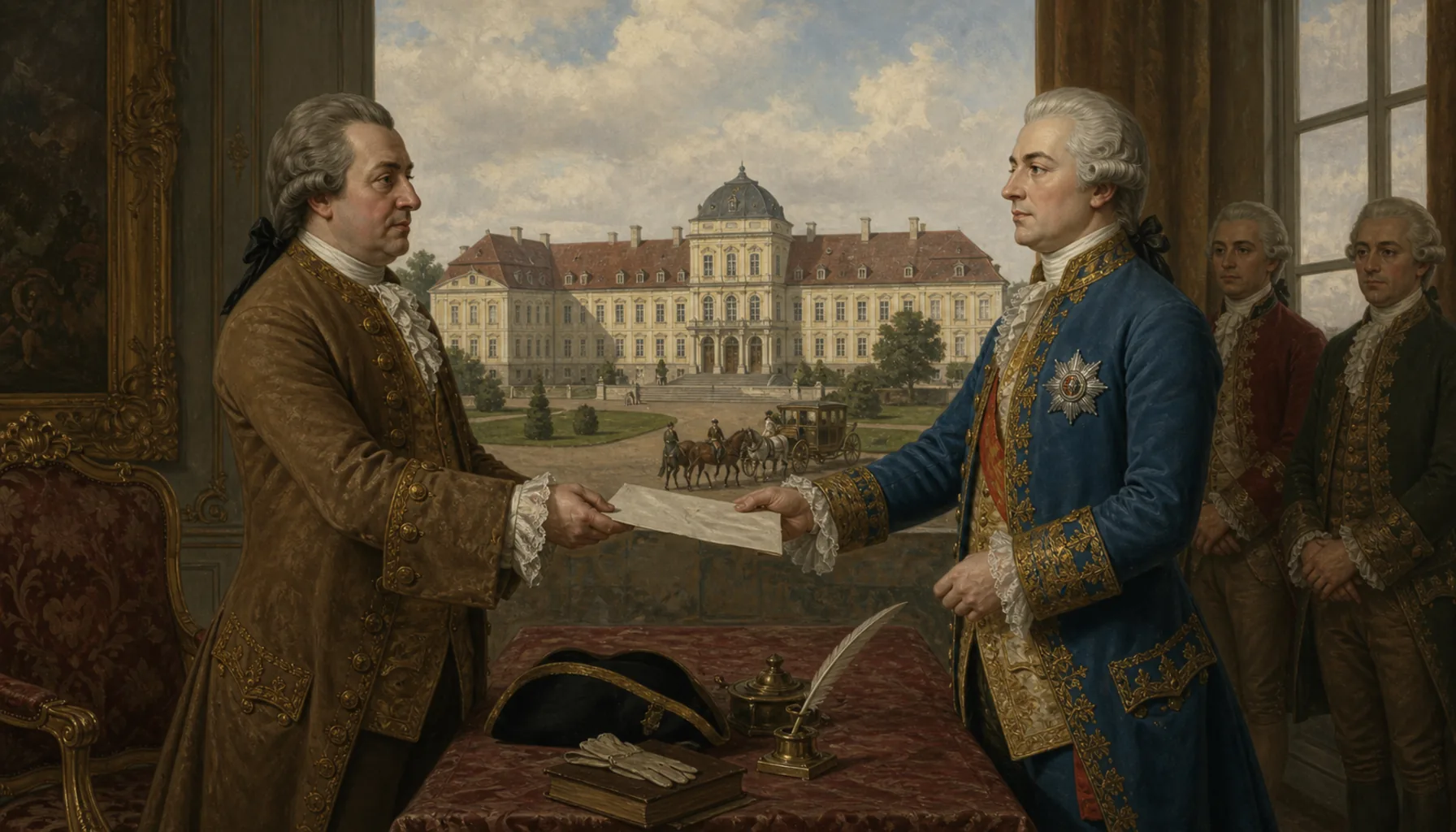
In 1736 the deeply indebted Jozef Czobor sold his estates at Holíč and Šaštín in one transaction to Francis Stephen of Lorraine. That same year Francis Stephen married Maria Theresa, heiress to the Habsburg lands, and he would later be crowned Holy Roman Emperor. In a single piece of business a provincial frontier post became imperial private property — and so did Šaštín, which is why the histories of the two places run together from here on. The couple wanted a country house within a day's ride of Vienna with good hunting on the doorstep. Holíč was it.V roku 1736 predal hlboko zadlžený Jozef Cobor svoje panstvá v Holíči a Šaštíne jedným obchodom Františkovi Štefanovi Lotrinskému. Ten sa v tom istom roku oženil s Máriou Teréziou, dedičkou habsburských krajín, a neskôr bol korunovaný za rímskeho cisára. Jediným obchodom sa z provinčnej pohraničnej pevnosti stal cisársky súkromný majetok — a rovnako aj zo Šaštína, a preto sa dejiny oboch miest odteraz prelínajú. Manželia hľadali vidiecke sídlo na deň cesty od Viedne a s dobrým poľovaním hneď za dverami. Holíč bol presne to.