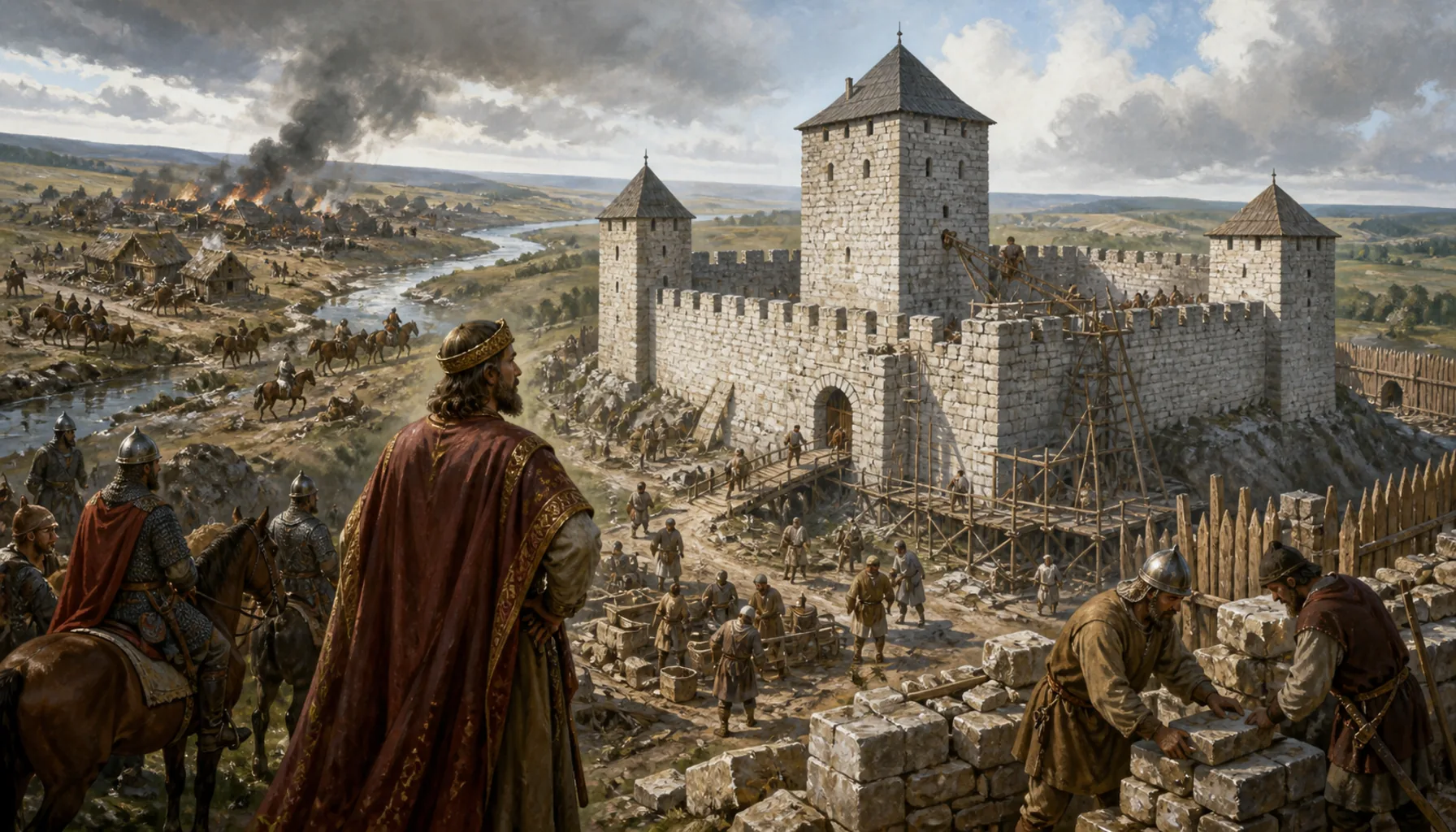
In 1241 the Mongol army destroyed the Hungarian royal army at the river Slaná and rode through the kingdom, and the lesson King Béla IV drew from it redrew the map of Slovakia: wooden forts had proved useless, so stone castles had to be built, fast. Holíč is a textbook case of what that means. The stone castle here belongs to the period after the invasion, not before it — it was built because of the Mongols, not destroyed by them, and mixing those two up is the commonest single mistake made about Slovak castles. From the thirteenth century Holíč was also the seat of a royal border county, an arrangement that ended in 1296, after which it was an ordinary lordship like any other.V roku 1241 zničili Mongoli uhorské kráľovské vojsko pri rieke Slanej a prehnali sa krajinou. Poučenie, ktoré si z toho odniesol kráľ Belo IV., prekreslilo mapu Slovenska: drevené hrádky boli nanič, kamenné hrady bolo treba postaviť, a rýchlo. Holíč je učebnicovým príkladom toho, čo to znamená. Kamenný hrad tu patrí až do obdobia po vpáde, nie pred ním — vznikol pre Mongolov, nie ich pričinením, a práve táto zámena je najčastejším omylom o slovenských hradoch. Od trinásteho storočia bol Holíč aj sídlom kráľovského pohraničného komitátu; tá úloha sa skončila v roku 1296 a odvtedy bol obyčajným panstvom ako každé iné.