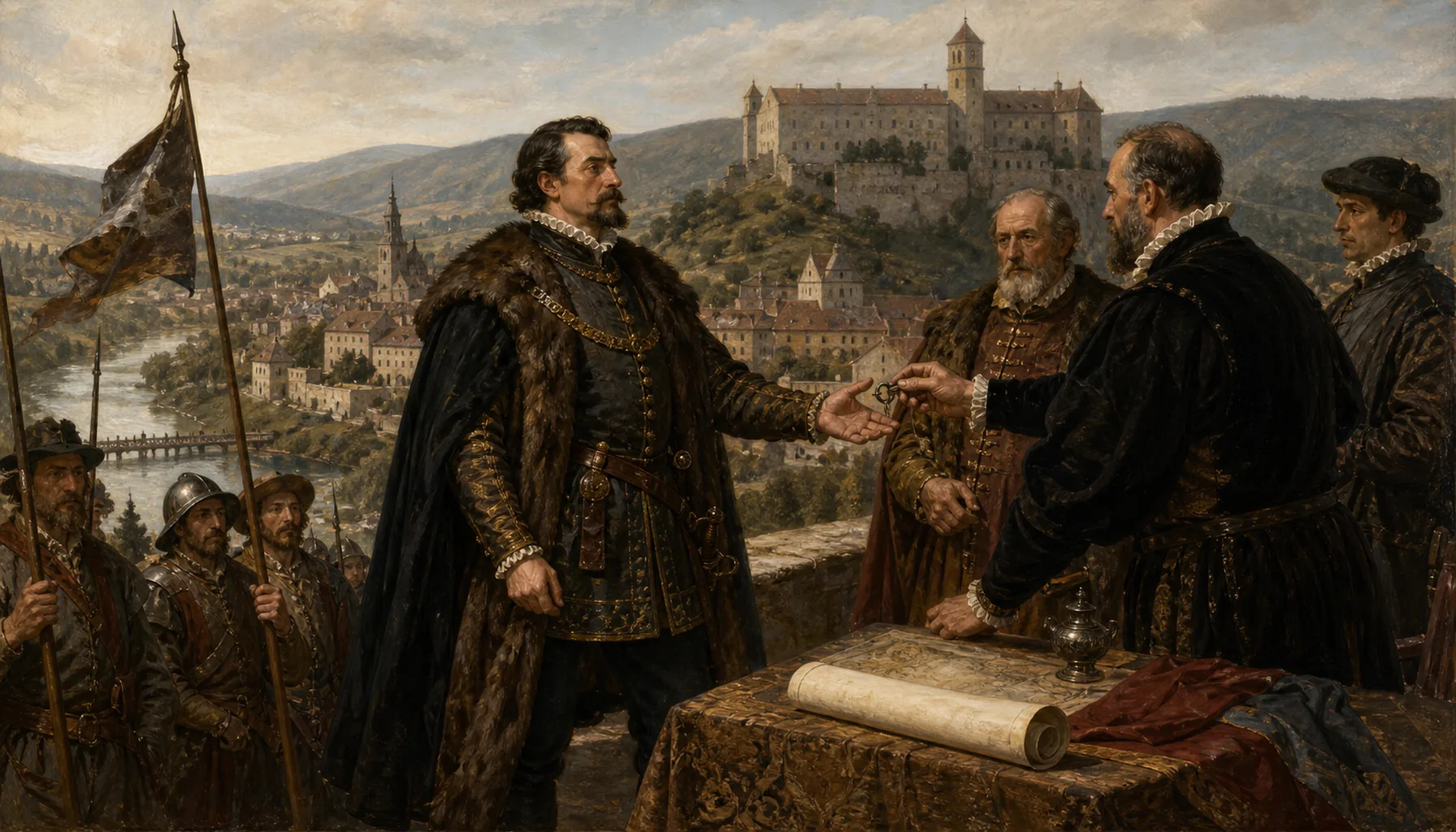
At the end of the sixteenth century Dubnica passed in pledge to Count Štefan Ilešházi, and it stayed with his family for the next two and a half centuries. Ilešházi was no ordinary landlord: within a few years the emperor's court had condemned him as a traitor, he had fled the country, and he had come back to be elected palatine — the highest office in the Kingdom of Hungary after the king himself. His descendants were hereditary chief counts of Trenčín county. A village on the Váh had become the property of one of the most powerful families in the kingdom.Koncom 16. storočia prevzal Dubnicu do zálohu gróf Štefan Ilešházi a v rukách jeho rodu zostala nasledujúce dve a pol storočia. Ilešházi nebol obyčajný zemepán: o pár rokov ho cisársky súd odsúdil ako zradcu, ušiel z krajiny a vrátil sa, aby ho zvolili za palatína – najvyšší úrad Uhorského kráľovstva hneď po kráľovi. Jeho potomkovia boli dedičnými hlavnými županmi Trenčianskej stolice. Z dediny pri Váhu sa stal majetok jednej z najmocnejších rodín kráľovstva.