The engineering town of the middle Váh: a vast Illésházy manor house and park at its centre, and around it the works Škoda built here in 1937, which became one of the largest armaments and heavy-machinery plants in Czechoslovakia.Strojárske mesto stredného Považia: rozľahlý ilešháziovský kaštieľ s parkom v strede a okolo neho závody, ktoré tu v roku 1937 postavila Škodovka a z ktorých sa stal jeden z najväčších zbrojárskych a ťažkostrojárskych podnikov Československa.
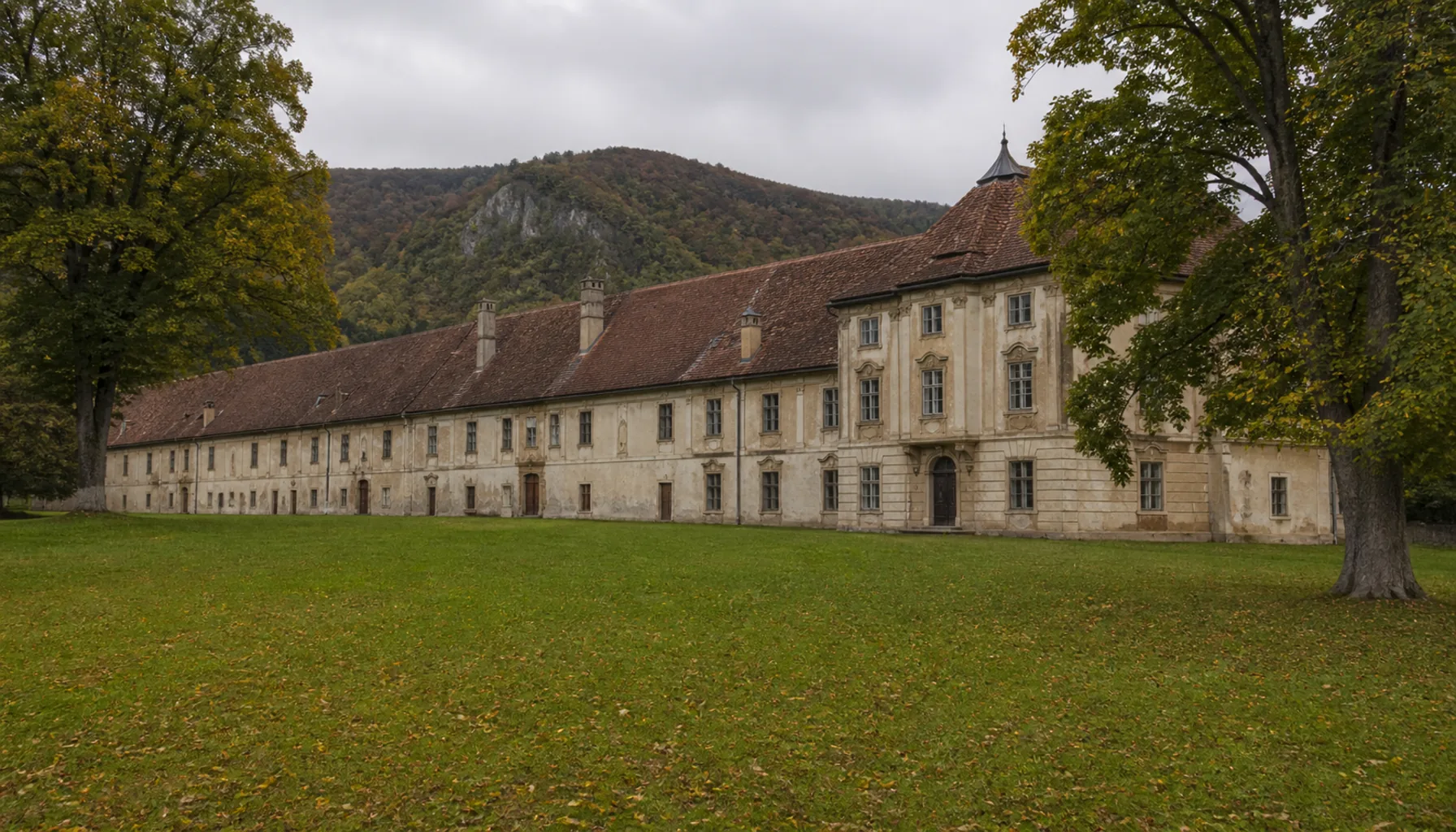
The Illésházy manor house and its old park at Dubnica nad VáhomIlešháziovský kaštieľ so starým parkom v Dubnici nad Váhom
Where it standsKde leží
Dubnica nad Váhom lies on the Váh between Trenčín and Ilava, at the foot of the Strážov Hills, with the White Carpathians across the valley to the west. It is the largest town of the Ilava district, although Ilava next door is the district seat.Dubnica nad Váhom leží na Váhu medzi Trenčínom a Ilavou, na úpätí Strážovských vrchov, s Bielymi Karpatmi za dolinou na západe. Je najväčším mestom okresu Ilava, hoci okresným sídlom je susedná Ilava.
The valley here is one continuous corridor of movement and industry — motorway, main railway, river and works within a couple of kilometres of each other — and Dubnica's factory district is the largest single element in it.Dolina je tu jediným súvislým koridorom dopravy a priemyslu — diaľnica, hlavná trať, rieka a závody na pár kilometroch — a dubnický priemyselný areál je jeho najväčšou zložkou.
The storyHistória
The Illésházy family, hereditary lords of Trenčín county, made Dubnica their residence and built the manor house here from the seventeenth century: a large Renaissance and Baroque quadrangle with a chapel, courtyards and a park laid out around it. For two hundred years the estate was the town's reason to exist, and the parish church and the older streets belong to that period.Ilešháziovci, dediční trenčianski župani, si Dubnicu zvolili za sídlo a od 17. storočia tu postavili kaštieľ: veľký renesančno-barokový štvorkrídlový areál s kaplnkou, nádvoriami a parkom okolo. Dvesto rokov bolo panstvo dôvodom existencie mesta a farský kostol i staršie ulice patria do tohto obdobia.
The town's second founding came in 1937, when the Škoda works of Plzeň built a branch plant at Dubnica to move armaments production away from a frontier that was about to become dangerous. The plant stayed and grew: after the war it became part of ZŤS, the heavy engineering combine, making artillery, tracked vehicles, machine tools and mining equipment on a scale that drew workers from the whole valley. Housing estates were built for them along the river.Druhé založenie mesta prišlo v roku 1937, keď plzeňská Škodovka postavila v Dubnici pobočný závod, aby zbrojnú výrobu presunula preč od hranice, ktorá sa mala čoskoro stať nebezpečnou. Závod tu zostal a rástol: po vojne sa stal súčasťou ZŤS, kombinátu ťažkého strojárstva, a vyrábal delostreleckú techniku, pásové vozidlá, obrábacie stroje a banské zariadenia v rozsahu, ktorý priťahoval robotníkov z celej doliny. Popri rieke im postavili sídliská.
What to seeČo vidieť
The manor house is the monument, and honesty is required about it: this is one of the largest noble residences in the Váh valley and it has been in poor repair for decades. Restoration proceeds in stages, parts of the complex are in use and parts are not, and access varies — check locally before you plan a visit around it.Hlavnou pamiatkou je kaštieľ a treba o ňom povedať pravdu: je to jedno z najväčších šľachtických sídel na Považí a už desaťročia je v zlom stave. Obnova postupuje po etapách, časť areálu sa využíva a časť nie a prístup sa mení — pred cestou si ho overte na mieste.
The park around it is a genuine public space, large and mature, and the parish church beside it completes the historic core. Nová Dubnica, immediately to the east, is a separate town altogether: built in the 1950s to house the works' expanding workforce, its centre laid out as a planned socialist ensemble, and worth a look as a complete period piece.Park okolo neho je skutočným verejným priestorom, rozľahlým a vzrastlým, a farský kostol vedľa dopĺňa historické jadro. Nová Dubnica hneď na východ je samostatné mesto: postavili ju v 50. rokoch pre rastúci počet robotníkov závodov, jej centrum je plánovaný socialistický celok a stojí za pozretie ako neporušená ukážka doby.
Everything else is nearby rather than here. Trenčianske Teplice, the spa town, is a few kilometres up its side valley; the crags of Vršatec and the ruin on them are across the river; and the Strážov Hills behind the town carry quiet marked trails towards Zliechov and the Strážov summit.Všetko ostatné je skôr v okolí než v meste. Kúpeľné Trenčianske Teplice sú pár kilometrov hore bočnou dolinou, vršatecké bralá so zrúcaninou hradu sú za riekou a Strážovskými vrchmi za mestom vedú tiché značené chodníky smerom na Zliechov a na Strážov.
Work and industryPráca a priemysel
Dubnica still lives by engineering, but not by one employer. The ZŤS combine broke up after 1989 when the arms export market collapsed, and the site is now an industrial estate of many separate companies: defence and ammunition manufacture, forging and foundry work, machine tools, research and design offices, and a growing number of automotive suppliers.Dubnica žije zo strojárstva aj naďalej, no nie z jedného zamestnávateľa. Kombinát ZŤS sa po roku 1989 rozpadol, keď sa zrútil vývoz zbraní, a z areálu sa stal priemyselný park mnohých samostatných firiem: zbrojná a muničná výroba, kováčne a zlievarne, obrábacie stroje, výskumné a konštrukčné pracoviská a rastúci počet dodávateľov pre automobilový priemysel.
The town's labour market is the valley's, and the other way round: people commute in from Ilava, Nová Dubnica and the villages, and out to Trenčín and Púchov.Trh práce mesta je trhom celej doliny a naopak: ľudia sem dochádzajú z Ilavy, z Novej Dubnice a z okolitých obcí a odtiaľto do Trenčína a do Púchova.
Getting thereAko sa tam dostať
Dubnica is on the main Bratislava–Žilina railway and beside the D1 motorway. Buses run the length of the valley and up the side valley to Trenčianske Teplice.Dubnica leží na hlavnej trati Bratislava – Žilina a pri diaľnici D1. Autobusy premávajú celou dolinou a bočnou dolinou do Trenčianskych Teplíc.
Explore Dubnica nad VáhomObjavujte Dubnica nad Váhom
Every part of this place with a page of its own.Každá časť tohto miesta, ktorá má vlastnú stránku.