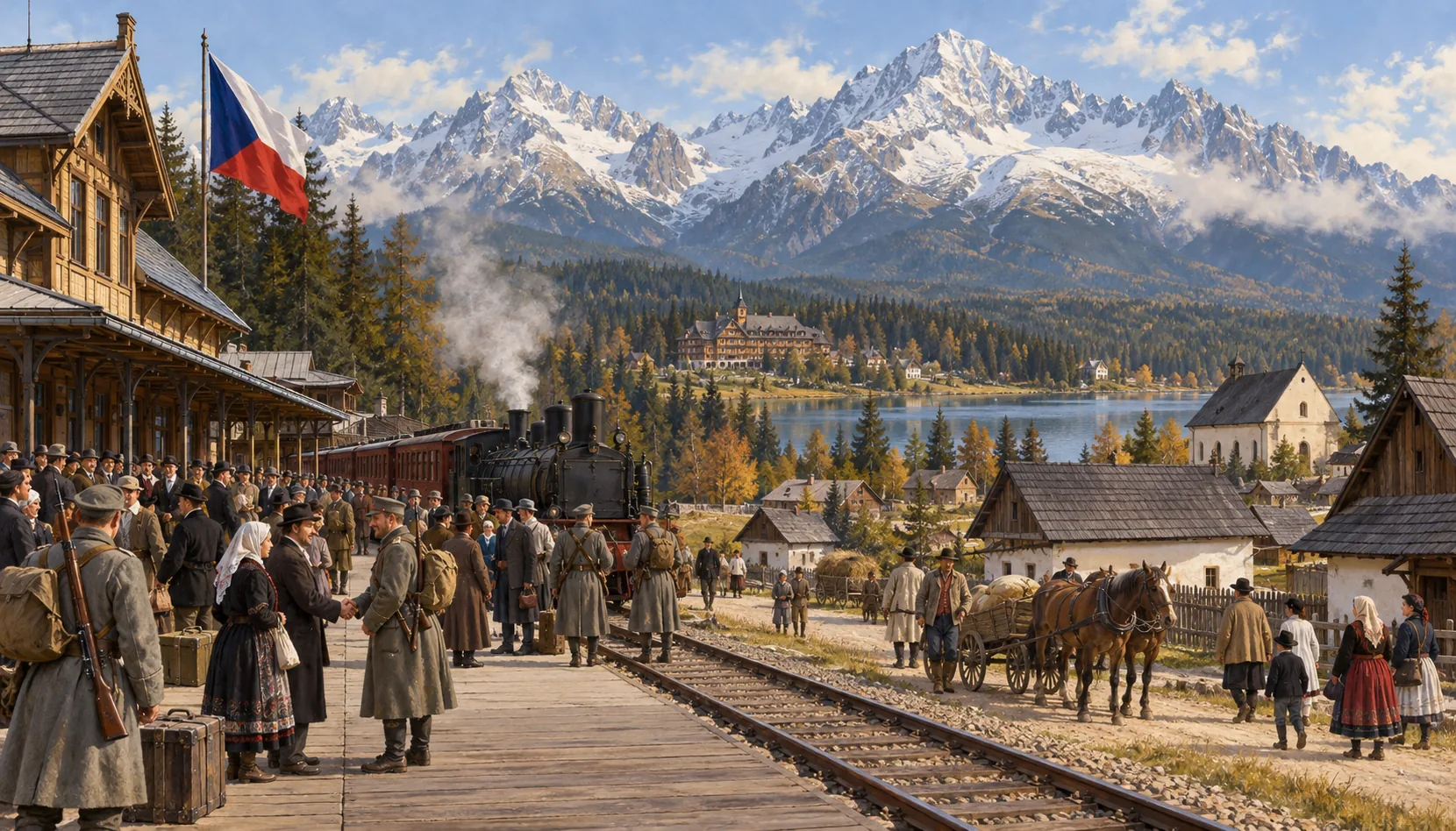
In 1918 the Hungarian state's Tatra property passed to Czechoslovakia, and Štrbské Pleso carried on as a climatic spa: the Hviezdoslav sanatorium opened in 1922, and in 1928 the Evangelical church down in the village finally got the tower the Toleration Patent had forbidden it. The rack railway did not survive the change. Buses were cheaper, the line lost money, and it was closed in 1933 after thirty-seven years. The railway that had made the village also employed it, so when the state railways cut jobs in 1936 and 1937 Štrba's railwaymen went on strike. For the first time in six hundred years the village's fortunes moved with a timetable and a wage bill rather than with the harvest.Roku 1918 prešiel tatranský majetok uhorského štátu na Československo a Štrbské Pleso fungovalo ďalej ako klimatické kúpele: roku 1922 otvorili Sanatórium Hviezdoslav a roku 1928 dostal evanjelický kostol v dedine konečne vežu, ktorú mu tolerančný patent kedysi zakázal. Ozubnica zmenu neprežila. Autobusy boli lacnejšie, trať bola stratová a roku 1933 ju po tridsiatich siedmich rokoch zrušili. Železnica, ktorá dedinu pozdvihla, ju aj živila — a tak keď štátne dráhy v rokoch 1936 a 1937 prepúšťali, štrbskí železničiari štrajkovali. Prvý raz za šesťsto rokov záviselo živobytie obce od cestovného poriadku a výplatnej listiny, nie od úrody.