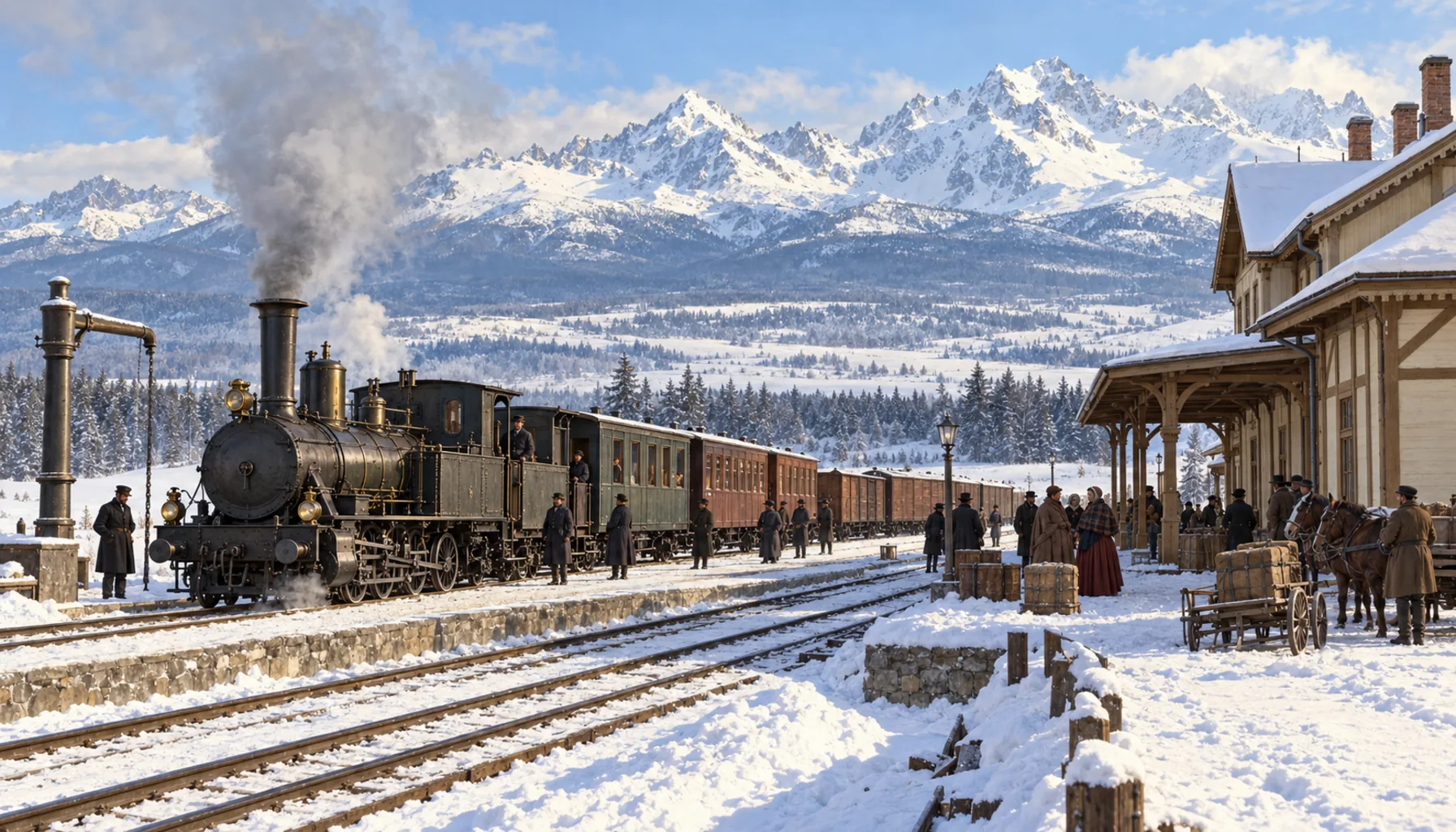
In December 1871 the Košice–Bohumín railway was carried over the saddle, and Štrba's station became the summit of the line — still the highest station in Slovakia at which express trains stop. The effect showed within months. In 1872 Jozef Szentiványi (1817–1905), of the family that had held Štrba since the Middle Ages, put up two log cabins beside the lake in the forest above the village; in 1875 his Jozefova chata opened with forty beds and baths of dwarf-pine extract. A restaurant followed in 1879 and villas through the 1890s. A landlord's private lake had become a resort — and it took the village's name with it: Štrbské Pleso.V decembri 1871 prešla cez sedlo Košicko-bohumínska železnica a štrbská stanica sa stala najvyšším bodom trate — dodnes je to najvyššie položená stanica na Slovensku, kde zastavujú rýchliky. Účinok bolo vidieť do niekoľkých mesiacov. Roku 1872 postavil Jozef Szentiványi (1817 – 1905) z rodu, ktorý Štrbu vlastnil od stredoveku, pri plese v lese nad dedinou dve zrubové chatky; roku 1875 otvoril Jozefovu chatu so štyridsiatimi lôžkami a kúpeľmi z kosodreviny. Roku 1879 pribudla reštaurácia a v 90. rokoch vily. Zo zemepánskeho plesa sa stalo letovisko — a vzalo si meno dediny: Štrbské Pleso.