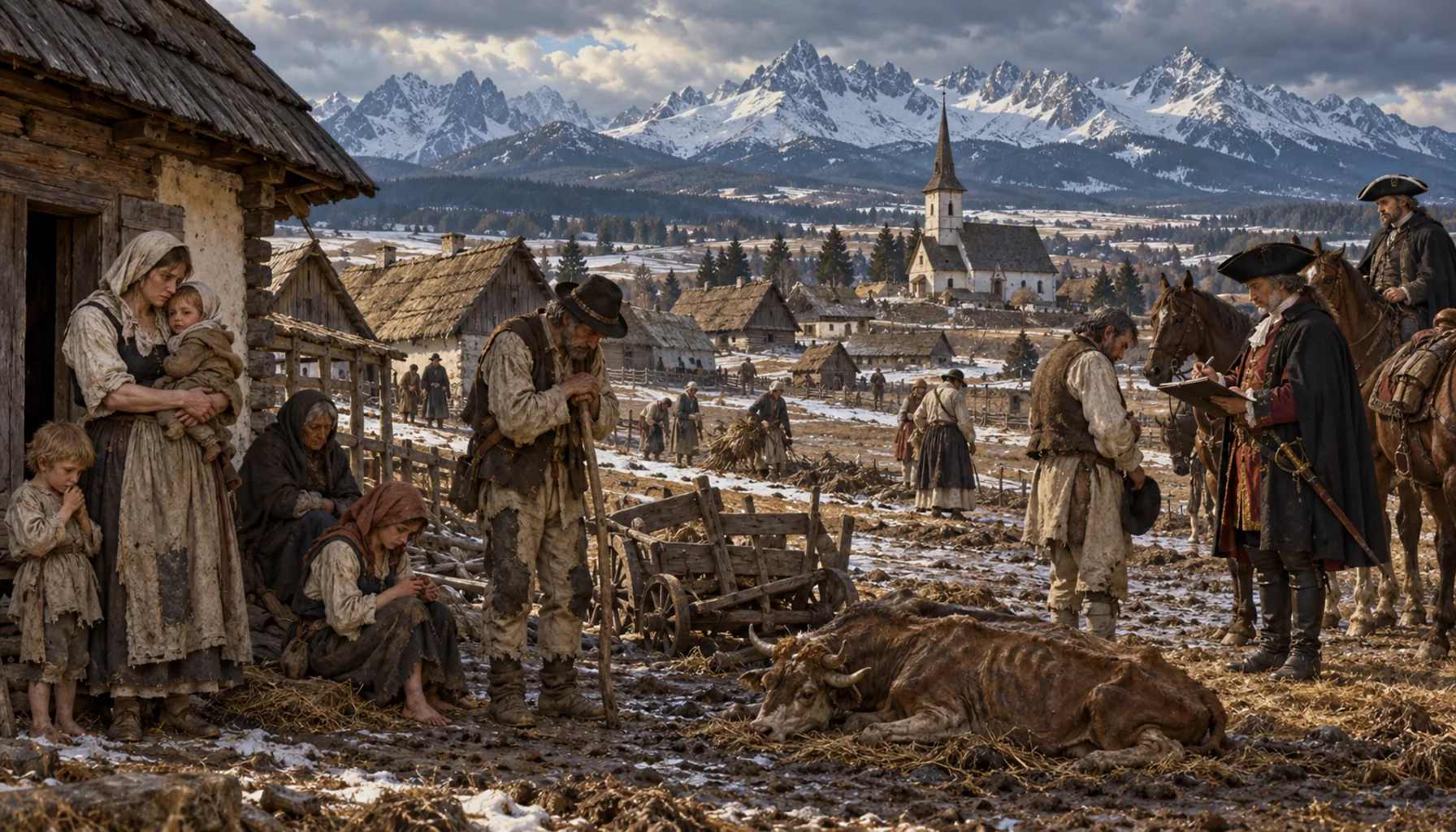
The tax census of 1715 counted 56 taxpayers in Štrba; five years later, in 1720, there were 37. The collapse has a name — the famine of 1715–17 — and Štrba was one of the worst-hit villages in the whole of Liptov: 41 families left it for good. That is what a bad harvest means at this height, where there is no second crop and nothing in the barn to sell. Those who stayed lived off sheep and cattle, burned charcoal and lime in the forest, felled timber, and above all carted: from the eighteenth century Štrba's men hauled goods and iron ore over the saddle to the ironworks. The pass was earning the village's living again, exactly as it had in 1280.Súpis daňovníkov z roku 1715 napočítal v Štrbe 56 poplatníkov, o päť rokov neskôr, roku 1720, už len 37. Ten prepad má meno: hladné roky 1715 – 1717. Štrba patrila k najviac postihnutým dedinám celého Liptova — 41 rodín sa z nej odsťahovalo navždy. Presne to znamená zlá úroda v takejto výške: druhá sejba nie je a v sýpke nezostane nič na predaj. Tí, čo ostali, žili z oviec a dobytka, pálili v lese uhlie a vápno, rúbali drevo a hlavne furmančili — od 18. storočia vozili Štrbania cez sedlo tovar a železnú rudu do hámrov. Priesmyk teda znovu živil dedinu, rovnako ako roku 1280.