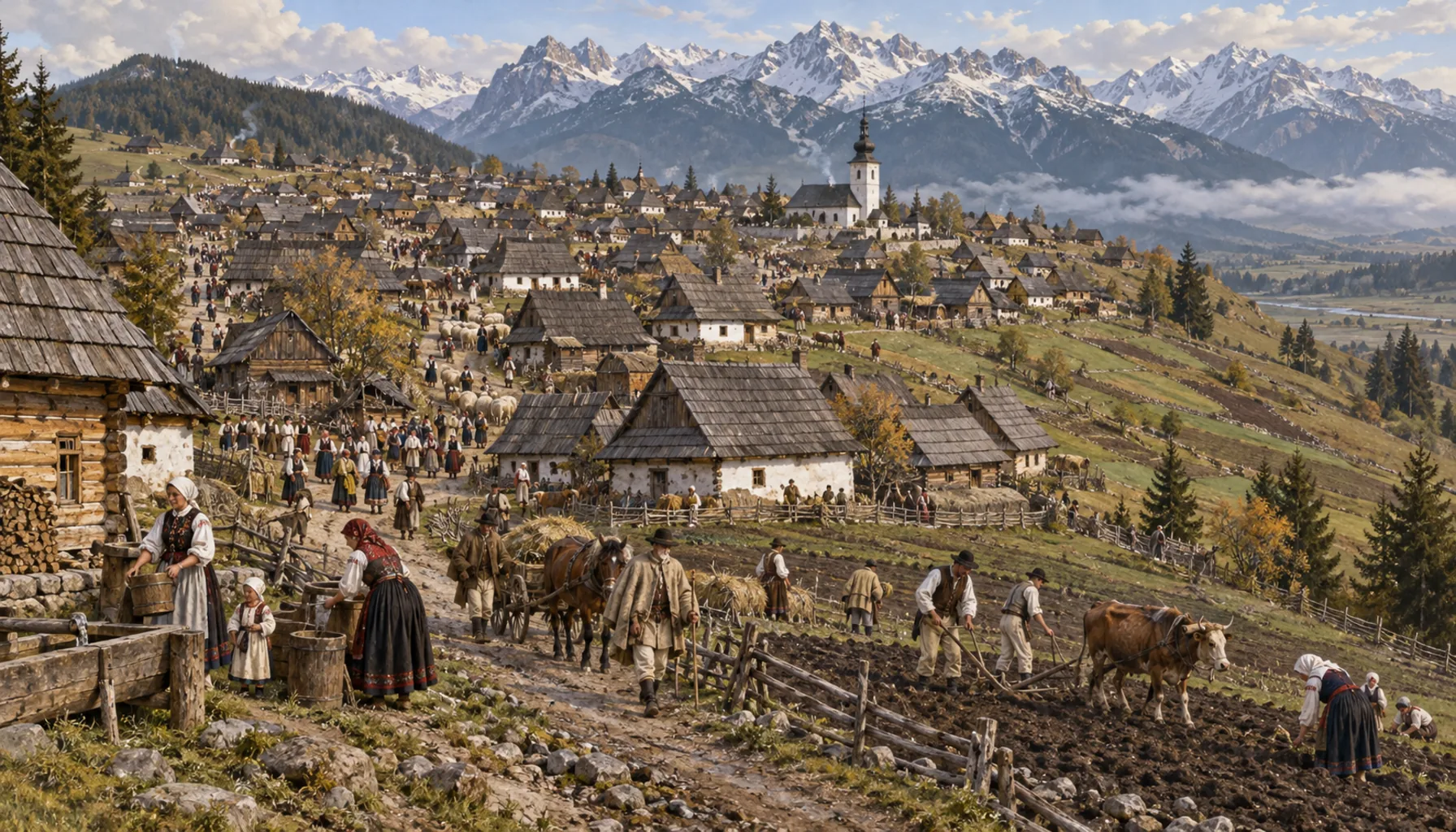
The census of 1828 found 186 houses and 1,623 people here — a big village for such thin, high ground, and more mouths than its fields could feed. In 1844 the Catholic parish built a new classicist church of St Andrew on the site of the medieval one. Four years later the revolution of 1848 abolished serfdom throughout the kingdom: the villagers stopped owing labour to the Szentiványi and their relatives and became owners of the strips they worked. It sounds like a clean ending, and it was not. The plots were small, stony and eight hundred metres up, and the next generation's answer was to look for wages somewhere else — on the railway that was about to be built, in the hotels that came with it, and, like tens of thousands from these counties, in America.Súpis z roku 1828 našiel v Štrbe 186 domov a 1 623 obyvateľov — na takú chudobnú a vysoko položenú pôdu veľkú dedinu a viac úst, než jej polia uživili. Roku 1844 postavila katolícka farnosť nový klasicistický Kostol svätého Ondreja na mieste stredovekého. O štyri roky zrušila revolúcia roku 1848 v celom kráľovstve poddanstvo: Štrbania prestali odrábať Szentiványiovcom a ich príbuzným a stali sa vlastníkmi svojich úzkych pásikov. Znie to ako pekný koniec, ale nebol. Polia zostali malé, kamenisté a osemsto metrov nad morom, a odpoveďou ďalšej generácie bolo hľadať zárobok inde — na železnici, ktorú práve chystali, v hoteloch, čo prišli s ňou, a ako desaťtisíce ľudí z týchto stolíc aj v Amerike.