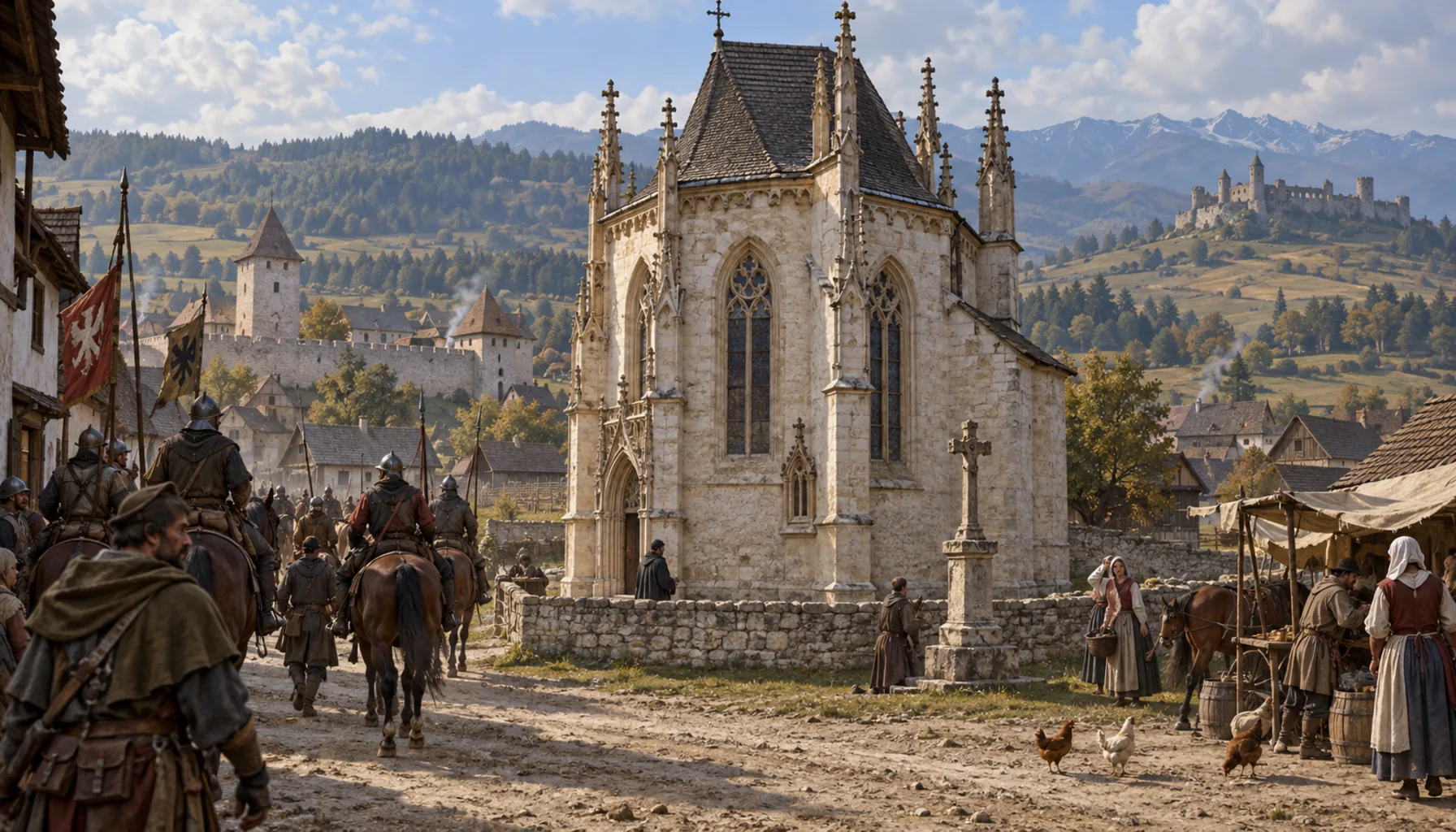
The fifteenth century was fought over here: the Czech captain Ján Jiskra held much of eastern Slovakia with hired troops, his men turned into freebooting bands, and Matthias Corvinus spent the 1460s clearing them out. Out of those wars the Zápoľský family came away with Spiš Castle and became, for a generation, the most powerful house in the kingdom. In 1473 Štefan Zápoľský had a funerary chapel built onto the south side of the church here: two storeys of worked stone, an upper chapel with a net vault and carving of a standard you would expect in a cathedral, and beneath it the crypt where the family were buried. Not everyone agrees on this — some Slovak accounts date the chapel to 1456–1468 and credit the Henckel and Thurzo families instead — but either way it is one of the finest late-Gothic chapels in Slovakia, and it stands in a village.O 15. storočie sa tu bojovalo: český kapitán Ján Jiskra držal so žoldniermi veľkú časť východného Slovenska, jeho ľudia sa zmenili na bratrícke družiny a Matej Korvín ich v šesťdesiatych rokoch vytláčal. Z tých vojen vyšiel rod Zápoľských so Spišským hradom v rukách a na jednu generáciu sa stal najmocnejším v kráľovstve. Roku 1473 dal Štefan Zápoľský pristavať k južnej strane tunajšieho kostola pohrebnú kaplnku: dve podlažia tesaného kameňa, hornú kaplnku so sieťovou rebrovou klenbou a kamenárskou prácou, akú by ste čakali v katedrále, a pod ňou kryptu, kde rod pochovávali. Nie všetci sa na tom zhodnú — niektoré slovenské pramene datujú kaplnku do rokov 1456 – 1468 a pripisujú ju rodom Henckel a Thurzo — no tak či onak je to jedna z najkrajších neskorogotických kaplniek na Slovensku a stojí v dedine.