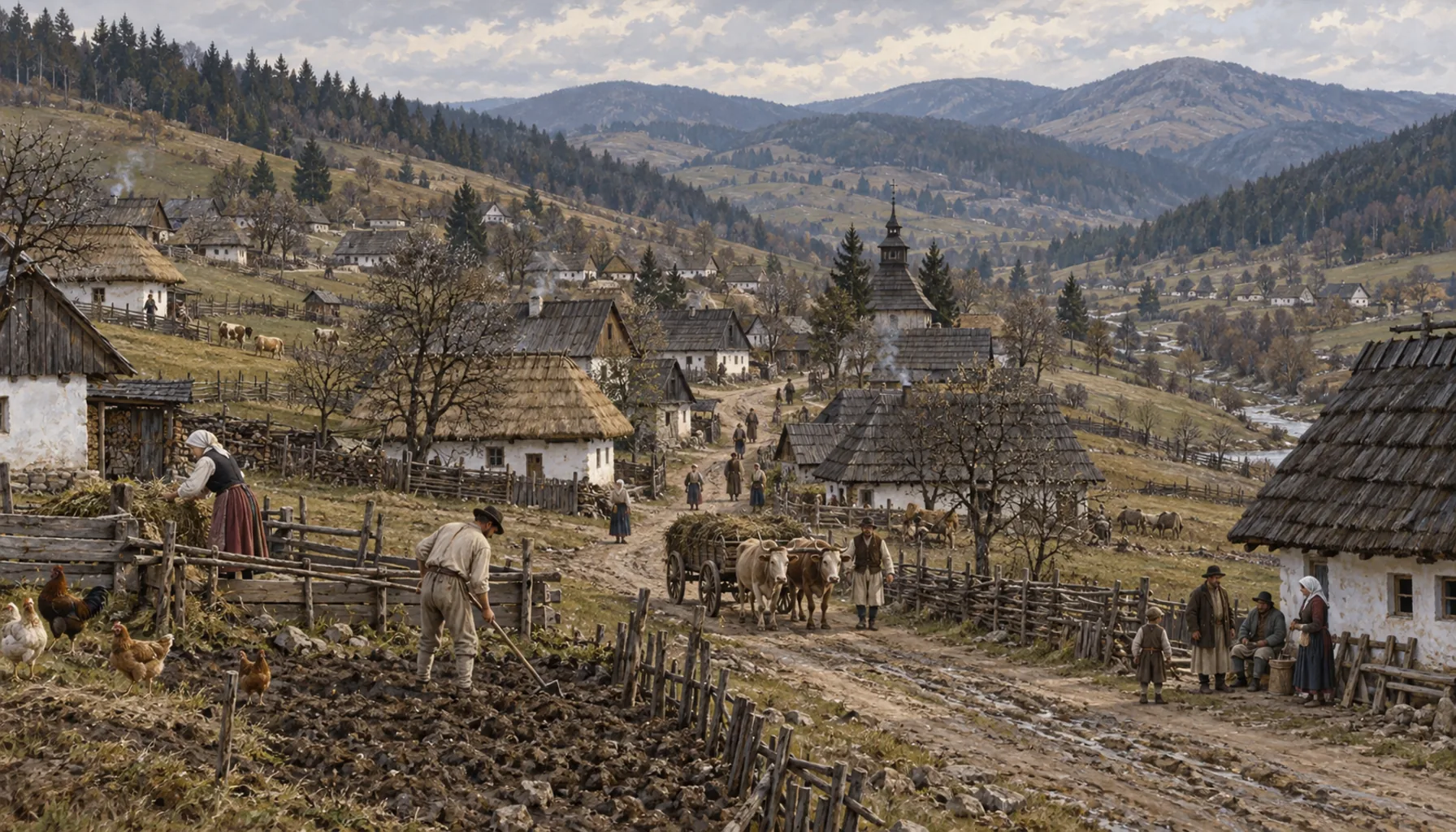
By 1828 there were 58 houses and 429 people. Then in 1848 serfdom was abolished and the villagers became owners of the land they worked. On good lowland soil that was the making of a family; on a Beskid hillside it was not. Holdings were divided between sons in every generation until a share could no longer feed a household, and the arguments over who now owned the forest and the pasture — the former landlord or the village — dragged on for decades all over the region. Within a generation there were more people in Miková than the valley could hold.Roku 1828 tu stálo 58 domov a žilo 429 ľudí. Potom, roku 1848, bolo zrušené poddanstvo a dedinčania sa stali vlastníkmi pôdy, ktorú obrábali. Na dobrej nížinnej pôde to rodinu postavilo na nohy, na beskydskom svahu nie. Usadlosti sa v každej generácii delili medzi synov, až podiel prestal domácnosť uživiť, a spory o to, komu teraz patrí les a pasienok — bývalému zemepánovi, alebo obci — sa v celom kraji ťahali desaťročia. Za jednu generáciu bolo v Mikovej viac ľudí, než dolina uniesla.