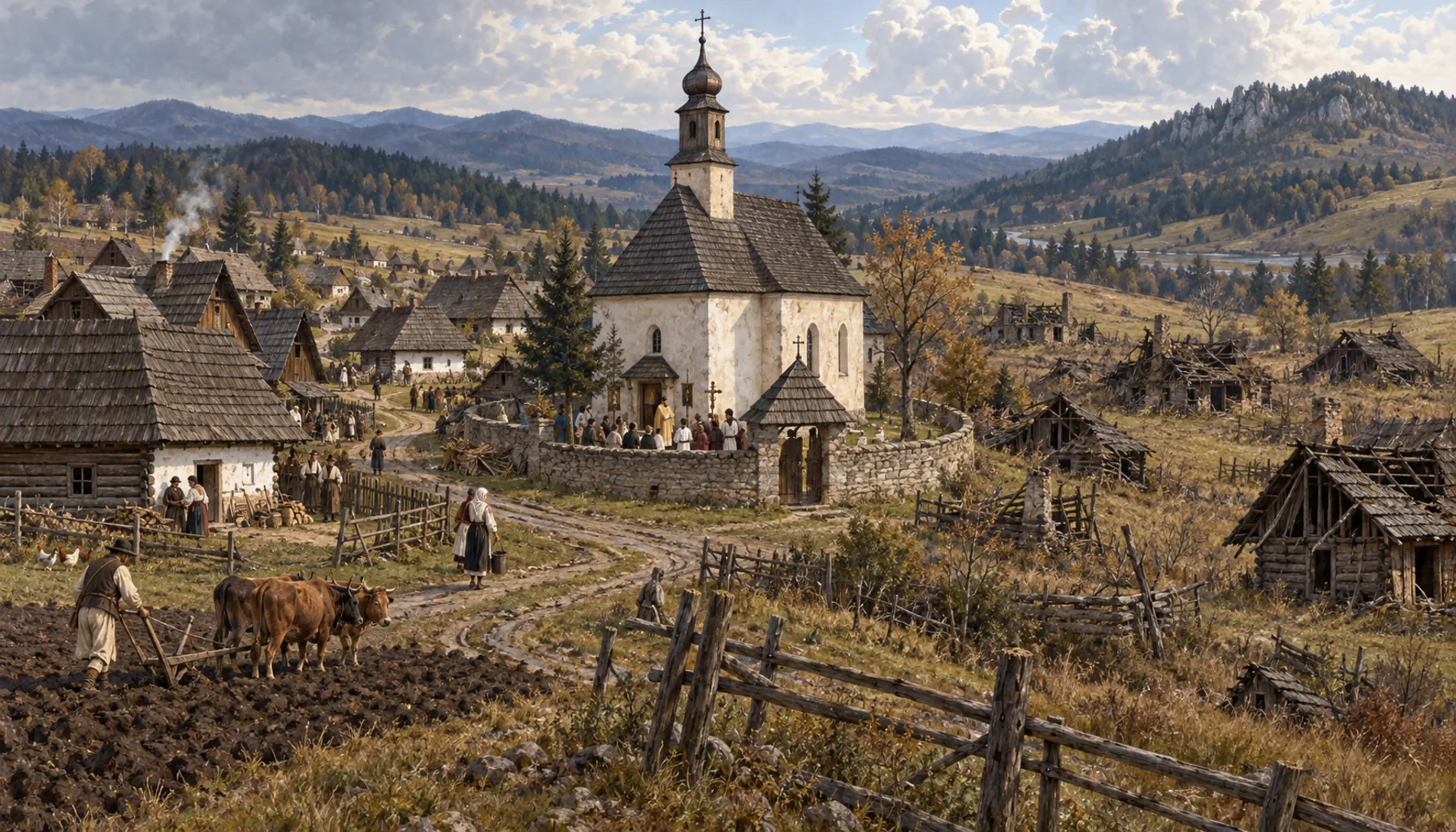
In 1715 the village had fourteen lived-in holdings and eleven standing empty — the mark of the war years just ended — and sixteen households by 1720. The parish, like almost every Rusyn parish in the north-east, had by now accepted union with Rome while keeping the eastern liturgy, Church Slavonic and married priests: they had become Greek Catholics. The church in the village was built in 1742. By 1787 there were 56 houses and 374 people, living on oats, potatoes, hay and sheep; the men burned charcoal and cut timber, because the fields on their own could not carry a family.Roku 1715 mala dedina štrnásť obývaných usadlostí a jedenásť opustených — stopa práve skončených vojnových rokov — a roku 1720 už šestnásť domácností. Farnosť, tak ako takmer každá rusínska farnosť na severovýchode, dovtedy prijala úniu s Rímom, ale ponechala si východnú liturgiu, cirkevnú slovančinu aj ženatých kňazov: stali sa z nich gréckokatolíci. Chrám v dedine postavili roku 1742. Roku 1787 tu bolo 56 domov a 374 ľudí, ktorí žili z ovsa, zemiakov, sena a oviec; muži pálili drevené uhlie a rúbali drevo, lebo samotné polia rodinu neuživili.