A Rusyn village in the Low Beskids that the world knows for one reason — Andy Warhol's parents left it for Pittsburgh — and that is otherwise a small, emptying place of wooded ridges, a valley road and a graveyard of family names.Rusínska obec v Nízkych Beskydách, ktorú svet pozná pre jedinú vec — odišli z nej do Pittsburghu rodičia Andyho Warhola — a ktorá je inak malým vyľudňujúcim sa miestom zalesnených hrebeňov, dolinovej cesty a cintorína rodinných mien.
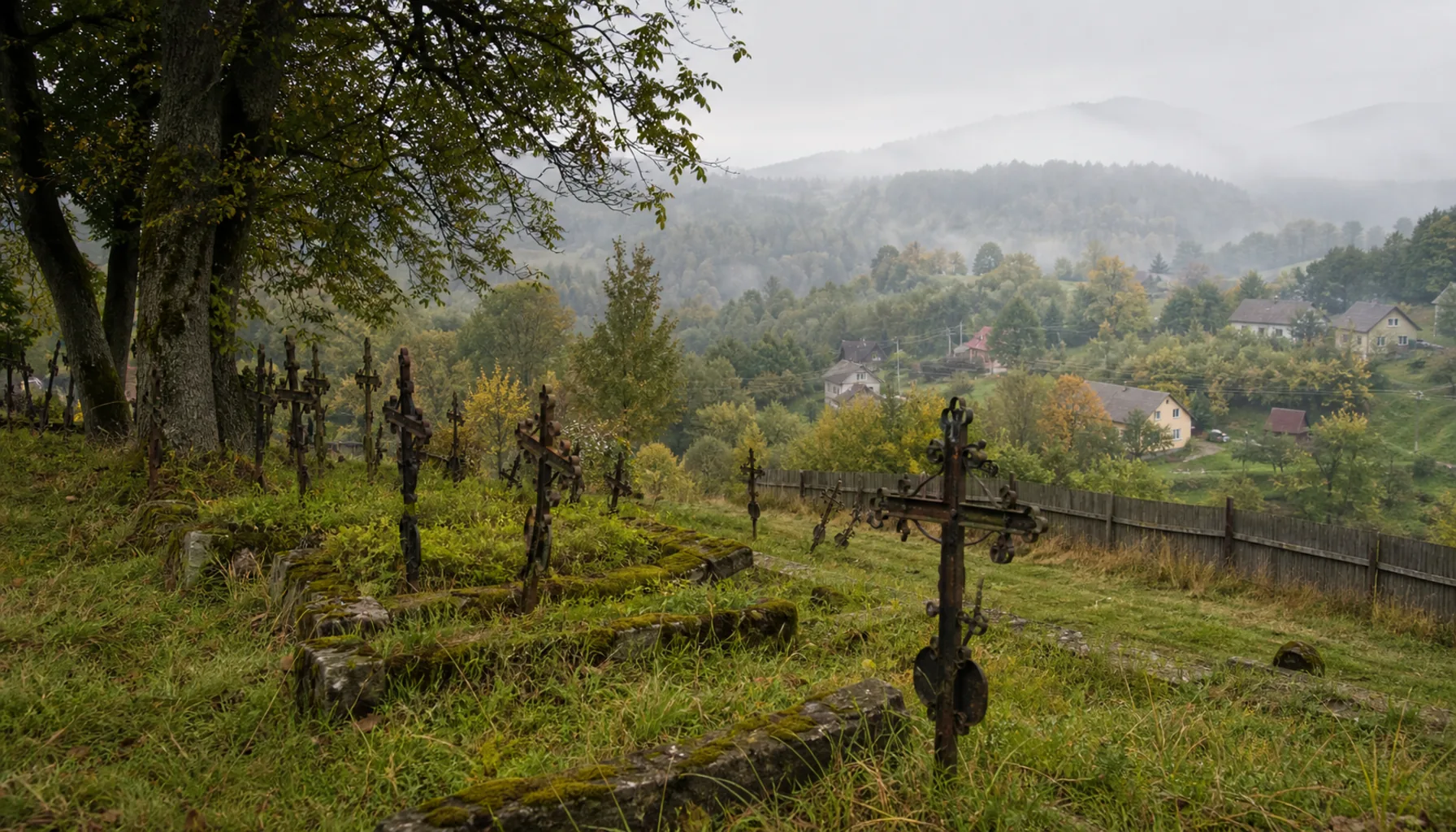
The hillside cemetery above Miková, its iron crosses under old trees in the Low BeskidsCintorín na svahu nad Mikovou so železnými krížmi pod starými stromami v Nízkych Beskydách
Where it standsKde leží
Miková lies up a side valley in the Low Beskids, in the hill country between Stropkov and Medzilaborce and not far from the Polish border. The ridges here are long, rounded and forested, the valleys narrow, the villages small and well apart.Miková leží v bočnej doline Nízkych Beskýd, v kopcovitom kraji medzi Stropkovom a Medzilaborcami, neďaleko poľskej hranice. Hrebene sú tu dlhé, oblé a zalesnené, doliny úzke a dediny malé a ďaleko od seba.
This is Rusyn country: the churches are Greek Catholic or Orthodox, Rusyn is still spoken, and the finest wooden churches in Slovakia stand in the valleys a short drive west.Toto je rusínsky kraj: chrámy sú gréckokatolícke alebo pravoslávne, po rusínsky sa tu stále hovorí a najkrajšie drevené chrámy na Slovensku stoja v dolinách kúsok na západ.
Why it is herePrečo práve tu
Villages like Miková were founded late and on poor ground, by settlers who moved along the Carpathian ranges with sheep. The land gave oats, potatoes and hay rather than wheat, the forest supplied the rest, and holdings were divided down the generations until they could no longer feed the families on them.Dediny ako Miková vznikali neskoro a na chudobnej pôde, keď sa po karpatských hrebeňoch sťahovali osadníci s ovcami. Pôda dávala ovos, zemiaky a seno, nie pšenicu, zvyšok poskytoval les a usadlosti sa po generáciách delili, až už nedokázali uživiť rodiny, ktoré na nich hospodárili.
So people left. From the 1880s onward the Rusyn villages of the north-east emptied westward across the Atlantic, to the mines and mills of Pennsylvania and Ohio. Ondrej and Júlia Varchola went from Miková to Pittsburgh in that movement, he first and she some years later; their youngest son was born there in 1928 and became Andy Warhol. Of that story the village owns only the beginning, and the beginning is emigration.A tak ľudia odchádzali. Od osemdesiatych rokov 19. storočia sa rusínske dediny severovýchodu vyprázdňovali smerom cez Atlantik, do baní a hút Pensylvánie a Ohia. V tejto vlne odišli z Mikovej do Pittsburghu aj Ondrej a Júlia Varcholovci — najprv on, o niekoľko rokov neskôr ona; ich najmladší syn sa tam v roku 1928 narodil a stal sa z neho Andy Warhol. Obci patrí z toho príbehu iba začiatok — a tým začiatkom je vysťahovalectvo.
Twice in thirty years the front came over these ridges — in 1914 and 1915, and again in the autumn of 1944 — and the villages of the district were burned and rebuilt. Between war, emigration and the drift to the towns, this corner of Slovakia has been losing people for a century.Dvakrát za tridsať rokov prešiel cez tieto hrebene front — v rokoch 1914 a 1915 a znovu na jeseň 1944 — a dediny okresu horeli a stavali sa nanovo. Medzi vojnou, vysťahovalectvom a odchodom do miest stráca tento kút Slovenska obyvateľov už sto rokov.
What you actually seeČo naozaj uvidíte
What is here is a road up a valley, houses spread along it with gardens and woodpiles, a church, a cemetery on the slope, and hills closing both ends. Meadows mown within living memory are going back to scrub and birch. Half an hour is enough to walk all of it.Je tu cesta dolinou, domy roztiahnuté popri nej so záhradami a hranicami dreva, chrám, cintorín na svahu a kopce, ktoré uzatvárajú oba konce. Lúky, ktoré sa v pamäti žijúcich ešte kosili, zarastajú krovím a brezinou. Prejsť to celé trvá pol hodinu.
The village marks its connection to the Varchola family modestly rather than trading on it: there is no house to go into here and no collection. The prints, the family photographs and the objects that came out of Miková are in the museum at Medzilaborce, fifteen kilometres away over the hills.Väzbu na Varcholovcov si obec pripomína skromne, nerobí z nej živnosť: nie je tu dom, do ktorého by sa dalo vojsť, ani zbierka. Grafiky, rodinné fotografie aj predmety, ktoré pochádzajú z Mikovej, sú v múzeu v Medzilaborciach pätnásť kilometrov za kopcami.
What is worth the time is the graveyard and the surnames on it, and then the valleys around: Bodružal, Miroľa and Ladomirová carry wooden churches of the eastern rite, two of them on the World Heritage List.Za čas tu stojí cintorín a priezviská na ňom a potom okolité doliny: v Bodružale, Miroli a Ladomirovej stoja drevené chrámy východného obradu, dva z nich v zozname svetového dedičstva.
Living village, not a museumŽivá obec, nie skanzen
Miková is inhabited, but thinly and by an ageing population, with houses that come to life at weekends and in summer. Nothing is laid on: no ticket, no guide, no café, nobody waiting for anyone. The church is a working parish church, and a service or a funeral is not an event to photograph.Miková je obývaná, ale riedko a starnúcimi ľuďmi, s domami, ktoré ožívajú cez víkendy a v lete. Nič tu nie je pripravené: žiadna vstupenka, žiadny sprievodca, žiadna kaviareň, nikto, kto by na niekoho čakal. Chrám je fungujúcim farským chrámom a bohoslužba ani pohreb nie sú udalosťou na fotenie.
People do come — a thin, steady trickle of Warhol readers who want to see where the family came from — and the village takes it calmly. Arriving with that in mind is fine; expecting the village to perform it is not.Ľudia sem chodia — tenký, ale stály prúd čitateľov kníh o Warholovi, ktorí chcú vidieť, odkiaľ rodina pochádzala — a obec to berie pokojne. Prísť s takým úmyslom je v poriadku; čakať, že to obec zahrá, nie.
Getting thereAko sa tam dostať
There is no railway and few buses; services run from Stropkov and Medzilaborce and are built around the school and working day rather than around visitors. By car it is a turn off the road that crosses the hills between those two towns, and a car is realistically the only way to combine Miková with the wooden churches to the west.Železnica sem nevedie a autobusov je málo; spoje idú zo Stropkova a z Medzilaboriec a sú postavené na školskom a pracovnom dni, nie na návštevníkoch. Autom ide o odbočku z cesty, ktorá prechádza kopcami medzi týmito dvoma mestami, a spojiť Mikovú s drevenými chrámami na západe sa reálne dá iba autom.
Explore MikováObjavujte Miková
Every part of this place with a page of its own.Každá časť tohto miesta, ktorá má vlastnú stránku.