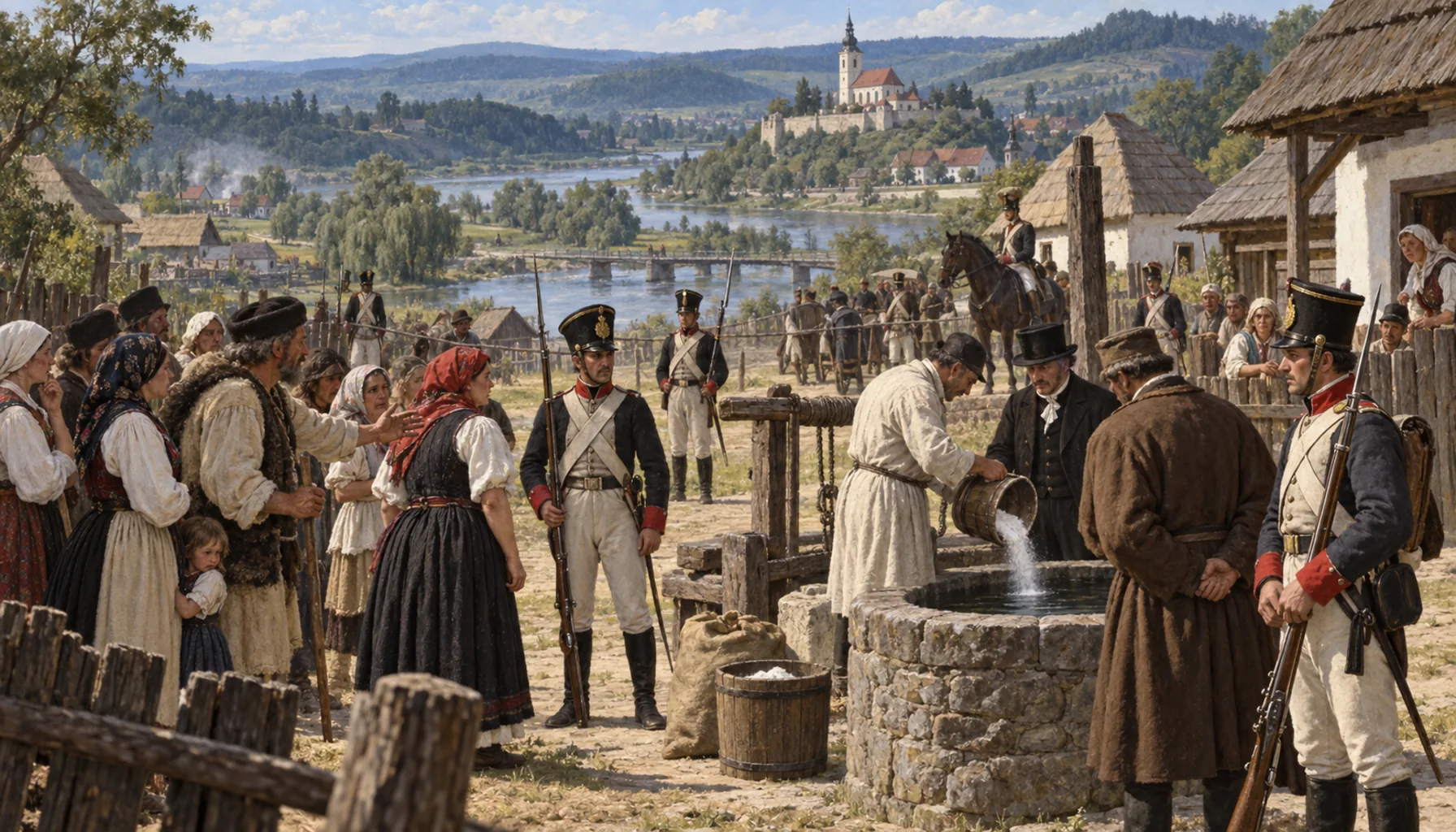
In the summer of 1831 cholera came up the rivers of eastern Slovakia, and with it came the authorities' remedy: soldiers, cordons and chlorinated wells that villagers were certain the lords had poisoned. Peasants across Zemplín and Šariš rose, and the people of Vranov were among them. The rising was crushed within weeks and the punishments were harsh. It is remembered as the East Slovak peasant uprising, and it is the largest thing that happened in this district in the whole nineteenth century — a reminder that for most people here the age of national awakening was first of all an age of hunger and epidemic.V lete 1831 sa po riekach východného Slovenska rozšírila cholera a s ňou aj liek, ktorý priniesla vrchnosť: vojaci, kordóny a chlórované studne, o ktorých boli dedinčania presvedčení, že ich páni otrávili. Sedliaci v Zemplíne a Šariši povstali a Vranovčania boli medzi nimi. Povstanie potlačili za pár týždňov a tresty boli tvrdé. Do dejín vošlo ako východoslovenské roľnícke povstanie a je najväčšou udalosťou, aká sa v tomto okrese v celom 19. storočí odohrala — pripomienka, že pre väčšinu tunajších ľudí bolo obdobie národného prebudenia predovšetkým obdobím hladu a epidémií.