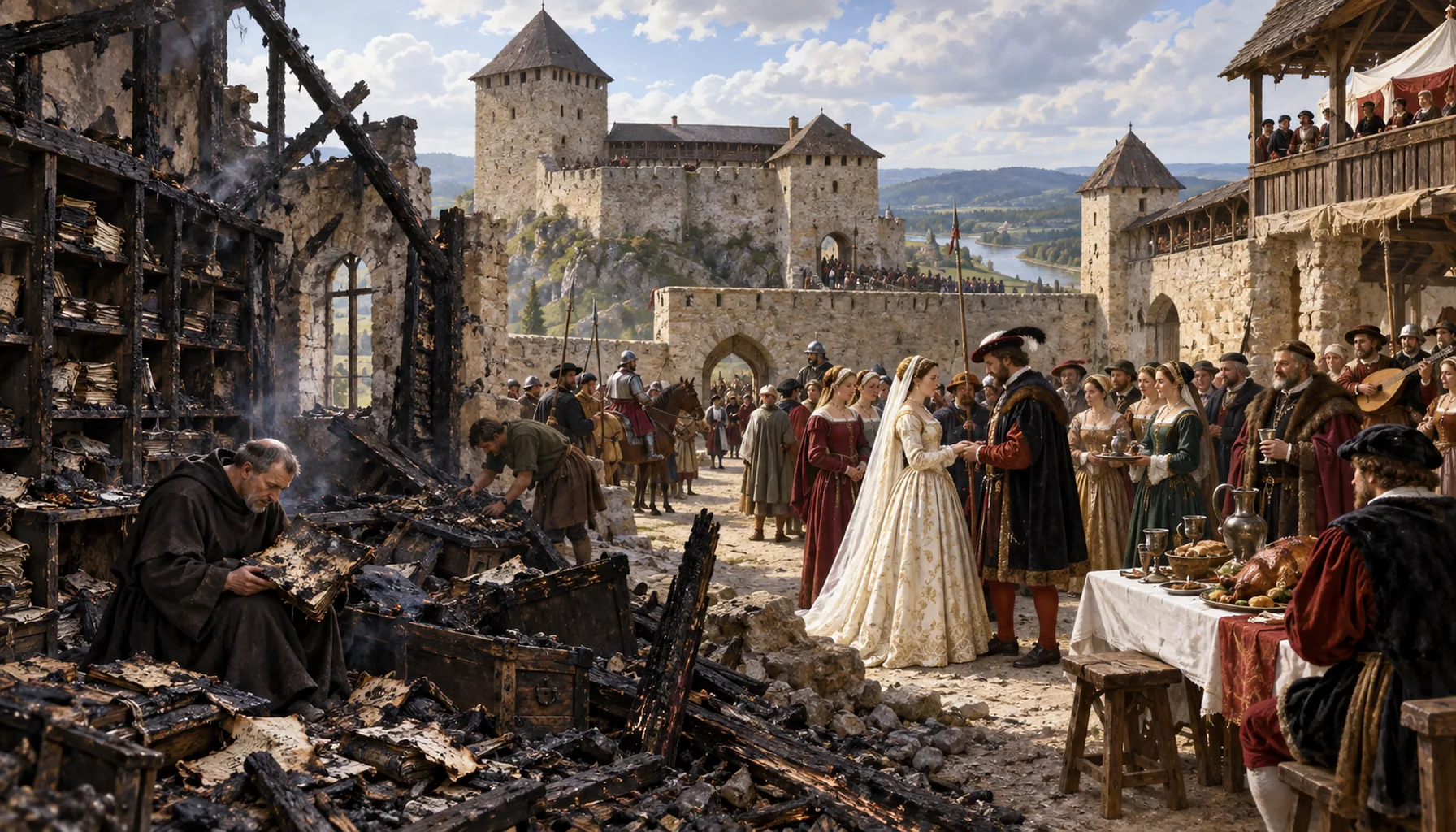
Čičva was more than a fortress. In 1527 it was the meeting place of Zemplín county and the strongroom for the county archive — and that was the year John Zápolya, one of the two men claiming the Hungarian crown after the catastrophe at Mohács, took the castle and burned it, with the county's records inside. The castle was repaired. In 1575 the town below hosted one of the great weddings of the age, when Ferenc Nádasdy married Elizabeth Báthory and Čičva went with her as part of the dowry; in 1610 it passed to her daughter Katarína, who married Juraj Druget of Humenné. A law of 1569 had also ordered a goods warehouse built at Vranov, to make supplying the town and the soldiers easier — a small line in a statute book that tells you where the traffic ran.Čičva nebola len pevnosťou. V roku 1527 bola zhromaždiskom Zemplínskej stolice a zároveň úschovňou stoličného archívu — a práve v tom roku hrad dobyl a podpálil Ján Zápoľský, jeden z dvoch mužov, ktorí si po katastrofe pri Moháči nárokovali uhorskú korunu. S hradom zhorel aj archív stolice. Hrad opäť opravili. V roku 1575 sa v meste pod ním konala jedna z najslávnejších svadieb svojej doby: František Nádašdy si bral Alžbetu Bátoriovú a Čičva išla s ňou ako súčasť vena. Roku 1610 pripadla jej dcére Kataríne, ktorá sa vydala za Juraja Drugeta z Humenného. Zákon z roku 1569 navyše nariadil postaviť vo Vranove sklad tovaru, aby sa mesto aj vojsko ľahšie zásobovali — jeden riadok v zákonníku, ktorý prezrádza, kadiaľ išla doprava.