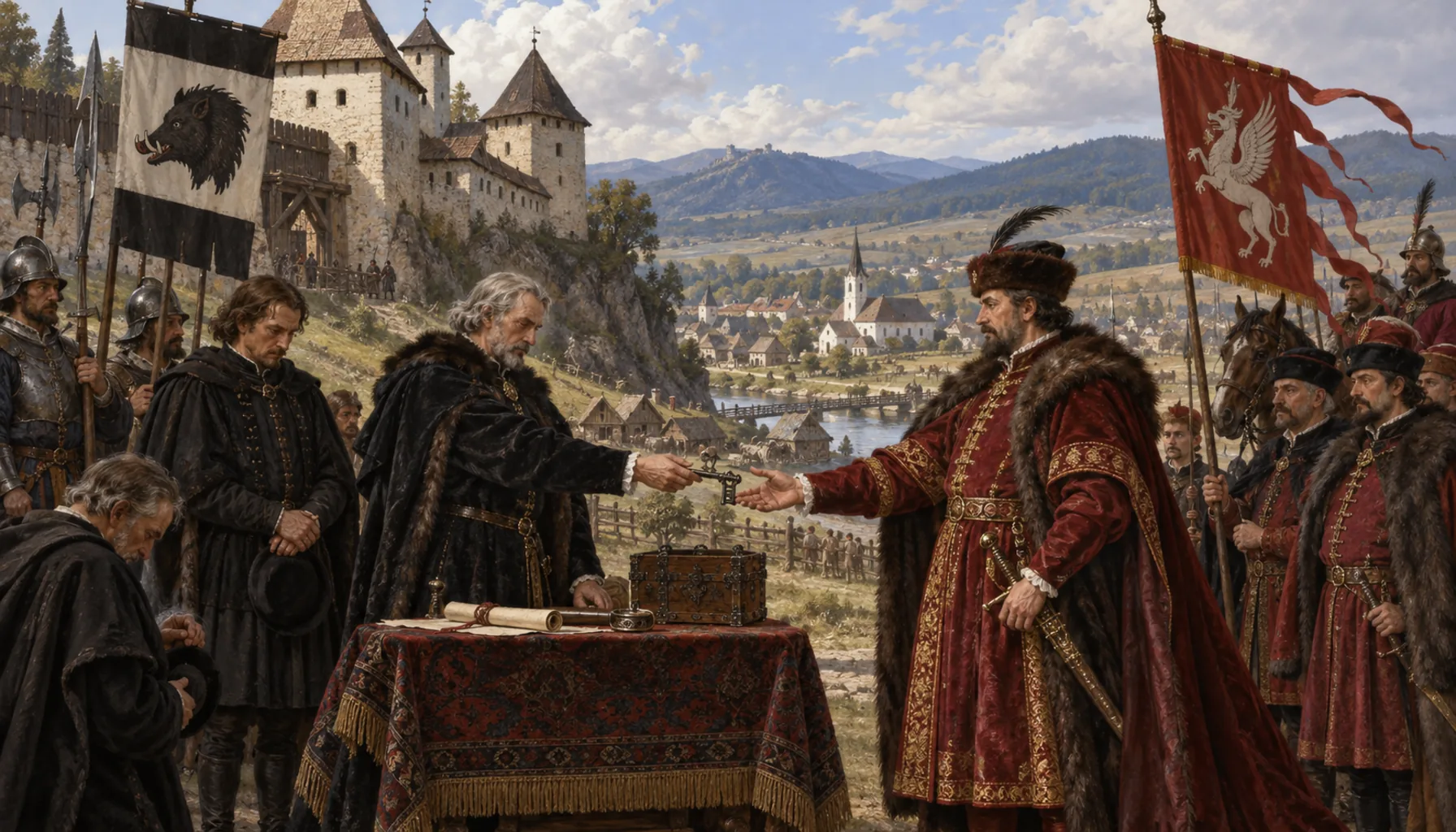
The Rozgonyi line, which had held this valley for two and a half centuries, died out in the 1520s, and the estate passed to the Báthorys, one of the greatest families in Hungary. They spent money here. In 1570 István Báthory, the kingdom's chief justice, founded a Lutheran grammar school in Vranov, and in 1580 his wife Fruzsina Drugeth had a church built for the town's Protestants. By 1671 Vranov had two churches: the older one, at the lower end of the town, was known simply as the Slovak church. Two churches, two languages and two confessions in one small market town was ordinary in sixteenth-century upper Hungary — and it is why the wars of the next century hit places like this so hard.Rod Rozgoňovcov, ktorý túto dolinu držal dve a pol storočia, v dvadsiatych rokoch 16. storočia vymrel a panstvo prešlo na Bátoriovcov, jeden z najmocnejších uhorských rodov. Peniaze sem priniesli. Krajinský sudca Štefan Bátori založil roku 1570 vo Vranove evanjelické gymnázium a jeho manželka Fruzína Drugetová dala roku 1580 postaviť kostol pre miestnych protestantov. V roku 1671 mal Vranov dva kostoly a tomu staršiemu, na dolnom konci mesta, sa hovorilo jednoducho slovenský kostol. Dva kostoly, dva jazyky a dve konfesie v jednom mestečku boli v Hornom Uhorsku 16. storočia bežné — a práve preto zasiahli vojny nasledujúceho storočia takéto miesta tak tvrdo.