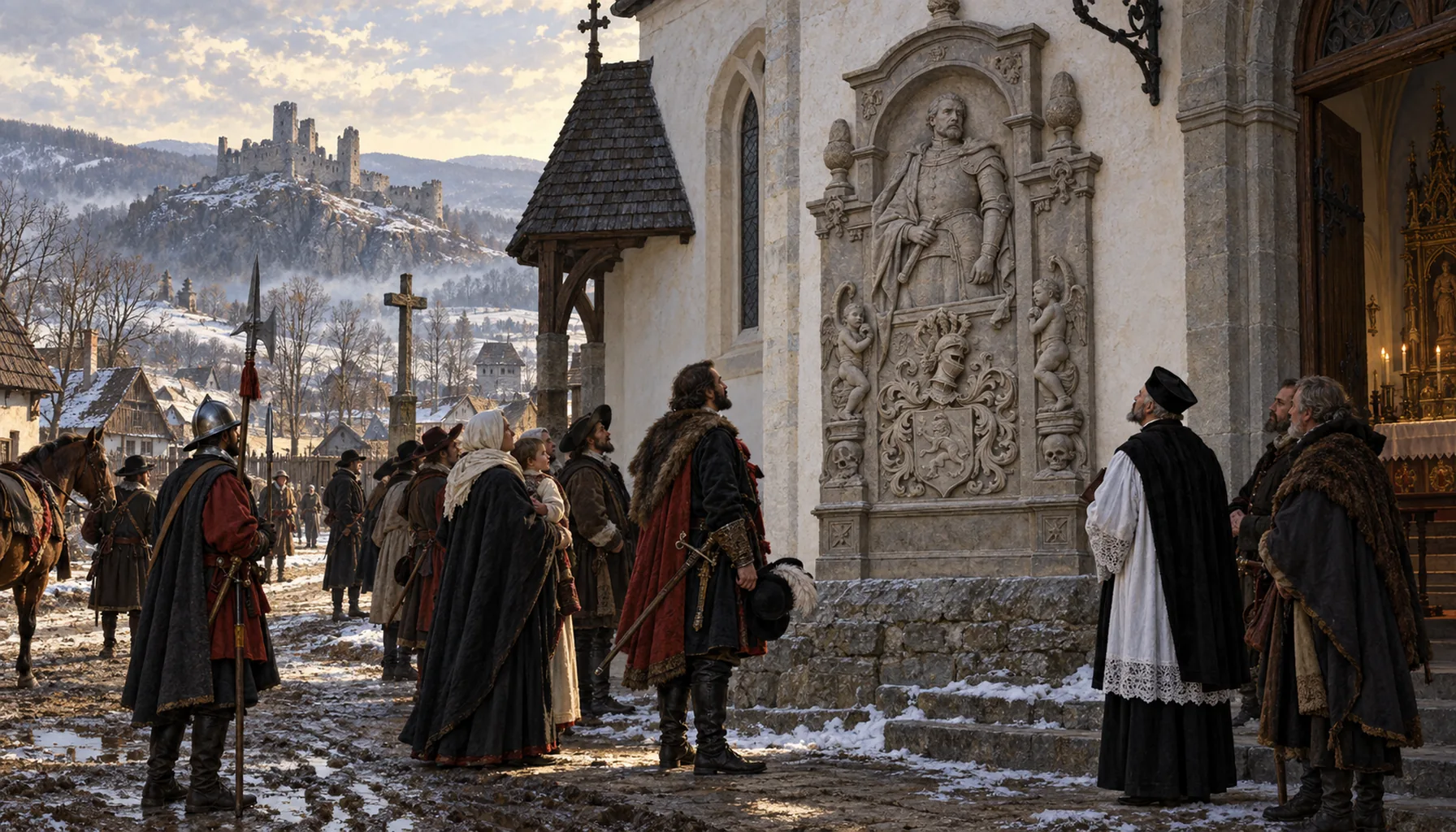
The church keeps this century's evidence on its walls: a monument of 1621 to Melichar Fekešházi, described on it as captain of the castle at Kamenica — sixty-five years after that castle was supposed to have been destroyed, which is the kind of detail that keeps historians arguing. Beside it hangs a red marble epitaph of 1636 to an estate official, Melichar Duchoň. The lordship itself passed in the seventeenth century to the Dessewffy family, also written Dežofy, lords of Černek, and to the Szirmays. These were the decades of the anti-Habsburg risings, when armies of both sides lived off towns like this one and a market town's best hope was to pay whoever arrived first.Doklady o tomto storočí má kostol priamo na stenách: pomník Melichara Fekešháziho z roku 1621, na ktorom je označený za kapitána hradu v Kamenici — šesťdesiatpäť rokov po tom, čo mal byť tento hrad zničený, čo je presne ten druh detailu, pre ktorý sa historici hádajú. Vedľa neho je epitaf z červeného mramoru z roku 1636 venovaný panskému úradníkovi Melicharovi Duchoňovi. Samotné panstvo prešlo v 17. storočí na Dessewffyovcov, písaných aj Dežőfi, pánov z Černeku, a na Szirmayovcov. Boli to desaťročia protihabsburských povstaní, keď vojská oboch strán žili z takýchto mestečiek a najlepšou nádejou trhového mesta bolo zaplatiť tomu, kto prišiel prvý.