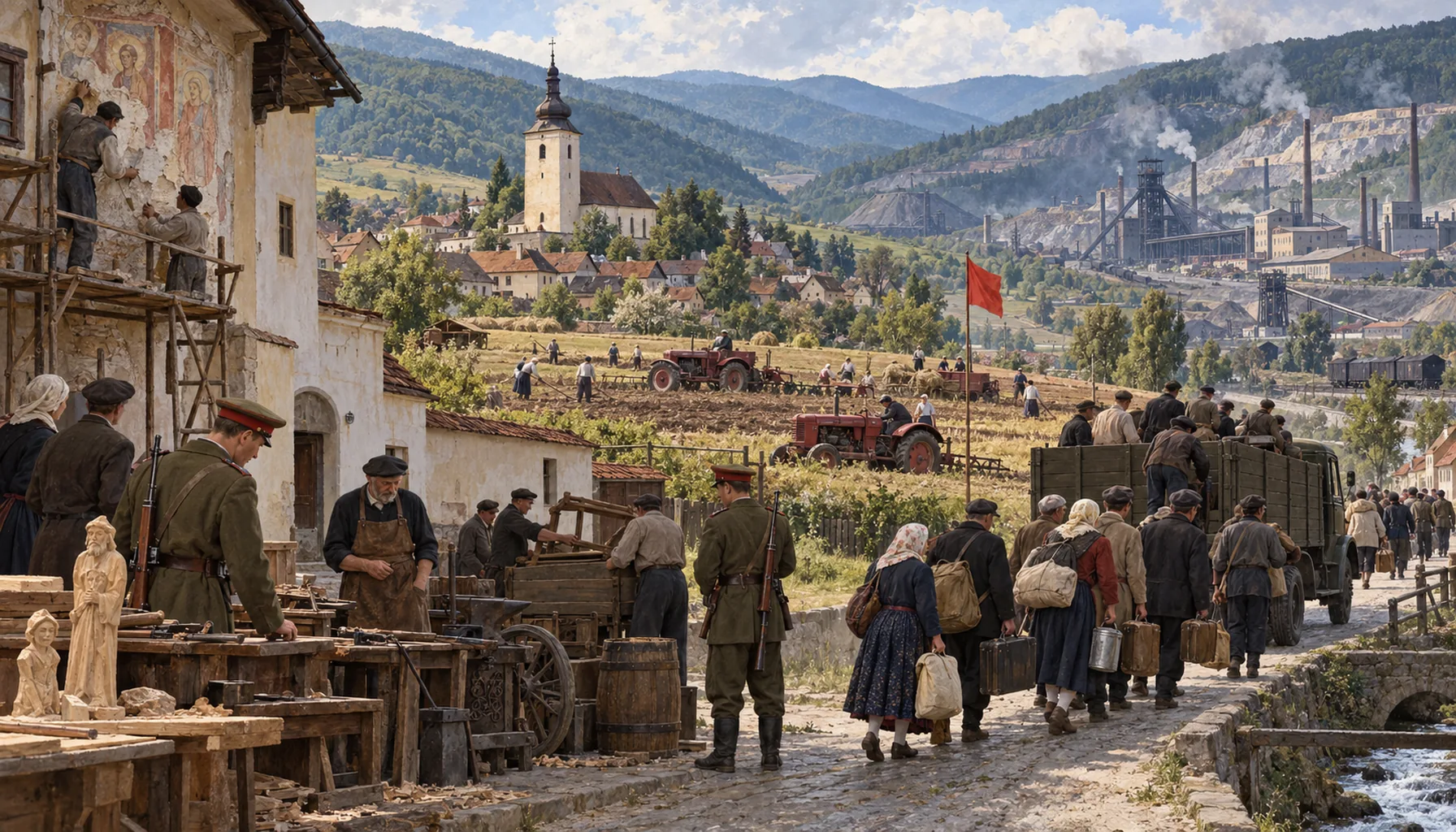
The communist state collectivised the fields, finished off what was left of the small workshops, and moved the valley's working people to jobs elsewhere — the magnesite plants at Jelšava and Lubeník, the ore mines around Rožňava, the factories of Košice. Štítnik became a place people commuted out of, and its population began a long decline that has not stopped. The one thing that steadily improved was the church: restorers went on taking limewash off the walls in stages through the twentieth century, and the medieval painting came back into view a section at a time. The uncovering has never entirely finished — there are still walls with something underneath.Komunistický štát skolektivizoval polia, dorazil zvyšky malých dielní a pracujúcich z doliny presunul za robotou inam — do magnezitiek v Jelšave a Lubeníku, do rudných baní pri Rožňave, do košických fabrík. Zo Štítnika sa stala obec, z ktorej sa dochádza, a počet obyvateľov začal dlho klesať — dodnes neprestal. Jediné, čo sa sústavne zlepšovalo, bol kostol: reštaurátori celé 20. storočie po častiach snímali vápno a stredoveká maľba sa vracala na svetlo kus po kuse. Odkrývanie sa nikdy celkom neskončilo — stále sú steny, pod ktorými niečo je.