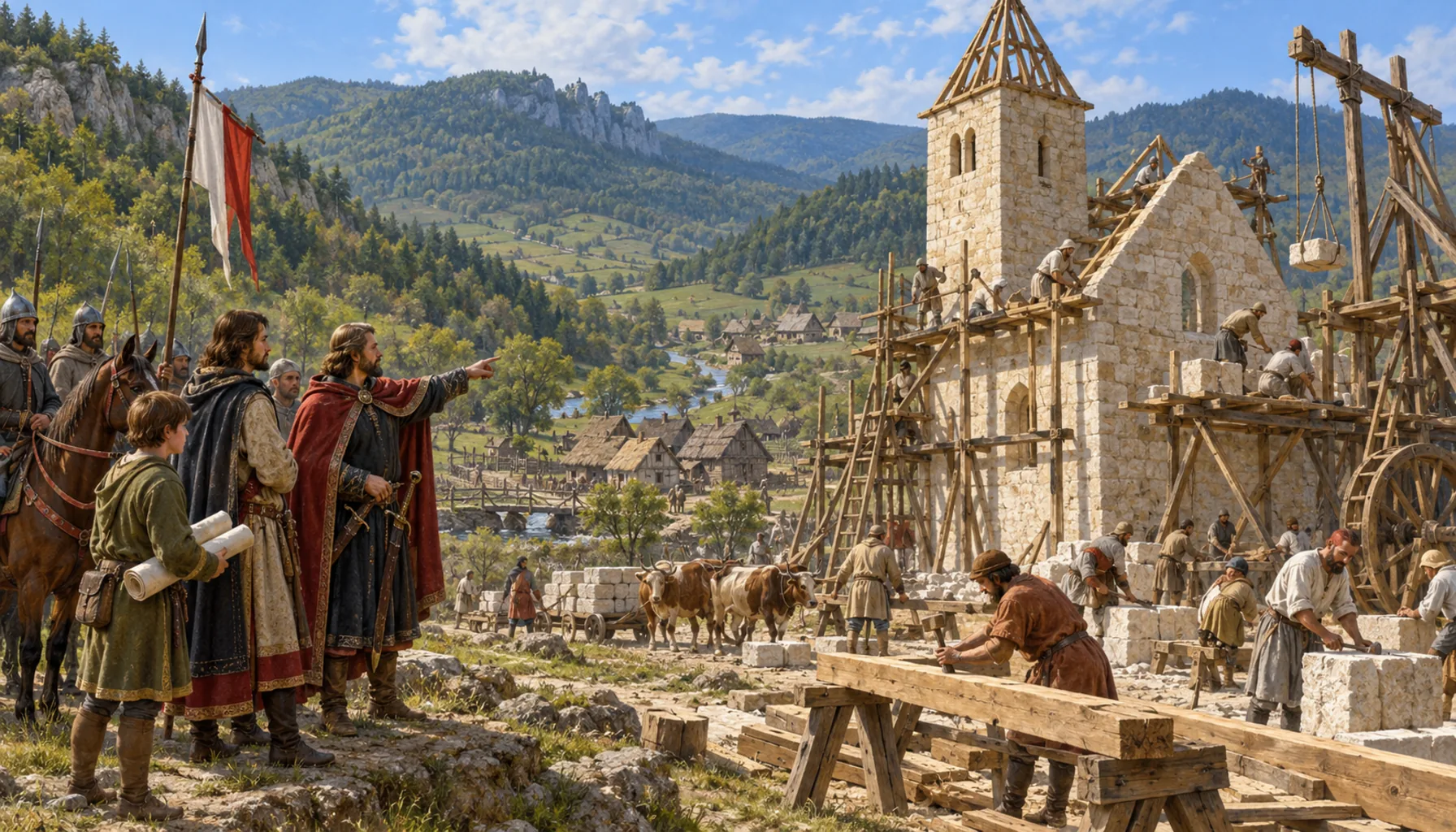
The valley belonged to the family that took its name from the place — the lords of Štítnik, in Hungarian the Csetneki, a branch of the same kindred, the Ákos, that produced the Bebeks of Plešivec. Iron made them rich; Štítnik held market rights and counted as a small town rather than a village; and in the fourteenth century they began the church that still stands. It was built as a family church and burial place as much as a parish church, and it was painted inside as the walls went up, in several campaigns one over another. Their tomb slabs are set in the floor: the people who paid for the building are lying in it.Dolina patrila rodu, ktorý si vzal meno podľa nej — pánom zo Štítnika, po maďarsky Csetneki, vetve toho istého rodu Ákos, z ktorého vzišli aj plešivskí Bebekovci. Zbohatli na železe, Štítnik mal trhové práva a platil skôr za mestečko než za dedinu, a v 14. storočí začali stavať kostol, ktorý tam stojí dodnes. Vznikal rovnako ako rodový kostol a pohrebisko, ako aj ako farský chrám, a maľovali ho zvnútra už počas stavby, vo viacerých vrstvách jedna cez druhú. Ich náhrobné dosky sú vsadené do dlážky: tí, čo stavbu zaplatili, v nej ležia.