Košice region · VillagesKošický kraj · Obce

ŠtítnikŠtítnik

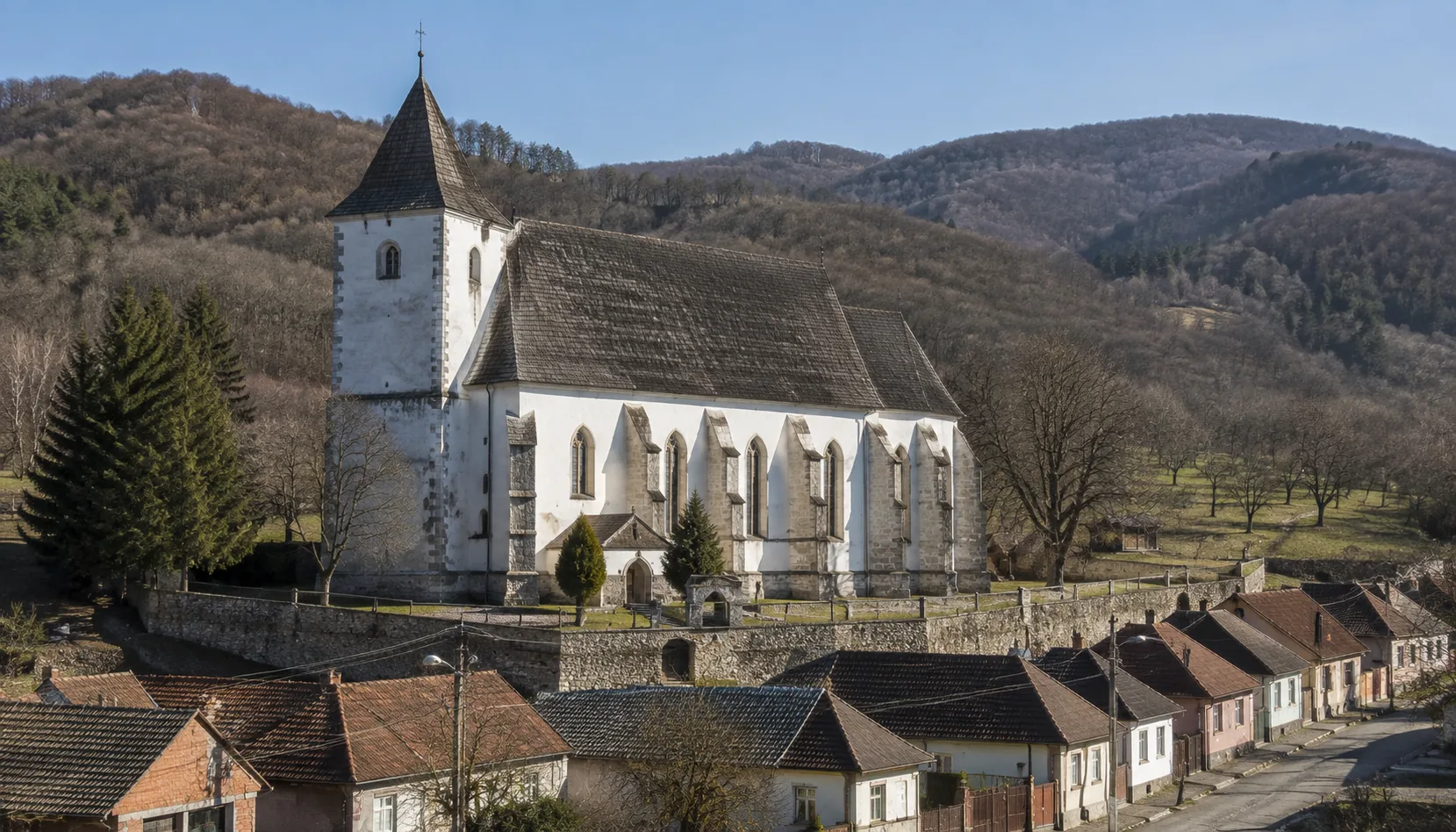
A church far too big for the village that now stands around it: a Gothic hall in the Štítnik valley, its walls carrying one of the largest areas of medieval painting to survive anywhere in Slovakia.Kostol, ktorý je na dnešnú obec okolo neho priveľký: gotická halová stavba v Štítnickej doline, na stenách ktorej sa zachovala jedna z najväčších plôch stredovekej maľby na Slovensku.

Where it standsKde leží

Štítnik lies in the valley of its own small river, which comes down off the southern edge of the Slovak Ore Mountains and joins the Slaná at Plešivec, about fifteen kilometres west of Rožňava. The karst plateaus stop below the village; above it the hills are wooded and ore-bearing.Štítnik leží v doline rovnomennej riečky, ktorá steká z južného okraja Slovenského rudohoria a pri Plešivci sa vlieva do Slanej, asi pätnásť kilometrov západne od Rožňavy. Krasové planiny sa končia pod obcou, nad ňou sú kopce zalesnené a rudonosné.

The valley is a single road with villages strung along it — Roštár and Koceľovce further up, Ochtiná over the ridge, Slavošovce at the head. Štítnik is the largest and has been its centre for six hundred years.Dolinou vedie jediná cesta a na nej sú navlečené obce — Roštár a Koceľovce vyššie, Ochtiná za hrebeňom na západ, Slavošovce celkom hore. Štítnik je z nich najväčší a už šesťsto rokov je centrom doliny.

The Gothic hall church at Štítnik, far larger than the village around it
The Gothic hall church at Štítnik, far larger than the village around itGotický halový kostol v Štítniku, oveľa väčší než obec okolo neho

Why it is herePrečo práve tu

Iron brought people here. Ore was dug and smelted in these hills from the Middle Ages, hammer mills worked along the stream, and the estate that owned them belonged to the lords of Štítnik — a family of the same kindred as the Bebeks of Plešivec. Štítnik held market rights and was a small town, not a village, for most of its history.Ľudí sem priviedlo železo. Rudu v týchto kopcoch dobývali a tavili od stredoveku, na potoku pracovali hámre a panstvo, ktoré ich vlastnilo, patrilo pánom zo Štítnika — rodu z toho istého príbuzenstva ako Bebekovci z Plešivca. Štítnik mal trhové právo a väčšinu svojich dejín bol mestečkom, nie dedinou.

The church was built to the town's standing rather than to its population: begun in the fourteenth century, enlarged into a three-aisled hall in the fifteenth, painted inside as it went up in several campaigns one over another. When the parish turned Lutheran in the sixteenth century the painting went under limewash — the same thing that happened across Gemer, and the reason so much of it survives. It came off again in stages from the early twentieth century, and the uncovering has never entirely finished.Kostol postavili podľa postavenia mestečka, nie podľa počtu obyvateľov: začali ho v 14. storočí, v 15. ho rozšírili na trojloďovú halu a maľoval sa priebežne, v niekoľkých etapách jedna cez druhú. Keď sa fara v 16. storočí stala evanjelickou, maľby zmizli pod vápnom — to isté sa stalo v celom Gemeri a práve preto sa ich toľko zachovalo. Odkrývali ich po etapách od začiatku 20. storočia a celkom sa to dodnes neskončilo.

What you actually seeČo naozaj uvidíte

From the street the church is a long, high, buttressed building under a steep roof, with a square west tower and a walled churchyard round it. Inside it is one wide room: piers, vaulting, and painting on nearly every cleaned wall surface.Z ulice je kostol dlhou vysokou stavbou s opornými piliermi pod strmou strechou, so štvorcovou západnou vežou a s ohradeným cintorínom okolo. Vnútri je to jedna široká miestnosť: piliere, klenba a maľba takmer na každej odkrytej stene.

It is not one picture but layers of them — saints in rows, apostles, scenes from legends, a Last Judgement, patches where the plaster failed and patches where a later coat still covers what is underneath. Faded to ochre, red and dull green, and left that way.Nejde o jeden obraz, ale o vrstvy — svätci v radoch, apoštoli, výjavy z legiend, Posledný súd, miesta, kde omietka nevydržala, aj miesta, kde neskorší náter stále kryje to, čo je pod ním. Vybledli do okrovej, červenej a kalnej zelene a takto ich aj nechali.

The fittings repay their own look: a bronze font of medieval date, tomb slabs of the family who paid for the building, and Lutheran furniture — pews, galleries, a pulpit, an old organ — in a room designed for a different liturgy. Roštár and Koceľovce have small painted churches of the same group, usually seen on the same trip.Zariadenie stojí za samostatný pohľad: bronzová krstiteľnica stredovekého pôvodu, náhrobné dosky rodu, ktorý stavbu zaplatil, a evanjelický mobiliár — lavice, empory, kazateľnica, starý organ — osadený v priestore navrhnutom pre inú liturgiu. Roštár a Koceľovce majú menšie maľované kostoly toho istého okruhu a zvyčajne si ich pozriete pri tej istej ceste.

Living village, not a museumŽivá obec, nie skanzen

The church belongs to a Lutheran congregation and is in use. It is normally locked and is opened by a keyholder from the village or through the parish, so a telephone call beforehand decides whether you see the inside or photograph a door. The marked Gothic Route through these villages exists because the churches on it cannot be kept open.Kostol patrí evanjelickému cirkevnému zboru a používa sa. Bežne býva zamknutý a otvára ho kostolník z obce alebo farský úrad, takže telefonát vopred rozhoduje o tom, či uvidíte interiér, alebo odfotíte dvere. Značená Gotická cesta cez tieto obce vznikla práve preto, že sa kostoly na nej nedajú držať otvorené.

This is one of the poorest corners of Slovakia, and it is worth saying plainly. The district has carried some of the country's highest unemployment since the mines and ironworks closed, the valley has been losing people for decades, and the congregation looking after a monument of European importance is small.Toto je jeden z najchudobnejších kútov Slovenska a treba to povedať priamo. Okres má od zatvorenia baní a železiarní jednu z najvyšších nezamestnaností v krajine, dolina desaťročia stráca ľudí a zbor, ktorý sa stará o pamiatku európskeho významu, je malý.

Getting thereAko sa tam dostať

The way in is the valley road north from Plešivec, about ten kilometres, or across from Rožňava; buses run from both. The branch railway that once climbed the valley no longer carries passengers, so the nearest station with a service is Plešivec or Rožňava, on the Zvolen–Košice line.Ide sa sem dolinovou cestou z Plešivca na sever, asi desať kilometrov, alebo naprieč od Rožňavy; autobusy premávajú z oboch. Odbočná železnica, ktorá kedysi stúpala dolinou do Slavošoviec, už osobnú dopravu nemá, takže najbližšia stanica s vlakmi je Plešivec alebo Rožňava na trati Zvolen – Košice.

← Villages← Obce

Gothic →Gotika →

WatchPozrite si

Sixteen videos for Štítnik.Šestnásť videí — Štítnik.