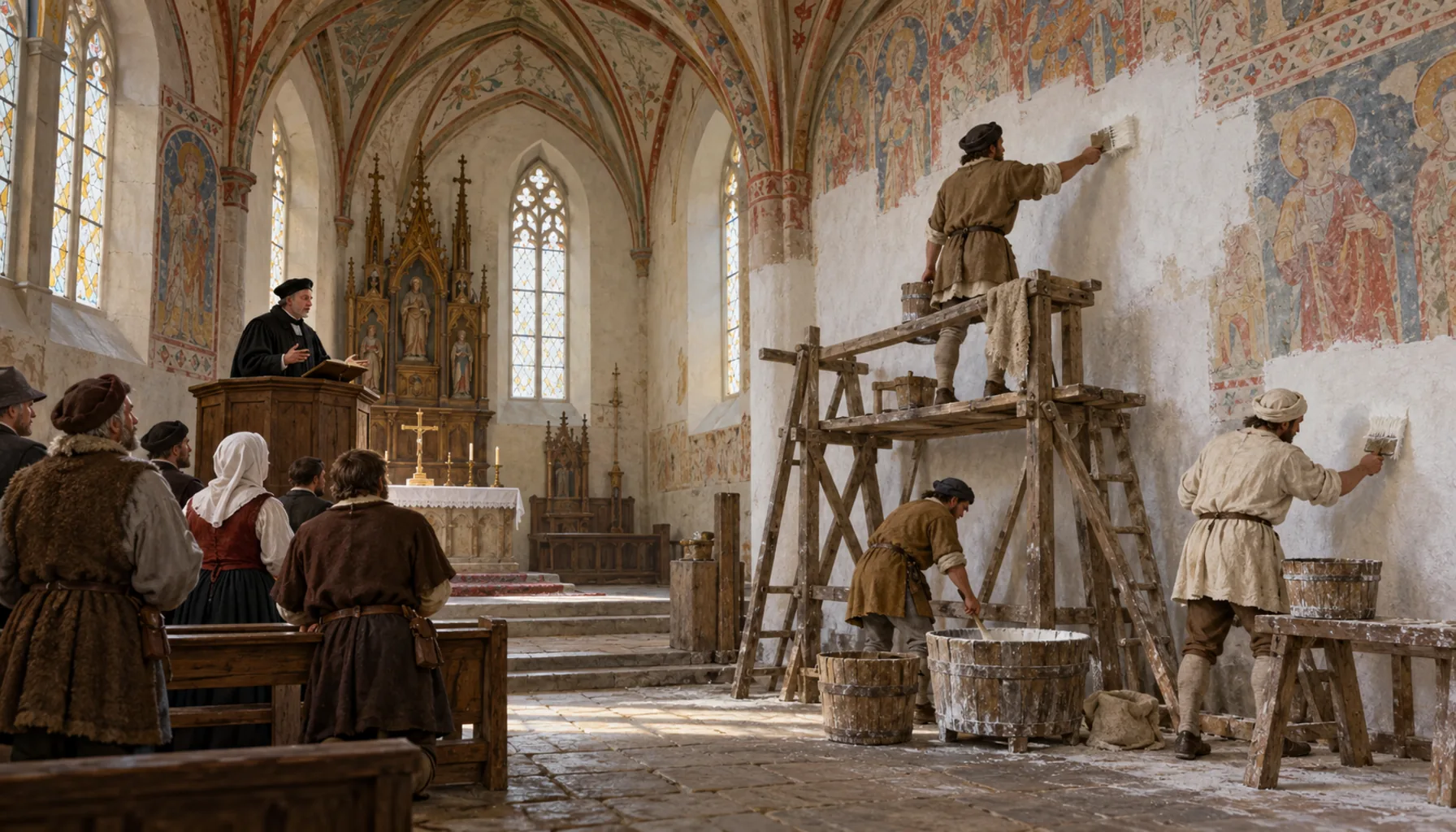
In the sixteenth century the parish turned Lutheran, as most of Gemer did, and the wall paintings were covered with limewash. To the people doing it this was not vandalism: Lutheran worship centred on the preached word, and a wall crowded with painted saints was held to distract from it. It is also the single reason so much of that painting still exists — lime protected it, while elsewhere unpainted churches were simply redecorated or rebuilt. The congregation furnished the room to its own taste instead, with galleries, pews and an organ dated 1639, while beyond the hills the Ottoman frontier ran across southern Gemer and the whole district paid tax to Fiľakovo.V 16. storočí prešla fara na evanjelickú vieru, tak ako väčšina Gemera, a nástenné maľby zabielili vápnom. V očiach tých, čo to robili, to nebolo ničenie: evanjelické bohoslužby stáli na kázanom slove a stena plná maľovaných svätcov od neho podľa nich odvádzala pozornosť. Zároveň je to jediný dôvod, prečo sa tá maľba vôbec zachovala — vápno ju chránilo, kým inde sa nezabielené kostoly jednoducho premaľovali alebo prestavali. Zbor si priestor zariadil po svojom: emporami, lavicami a organom s letopočtom 1639, kým za kopcami viedla osmanská hranica cez južný Gemer a celý kraj platil dane do Fiľakova.