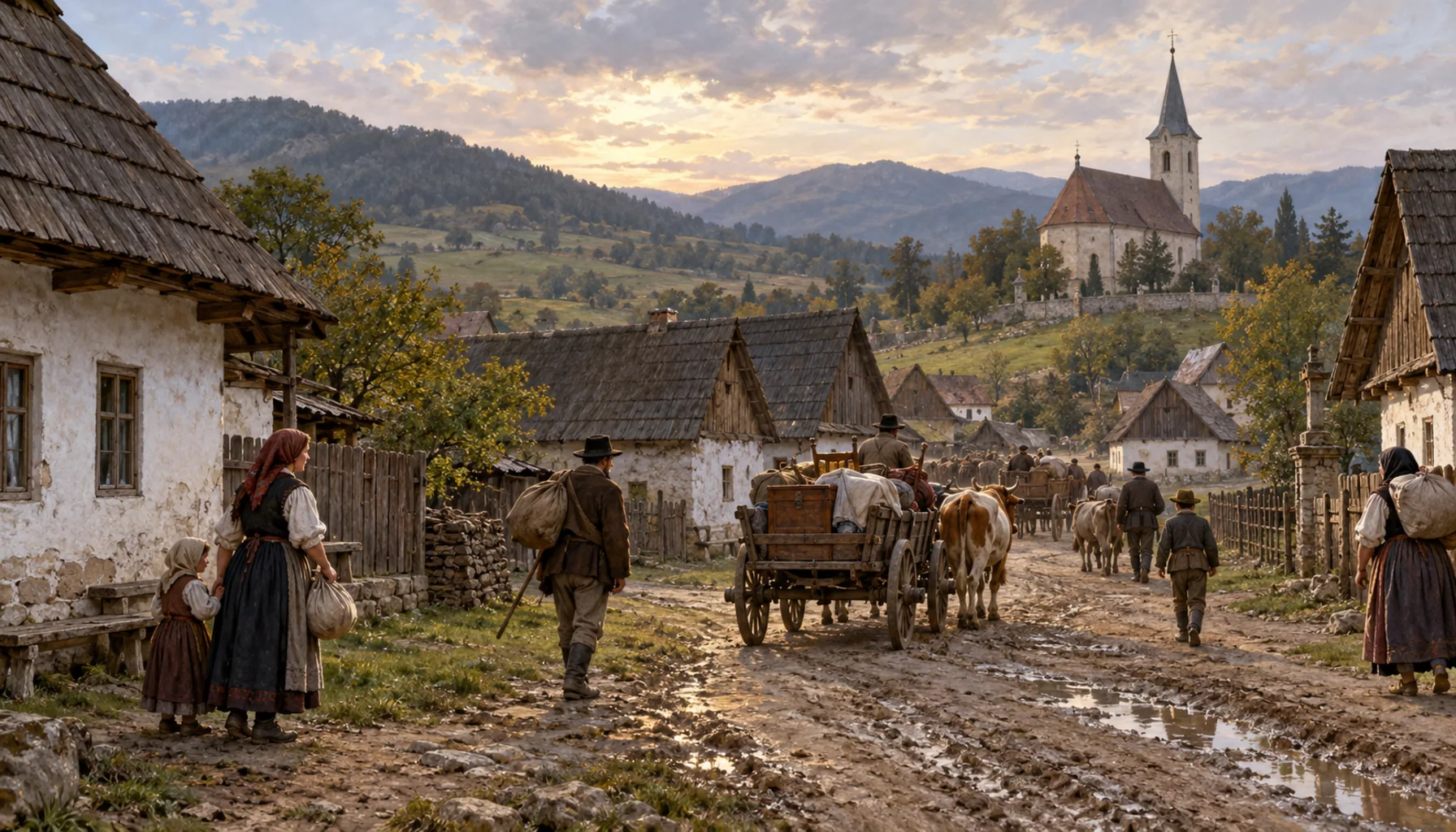
Under Austria-Hungary the village belonged, as it had for centuries, to Gemer-Malohont stolica — the county, the unit that collected the taxes and ran the courts. By the census of 1910 there were 344 people here, down from 436 in 1828. Nothing dramatic caused that. Cloth woven at home could not compete with cloth woven by machine, the fields on these slopes were poor and hard to work, and the paid work was down in the valleys — the ore mines and ironworks of the Slaná valley, the magnesite at Ochtiná. The slow arithmetic of an upland village emptying is not an event, which is exactly why it is easy to miss: it had been running for eighty years before the twentieth century made it faster.Za Rakúsko-Uhorska patrila obec, tak ako po stáročia predtým, do Gemersko-malohontskej stolice — do župy, ktorá vyberala dane a spravovala súdy. Sčítanie v roku 1910 tu našlo 344 ľudí; v roku 1828 ich bolo 436. Nespôsobilo to nič dramatické. Doma tkané plátno nemohlo konkurovať tomu strojovému, polia na týchto svahoch boli chudobné a ťažko obrobiteľné a platená práca bola dole v dolinách — rudné bane a železiarne v doline Slanej, magnezit v Ochtinej. Pomalé počty vyľudňujúcej sa horskej dediny nie sú udalosť, a práve preto sa ľahko prehliadnu: bežali už osemdesiat rokov predtým, než ich dvadsiate storočie zrýchlilo.