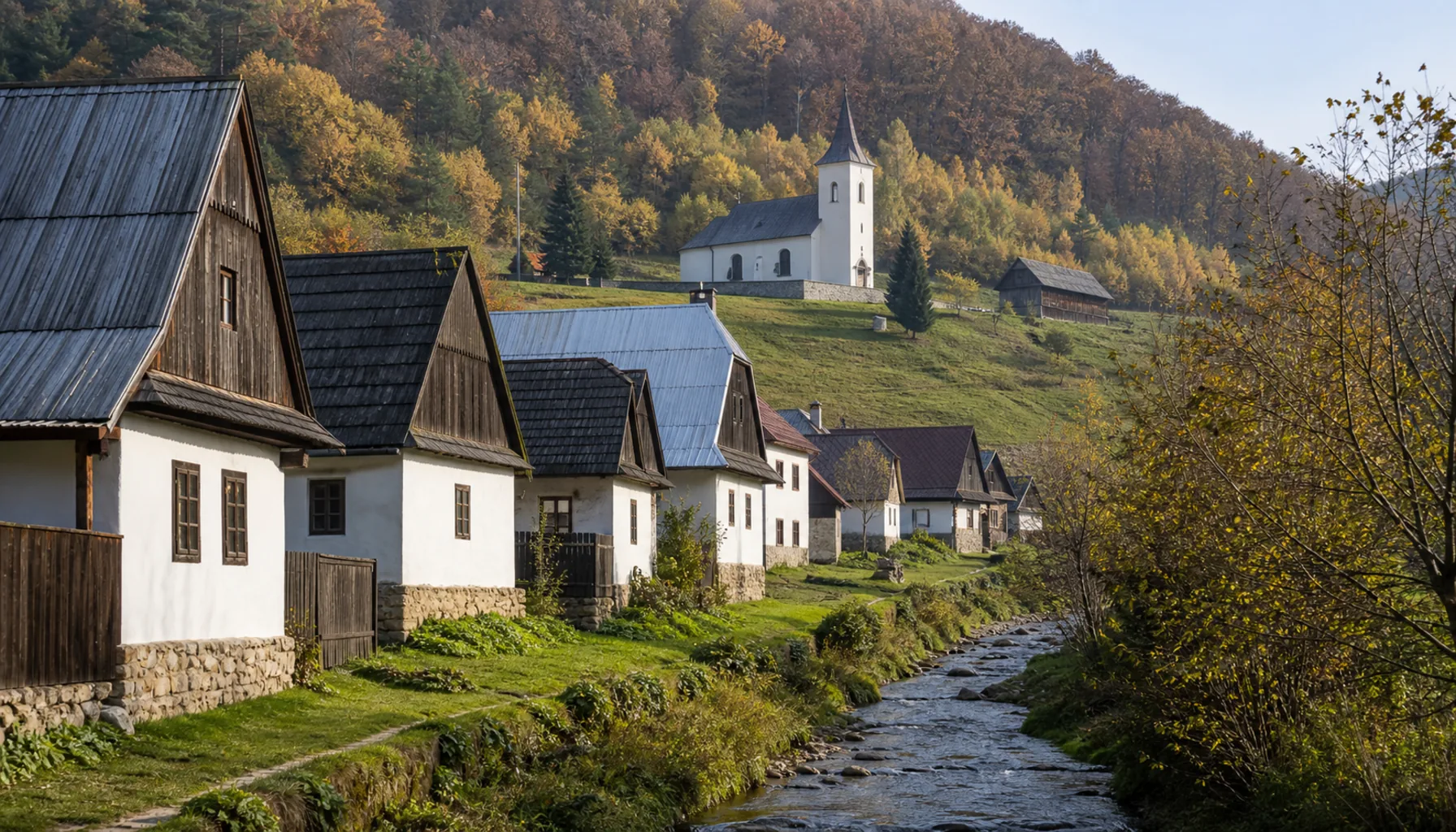
A thinning upland village in the hills north of Rožňava, known because Pavol Jozef Šafárik was born in its Lutheran parsonage — and worth the drive for the road, the pasture and the emptiness rather than for anything built.Rednúca horská obec v kopcoch severne od Rožňavy, známa tým, že sa v jej evanjelickej fare narodil Pavol Jozef Šafárik — a oplatí sa tam ísť skôr pre cestu, pasienky a prázdno než pre čokoľvek postavené.
The village lane at Kobeliarovo under the wooded ridges of the Ore MountainsDedinská ulica v Kobeliarove pod zalesnenými hrebeňmi rudohoria
Where it standsKde leží
Kobeliarovo lies in a side valley in the hills north of Rožňava, on the southern flank of the Slovak Ore Mountains between the Slaná and Štítnik valleys. A minor road climbs to it off the valley floor and goes very little further.Kobeliarovo leží v bočnej doline v kopcoch severne od Rožňavy, na južnom úbočí Slovenského rudohoria medzi dolinami Slanej a Štítnika. Vedie k nemu vedľajšia cesta, ktorá stúpa zo dna doliny a ďalej už takmer nepokračuje.
It is high, small and open: hay meadows and pasture on the slopes, beech forest above them, one street of houses following the stream. Several of the houses are empty, which is the ordinary condition of upland Gemer.Je vysoko, je malé a otvorené: na svahoch lúky a pasienky, nad nimi bučiny, jediná ulica domov popri potoku. Viaceré domy sú prázdne, čo je v hornom Gemeri bežný stav.
Why it is herePrečo práve tu
Villages this high in Gemer lived on sheep, cattle, hay and forest, topped up with whatever wages the ironworks and mines in the valleys below were paying. None of it was ever much, and the twentieth century took most of it away.Takto vysoko položené gemerské dediny žili z oviec, dobytka, sena a lesa a z toho, čo pridali mzdy zo železiarní a baní v dolinách pod nimi. Nikdy toho nebolo veľa a 20. storočie väčšinu z toho odnieslo.
Pavol Jozef Šafárik was born here in 1795 in the house of the village's Lutheran minister, who was his father. He left as a boy for school and never came back to live; the Slavic Antiquities, and with them the founding of Slavic studies as a subject, were written in Novi Sad and Prague. This site tells his story properly elsewhere, and this page is about the place he started from.Pavol Jozef Šafárik sa tu narodil v roku 1795 v dome tunajšieho evanjelického farára, ktorým bol jeho otec. Ako chlapec odišiel do škôl a natrvalo sa už nevrátil; Slovanské starožitnosti a s nimi aj základ slavistiky ako odboru vznikli v Novom Sade a v Prahe. Jeho príbeh rozpráva táto stránka poriadne inde — táto strana je o mieste, z ktorého vyšiel.
What the village adds is the scale of that starting point. A parish of a few hundred people, at the top of a poor valley in a poor region, produced the man who gave the Slavs of central Europe a documented past — and whose name is now on the university in Košice.Obec k tomu pridáva mierku toho začiatku. Fara s niekoľkými stovkami duší na konci chudobnej doliny v chudobnom kraji vydala muža, ktorý dal Slovanom strednej Európy zdokumentovanú minulosť — a ktorého meno dnes nesie univerzita v Košiciach.
What you actually seeČo naozaj uvidíte
The Lutheran church stands above the houses, plain and small, and the village keeps a memorial to Šafárik. Like almost everything in these upland villages it is opened on request rather than to a timetable: ask at the village office, or accept the exterior and the setting.Nad domami stojí evanjelický kostol, jednoduchý a malý, a obec udržiava pamätník Šafárika. Ako takmer všetko v týchto horských obciach sa otvára na požiadanie, nie podľa otváracích hodín: opýtajte sa na obecnom úrade, alebo sa uspokojte s exteriérom a s prostredím.
The rest is landscape and vernacular fabric: houses with stone footings and timber above, steep roofs, log barns, hay drying the old way on some of the slopes, and forest tracks climbing from the last gate onto the ridges of the Ore Mountains. There is no marked visitor provision beyond the tracks themselves.Zvyšok je krajina a ľudová stavebná látka: domy s kamennou podmurovkou a drevom nad ňou, strmé strechy, zrubové stodoly, na niektorých svahoch seno sušené po starom a lesné cesty stúpajúce od poslednej brány na hrebene rudohoria. Okrem samotných ciest tu niet nijakého značeného zázemia pre návštevníkov.
Anyone expecting a birthplace museum with a car park should adjust the expectation before setting out. What Kobeliarovo offers is a small, quiet, half-empty village in good hill country, and the knowledge that one particular door in it was the first one.Kto čaká rodný dom s parkoviskom a expozíciou, mal by si predstavu upraviť ešte pred odchodom. Kobeliarovo ponúka malú, tichú, spolovice prázdnu obec v peknej hornatej krajine — a vedomie, že jedny konkrétne dvere v nej boli tie prvé.
Living village, not a museumŽivá obec, nie skanzen
People live here, in fewer numbers each decade. There is no visitor infrastructure at all: assume no café, no shop open when you want it and no signposting. The district carries some of the highest unemployment in Slovakia, and the upland villages are the thinnest end of it. This is somebody's home, and a hard one to keep going, not a heritage set.Ľudia tu žijú, hoci každým desaťročím ich je menej. Nijaké zázemie pre návštevníkov tu nie je: nerátajte s kaviarňou, s obchodom otvoreným vtedy, keď ho potrebujete, ani so smerovkami. Okres má jednu z najvyšších nezamestnaností na Slovensku a horské obce sú jeho najtenším koncom. Je to niečí domov, ktorý sa ťažko udržiava, nie kulisa pamiatky.
Yards, tracks and meadows are private and in use. The ordinary rules apply: park without blocking a gate, close what you open, and treat a photograph of somebody's house as something to ask about first.Dvory, cesty a lúky sú súkromné a používajú sa. Platia bežné pravidlá: parkujte tak, aby ste nezablokovali bránu, zatvorte, čo ste otvorili, a fotografiu niečieho domu berte ako vec, na ktorú sa treba najprv spýtať.
Getting thereAko sa tam dostať
By car, north from Rožňava up the valley and then a signposted turn onto the side road. Buses run from Rožňava but are timed for school and work rather than for visitors, so a car is the practical answer. The nearest station is Rožňava, on the Zvolen–Košice line.Autom sa ide z Rožňavy na sever dolinou a potom značenou odbočkou na vedľajšiu cestu. Autobusy z Rožňavy premávajú, ale sú nastavené na školu a prácu, nie na návštevníkov, takže praktickou odpoveďou je auto. Najbližšia stanica je Rožňava na trati Zvolen – Košice.
Explore KobeliarovoObjavujte Kobeliarovo
Every part of this place with a page of its own.Každá časť tohto miesta, ktorá má vlastnú stránku.