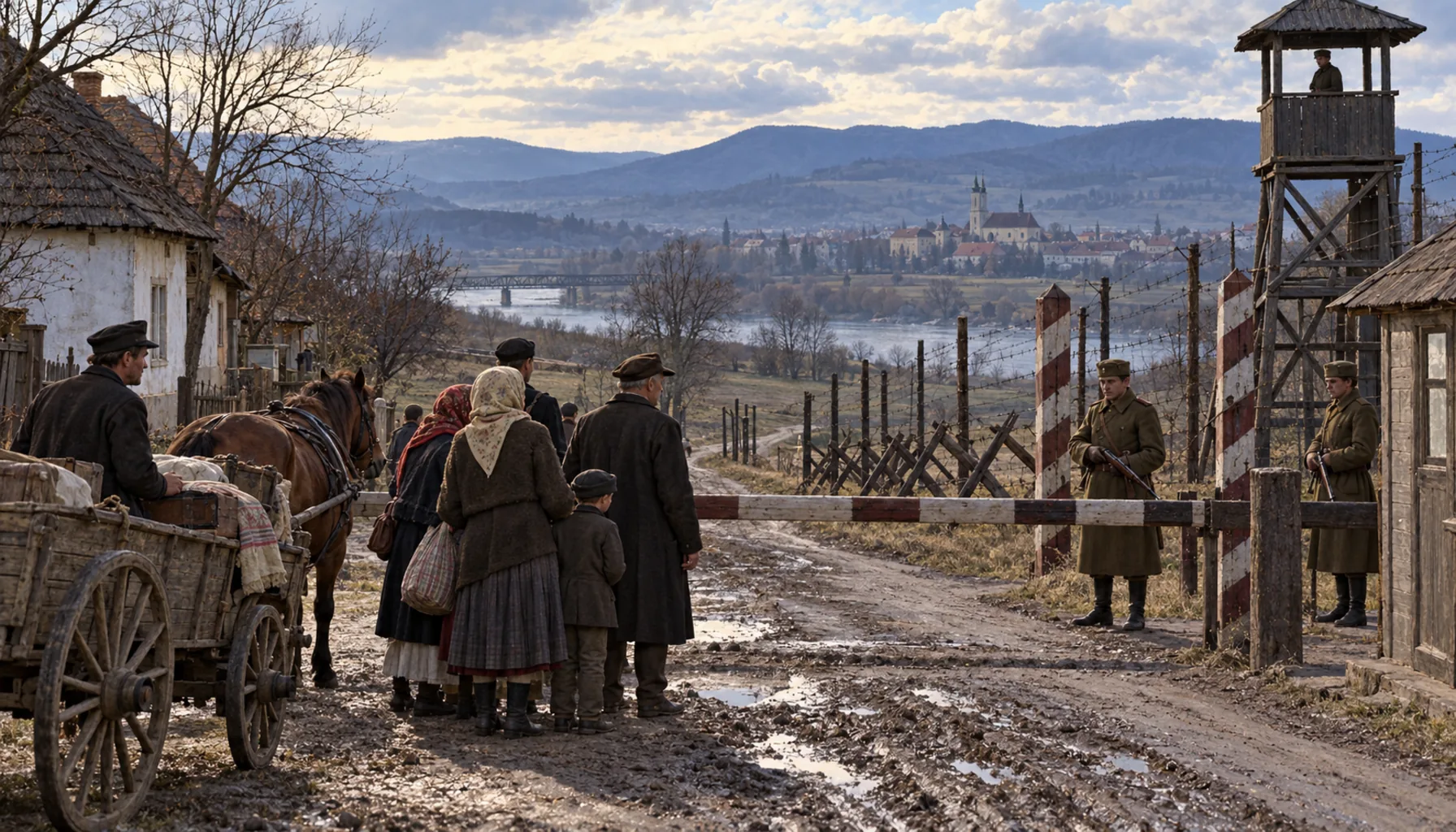
After the war Subcarpathian Ruthenia was handed to the Soviet Union, so Uzhhorod — the town's market, its county seat, its natural capital for nine hundred years — ended up in another country, behind the most closely guarded frontier in Europe. Sobrance lost its district status and became an ordinary small town in a corner nobody was going to invest in. Farms were collectivised, the state worked the forests of the Vihorlat, and young people left for Michalovce, Košice or the Czech lands. Being at the end of the road, instead of on it, is the whole economic history of the second half of the century here.Po vojne pripadla Podkarpatská Rus Sovietskemu zväzu, a tak sa Užhorod — trh Sobraniec, ich stoličné mesto a deväťsto rokov ich prirodzené centrum — ocitol v inej krajine, za najprísnejšie stráženou hranicou v Európe. Sobrance stratili postavenie okresného mesta a stali sa obyčajným mestečkom v kúte, do ktorého nikto nemienil investovať. Družstvá pohltili polia, lesy Vihorlatu obhospodaroval štát a mladí odchádzali do Michaloviec, Košíc alebo do českých krajov. Byť na konci cesty namiesto na ceste — to sú celé hospodárske dejiny druhej polovice storočia v tomto meste.