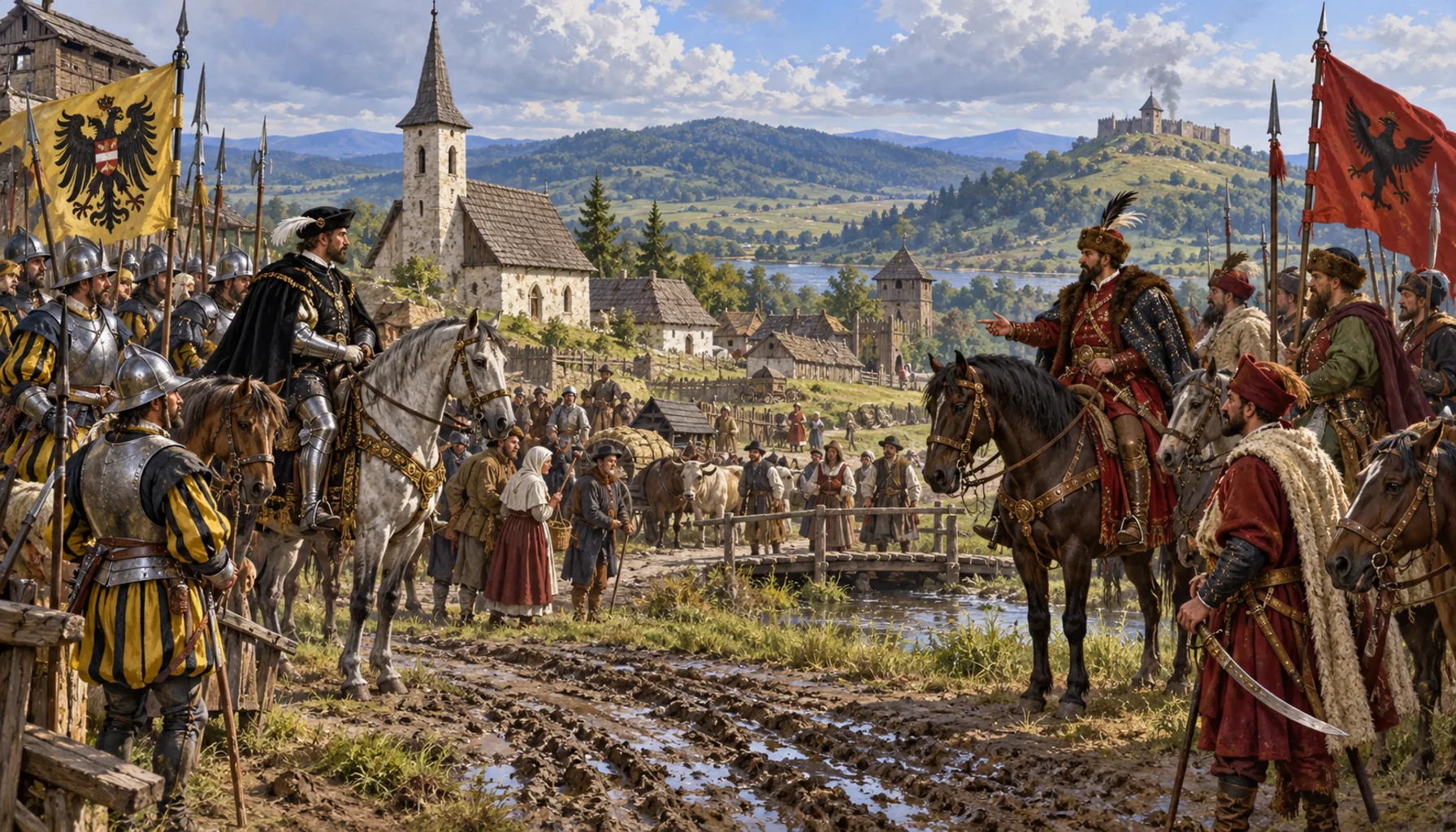
After the defeat at Mohács in 1526 the kingdom split, and Ung — like Zemplín next door — ended up in the zone claimed by the princes of Transylvania and disputed by the Habsburg emperors. The Ottoman frontier itself never reached this far north-east, so the enemy that mattered here was usually not the sultan but whichever Christian army happened to be passing. Armies quartered themselves on villages, took what they wanted and burned what they could not carry. It is worth being precise about this, because destroyed by the Turks is the standard local explanation for a great many eastern Slovak ruins that were in fact wrecked by imperial or rebel troops.Po porážke pri Moháči roku 1526 sa kráľovstvo rozpadlo a Užská stolica — rovnako ako susedný Zemplín — sa ocitla v pásme, na ktoré si robili nárok sedmohradské kniežatá a o ktoré sa sporili habsburskí cisári. Osmanská hranica sem na severovýchod nikdy nesiahla, takže nepriateľom tu spravidla nebol sultán, ale to kresťanské vojsko, ktoré práve prechádzalo. Vojaci sa ubytovali po dedinách, vzali si, čo chceli, a spálili, čo neodniesli. Túto vec treba hovoriť presne, lebo „zničili to Turci“ je bežné miestne vysvetlenie mnohých východoslovenských zrúcanín, ktoré v skutočnosti zničili cisárske alebo povstalecké vojská.