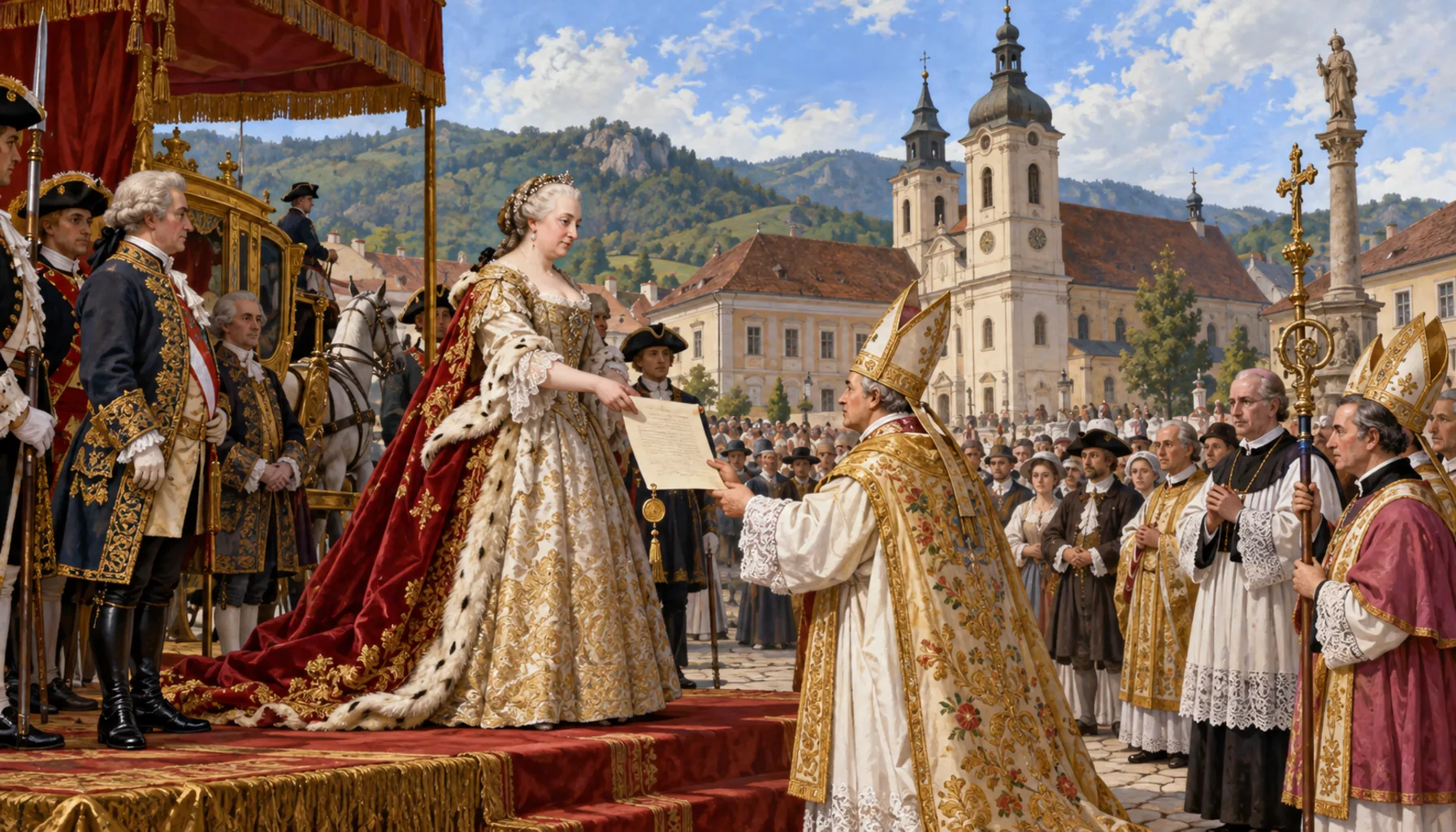
In 1776 the empress Maria Theresa had a new Roman Catholic diocese carved out for Rožňava, and the town gained a second identity almost overnight. A bishop needs a palace, a seminary needs teachers and a cathedral needs music and books, so the parish church of 1304 was raised to cathedral rank and the square filled up with institutions. The schools that came with the diocese mattered more than the ceremonies: for the next century and a half Rožňava was where the sons of Gemer went to be educated, whatever their families did for a living. The cathedral also holds the town's finest medieval object — the Metercia altar panel of 1513, a painting of St Anne with the Virgin and Child in whose background miners wash and haul ore, one of the earliest pictures of mining anywhere in Europe.V roku 1776 dala cisárovná Mária Terézia pre Rožňavu vyčleniť nové rímskokatolícke biskupstvo a mesto takmer zo dňa na deň získalo druhú tvár. Biskup potrebuje palác, seminár učiteľov a katedrála hudbu i knihy — farský kostol z roku 1304 tak povýšili na katedrálu a námestie sa zaplnilo inštitúciami. Dôležitejšie ako obrady boli školy, ktoré s biskupstvom prišli: nasledujúce poldruha storočia sa v Rožňave vzdelávali synovia celého Gemera bez ohľadu na to, čím sa doma živili. V katedrále je aj najcennejšia stredoveká pamiatka mesta — tabuľa Metercia z roku 1513, obraz svätej Anny s Pannou Máriou a dieťaťom, v ktorého pozadí baníci perú a vozia rudu; patrí k najstarším vyobrazeniam baníctva v Európe.