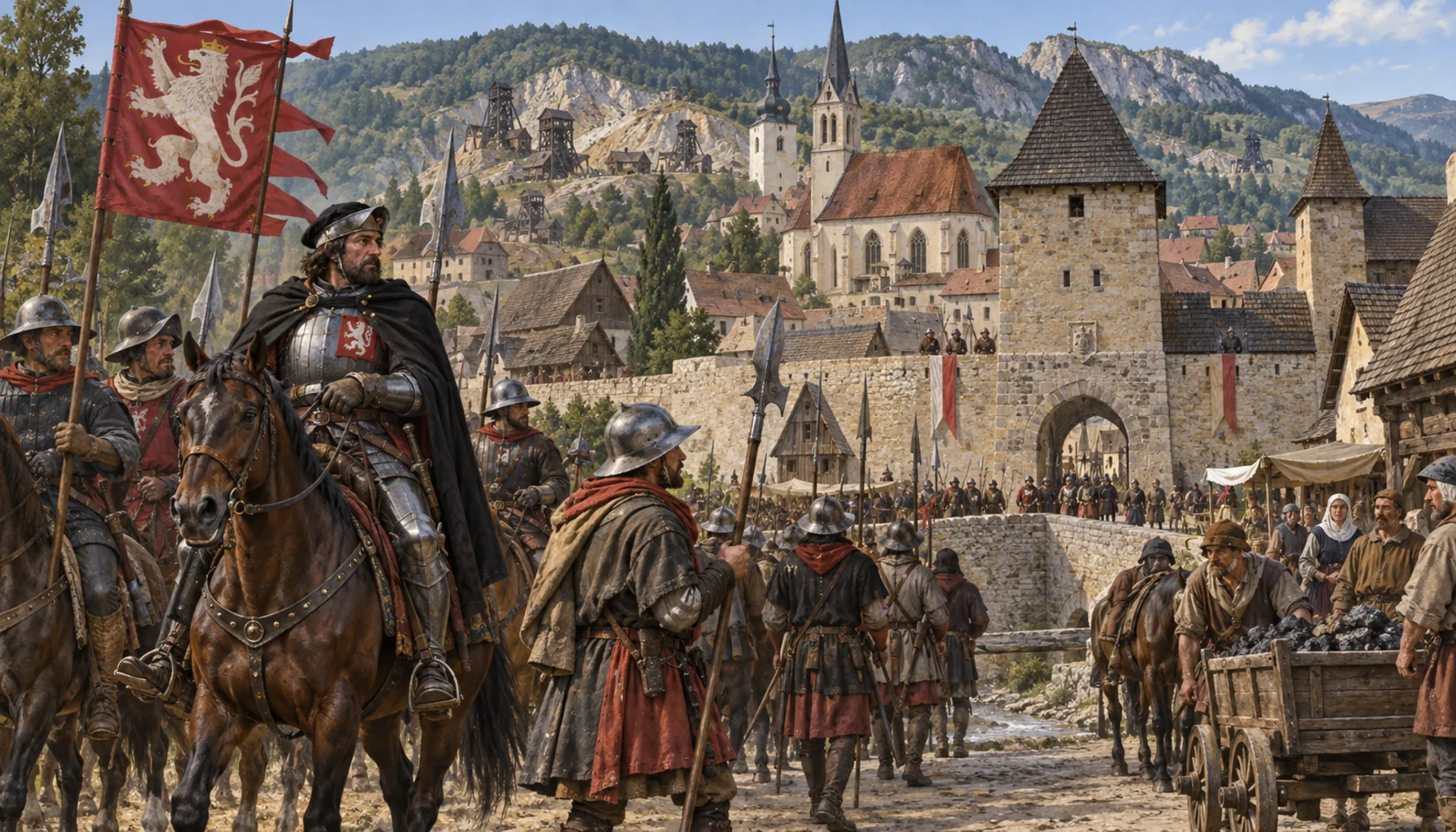
When King Albert died in 1439 leaving a newborn heir, the queen hired the Czech captain Ján Jiskra of Brandýs to hold the mining towns of upper Hungary for her son. For roughly twenty years his garrisons — Czech and Slovak soldiers, many of them veterans of the Hussite wars — were the real power across Gemer and Spiš, and the mining towns paid them to be it. When Jiskra's service ended, bands of unpaid soldiers called the bratríci, the 'little brethren', stayed on and lived off the country until King Matthias Corvinus broke them in the 1460s. Nobody in Gemer grew rich in these decades and the output of the mines fell.Keď v roku 1439 zomrel kráľ Albrecht a zanechal len práve narodeného dediča, kráľovná najala českého kapitána Jána Jiskru z Brandýsa, aby jej synovi udržal banské mestá horného Uhorska. Zhruba dvadsať rokov boli jeho posádky — českí a slovenskí vojaci, mnohí vyslúžilci husitských vojen — skutočnou mocou v Gemeri aj na Spiši a banské mestá im za to platili. Keď sa Jiskrova služba skončila, zostali po nej skupiny nevyplatených vojakov, takzvaní bratríci, ktoré sa živili z kraja, kým ich v šesťdesiatych rokoch 15. storočia nerozprášil kráľ Matej Korvín. V Gemeri v tých desaťročiach nezbohatol nikto a ťažba klesla.