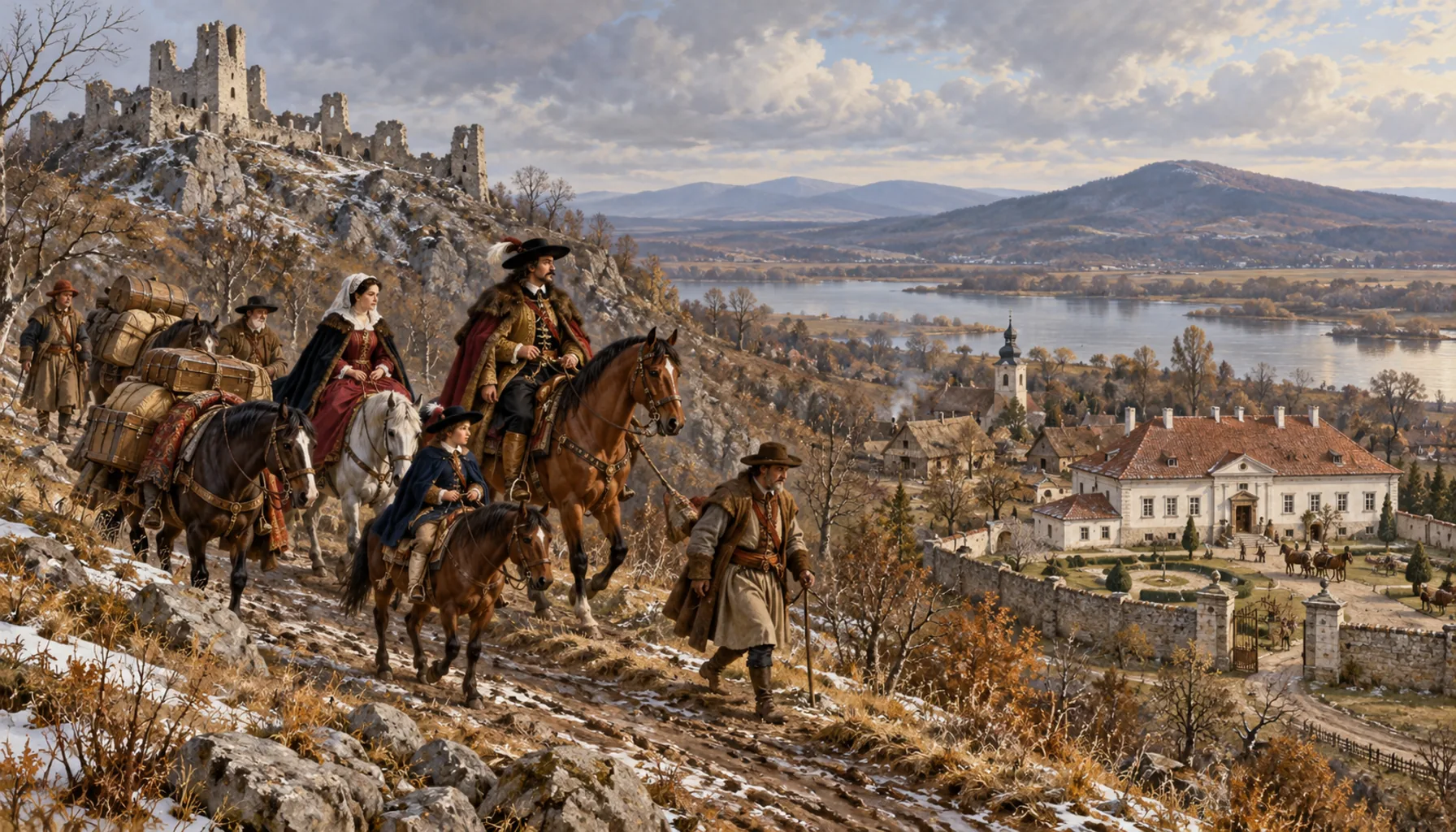
The Sztáray family, who held the estate, had no wish to live in a cold ruin up a steep hill when a comfortable manor house could be built in the village below, and that is where they went. It is how most Slovak castles actually ended: not stormed, but abandoned, because the way lords wanted to live had changed. Once a roof goes, a building has about a generation before the rest follows, and cut stone is far too useful to leave lying above a village that is busy building. By the nineteenth century Viniansky hrad was a shape in the trees that nobody climbed to.Rod Sztárayovcov, ktorý panstvo držal, nemal chuť bývať v studenej zrúcanine na strmom kopci, keď sa v dedine pod ním dal postaviť pohodlný kaštieľ — a tak sa presťahoval. Takto sa v skutočnosti skončila väčšina slovenských hradov: nie dobytím, ale opustením, lebo sa zmenilo to, ako chceli páni žiť. Keď zmizne strecha, má stavba asi generáciu, kým ju nasleduje aj zvyšok, a otesaný kameň je príliš dobrý na to, aby ležal nad dedinou, ktorá práve stavia. V 19. storočí bol Viniansky hrad už len tvarom medzi stromami, ku ktorému nikto nechodil.