Built After the Mongols LeftPostavený po odchode Mongolov
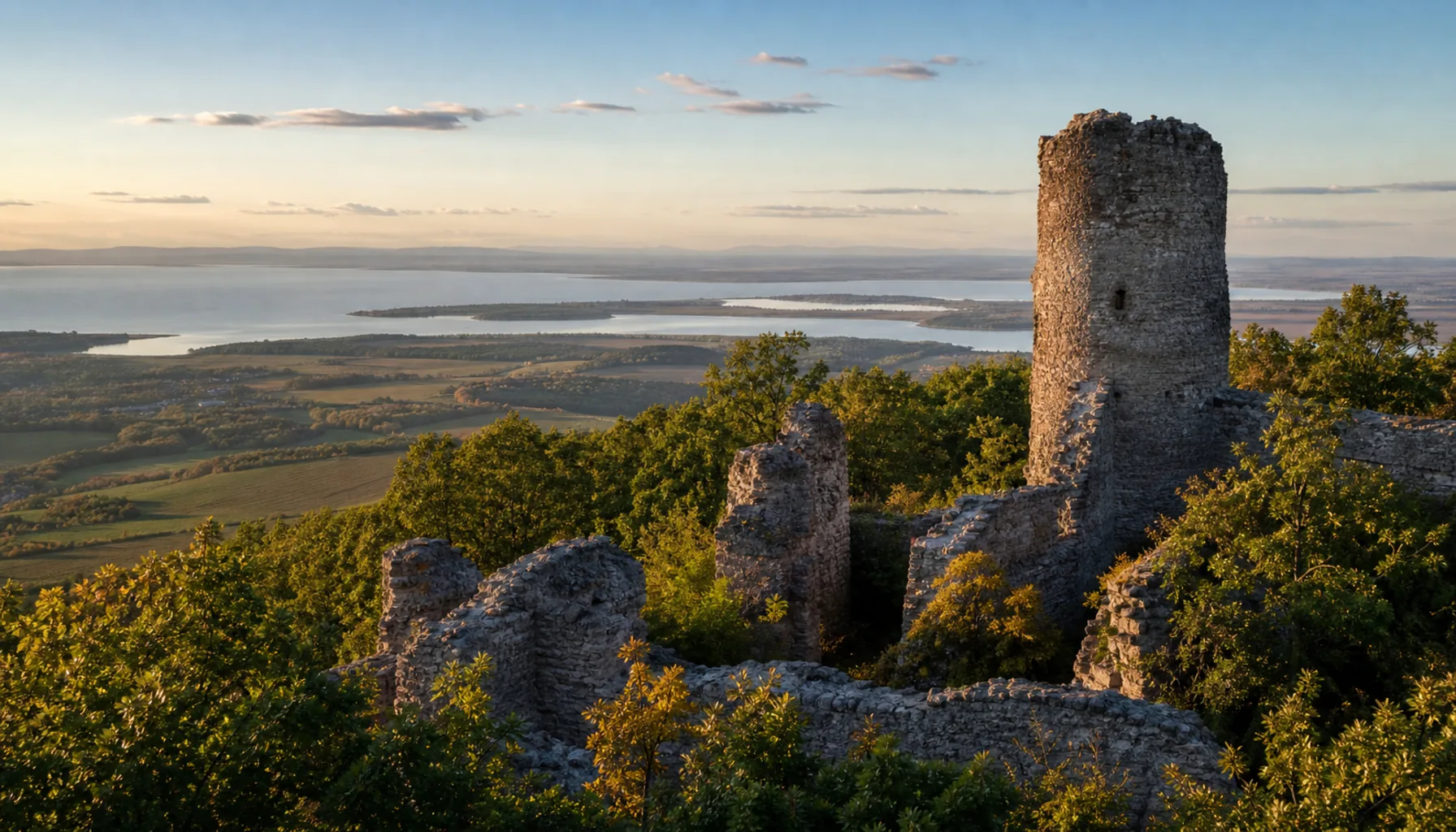
The Mongol invasion of 1241 tore through the Kingdom of Hungary and taught it one blunt lesson: earth ramparts and timber palisades were not enough. In the decades that followed, stone castles went up all over the country on any hill that would take one. Viniansky hrad is one of that generation — built in the second half of the thirteenth century on the hill above Vinné, where the flat Zemplín plain runs up against the first slopes of the Vihorlat.Mongolský vpád v roku 1241 sa prehnal Uhorským kráľovstvom a dal mu jedno tvrdé ponaučenie: zemné valy a drevené palisády nestačia. V nasledujúcich desaťročiach vyrástli kamenné hrady po celej krajine na každom kopci, ktorý ich uniesol. Viniansky hrad patrí k tejto generácii — postavili ho v druhej polovici trinásteho storočia na kopci nad Vinným, tam, kde rovinatý Zemplín naráža na prvé svahy Vihorlatu.
Through the Middle Ages it was held by noble families of the Zemplín — a regional seat rather than a royal fortress, watching the edge of the lowland and the roads that crossed it. The bare record is thin, and we would rather say that plainly than invent a chain of owners: what is certain is that the castle was in use for centuries, and that its walls were built for a landscape of marsh, field and forest track that has since changed beyond recognition.V stredoveku ho držali šľachtické rody Zemplína — bolo to skôr regionálne sídlo než kráľovská pevnosť, ktoré strážilo okraj nížiny a cesty cez ňu. Písomných správ je málo a radšej to povieme priamo, než by sme si vymýšľali reťaz majiteľov: isté je, že hrad slúžil po stáročia a že jeho múry vznikli pre krajinu močiarov, polí a lesných ciest, ktorá sa odvtedy zmenila na nepoznanie.
Like most of the smaller castles of eastern Slovakia it lost its purpose as warfare changed, and by the eighteenth century it was a ruin. There it stayed, quietly falling apart under the oaks, until a volunteer conservation effort began putting the walls back together in recent years — the reason there is anything to climb to today rather than a heap of stone in the undergrowth.Ako väčšina menších hradov východného Slovenska stratil s premenou vojenstva zmysel a v osemnástom storočí už bol zrúcaninou. Tak tam aj zostal a potichu sa rozpadával pod dubmi, kým sa v posledných rokoch dobrovoľníci nepustili do obnovy múrov — a práve preto tu dnes je kam vystúpiť namiesto kopy kameňa v podraste.