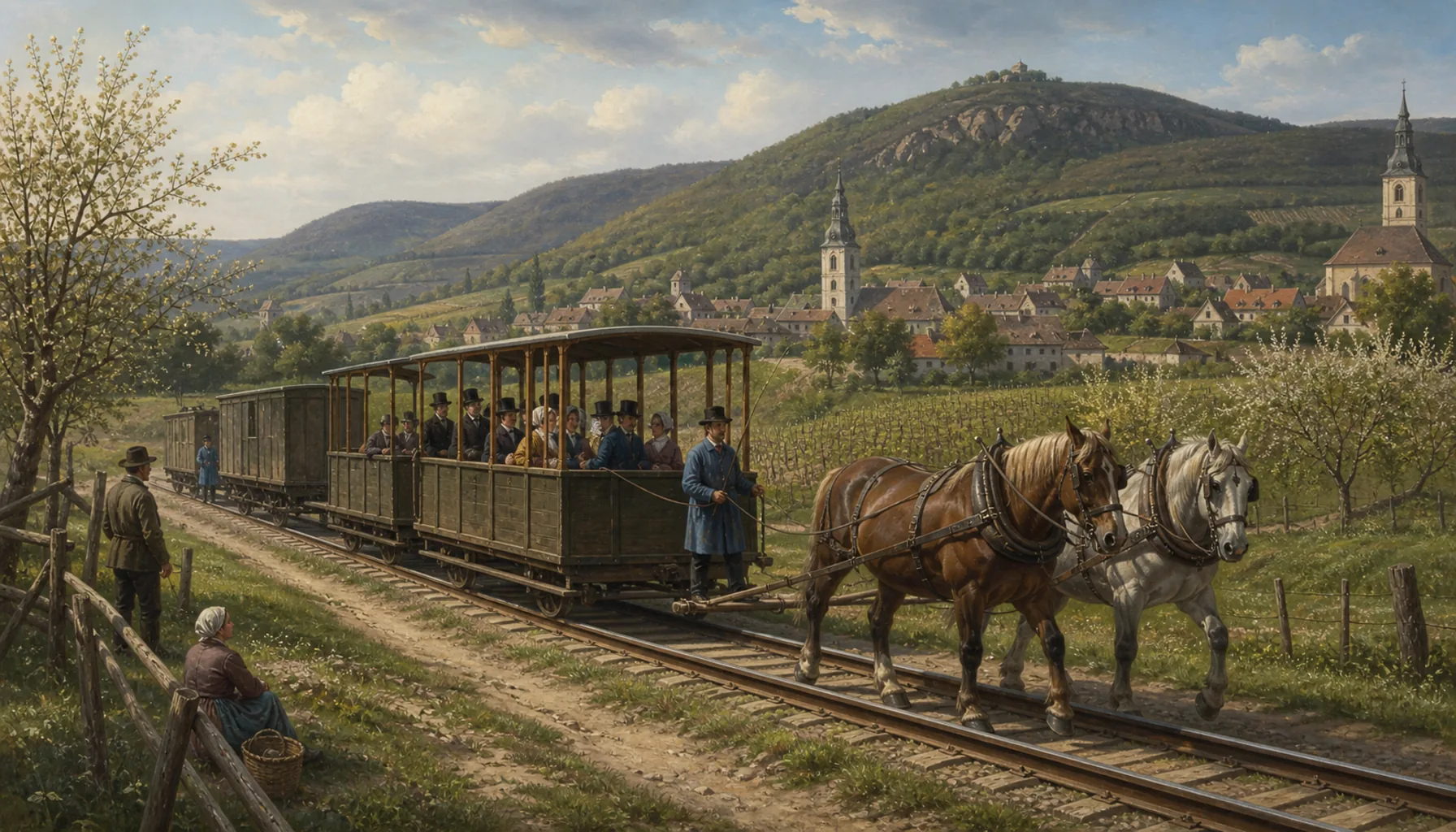
In the 1840s the first railway in the Kingdom of Hungary was built from Bratislava along the foot of these hills towards Trnava — horse-drawn, because that was what its promoters could afford. It ran through Svätý Jur and through Pezinok. It did not run through Modra, and the reason given is that the town's own magistrate opposed it. Modra has no railway station to this day: you come by bus, or from the stations at Pezinok and Šenkvice. In 1876 a reform of Hungarian local government took away the rank of free royal town it had held since 1607 and left it an ordinary town with an appointed magistracy — and between those two losses you can read the whole of Modra's nineteenth century as a quiet falling behind its neighbour.V 40. rokoch 19. storočia postavili z Bratislavy popod tieto kopce smerom na Trnavu prvú železnicu v Uhorsku — ťahanú koňmi, lebo na viac peniaze neboli. Viedla cez Svätý Jur a cez Pezinok. Cez Modru nie, a ako dôvod sa uvádza, že sa proti nej postavil mestský magistrát. Modra nemá vlastnú železničnú stanicu dodnes: chodí sa sem autobusom alebo z Pezinka a zo Šenkvíc. V roku 1876 jej reforma uhorskej správy vzala hodnosť slobodného kráľovského mesta, ktorú držala od roku 1607, a zostalo z nej mesto s usporiadaným magistrátom — a medzi tými dvoma stratami sa dá celé modranské 19. storočie čítať ako tiché zaostávanie za susedom.